ID-Verified Dating Apps: What Verification Actually Buys
$28.6 million was reported lost to romance scams in Australia in 2025 — by 1,330 people who filed with Scamwatch, a 21.8% rise on the year before, per the ACCC's National Anti-Scam Centre. Verification is one answer to that number, and a real one: a government document costs far more to fake at scale than an email address does. It says nothing about how the person holding it will behave.
Both halves of that are true at once, and most coverage picks one. This piece keeps them together, because the choice you are actually making when you photograph your passport for a dating app is a trade with a price on each side — and the price on the second side is paid later, by someone else's security team, on a day you will not choose.
Reading someone's writing before you can act on it is a different answer to the same problem, and the one this platform is built around.
Start with a page in your own wordsThat a document exists and that whoever presented it cleared a check. The US federal digital identity guidelines define identity proofing as establishing a link between an account and a real-life person — to some stated degree of assurance, no more. Read the definition twice and notice where it stops. It binds an account to a human being. It makes no claim about that human being.
The practical effect is accountability, not character. A verified account is a traceable account: harder to abandon, harder to duplicate, more expensive to burn and replace. That genuinely deters the volume operations, the ones whose margin depends on running many identities cheaply at once. It is close to useless against the single determined person who has every intention of showing you a real name.
Which is why catfishing — a wholly invented person — is only one failure mode of online dating, and not the one that accounts for most of the damage.
Because the profitable lie is a small one, told by someone who exists. When 62 judges read the self-descriptions of 78 real online daters and rated how trustworthy each writer seemed, their classifications were correct 48.7% of the time — indistinguishable from chance, in a Journal of Communication study by Toma and Hancock (2012).
The same body of research found that online daters lie frequently but subtly — height, weight, age, the photograph's vintage. Every one of those misstatements survives a passport check intact, because none of them is a claim about identity. The document says who you are. It does not audit the sentence underneath it.
Even at the criminal end, the identity is usually borrowed rather than fabricated. A 2020 review in Clinical Practice and Epidemiology in Mental Health describes the standard construction plainly: the photos are generally images stolen from the web of an attractive stranger — a soldier, an athlete, a model. The face is real. It belongs to someone who has no idea. And the method that follows is relational, not technical: the same review notes that the scammer works by manufacturing the sense that two people are perfectly in step about life. There is no document anywhere in that sequence to check.
It becomes a record — somewhere, for some period, under some policy. Those three blanks are the entire question, and most apps answer none of them on the screen where they ask. Australia's privacy regulator files government documents as their own breach category, defining identity information as a passport number, driver licence number or other government identifier.
That category exists separately for a reason. A leaked password is an inconvenience you fix in ninety seconds. A leaked passport number is a fact about you that stays true until a state agency agrees to change it, and a leaked photograph of the document is a reusable key to every other service that accepts the same photograph as proof. It is the one item in the breach dump with no expiry and no reset button.
None of this makes verification wrong. It makes it expensive, in a currency the signup screen never shows you. The honest version of the pitch would read: we will make impersonating you harder here, in exchange for creating a small permanent liability that lives on our servers and on our vendor's servers, and that neither of us can take back once it moves.
Ask, at minimum, whether the check runs in-house or through a third-party identity vendor, and which of the two keeps the image afterwards. An app that answers that question in one sentence has thought about it. An app that cannot is telling you something too.
They differ less in how well they work than in what they leave behind. The useful axis is not strength — it is residue: what has to be stored for the check to have happened, and what that stored thing is worth to somebody who steals it. Ranked by the size of the trace they leave, the common models look like this.
| Model | What it establishes | What it leaves behind | What a breach exposes |
|---|---|---|---|
| Email or phone confirmation | The account reaches a real inbox or handset | An address and a number | Contact details — rotatable, cheaply |
| Selfie or liveness check against the profile's own photos | The person in the photos operated the camera | A face image and a match score | A biometric-grade face record |
| Government ID upload plus face match | A document exists and the holder presented it | Document image, identifier, face image | A permanent identifier and a face, together |
| Third-party identity bureau lookup | The name and date of birth match a credit-file record | A query record at a company you never chose | Your identity data in a second organisation's hands |
| Self-declared identity, photos withheld until a match | Nothing about identity; the decision runs on writing | Text you wrote and chose to publish | Text you already meant strangers to read |
Read the last column as the real comparison. The first four rows buy varying amounts of assurance with data that gets more irreplaceable as you go down. The fifth buys none of that assurance at all, and that is a genuine cost — it is why this piece is not an argument that verification is a con. The two columns belong side by side, and they almost never appear that way.
Six questions, and any service that verifies identity should be able to answer all of them in plain language. If the answers live only in a privacy policy's subordinate clauses, treat the vagueness itself as the answer:
- Is the image stored, or only checked and discarded? "Deleted after verification" is a specific commitment. "Retained as required" is not.
- Who else sees it? In-house review and a third-party vendor are different risk surfaces, and only one of them is a company you chose.
- How long is it kept, exactly? Ask for a number. A retention ceiling in a policy is not a deletion schedule.
- What happens to it when I delete my account? Deletion policies and verification-vendor policies are frequently written by different people.
- What does the badge actually assert? Some verify a face against the profile's photos; some verify a legal identity. They are not interchangeable claims.
- What did the last incident look like? A company that has published a post-mortem has practised for the bad day. Silence is not the same as safety.
Anketta answers the same problem from the other direction, and it is worth being exact about what that does and does not include. Signing up asks for a display name, a date of birth, a gender, who you want to see and a city you type yourself, plus an eighteen-or-over declaration you tick. What introduces you afterwards is a manuscript rather than a photograph.
Photos exist, but they arrive late and stay optional: none appears anywhere before a mutual match, they are capped at three, they are shown only to someone who has offered one of their own, and a new photo is blurred to matches until two separate members approve it — or hidden entirely if two flag it. That is peer review, and Anketta is careful never to call it identity confirmation, because it isn't one. Meanwhile phone numbers, emails and addresses inside a manuscript are blurred by the server itself for anyone you haven't matched with, so the raw text never reaches an unmatched reader's browser at all.
What that leaves is an odd, old-fashioned kind of introduction. Someone reads several hundred words you wrote before they know your face, your surname or your street. They reach the paragraph where you admit the year abroad didn't work and you came home earlier than you told people. They decide about that — which is more information than any badge has ever carried, and considerably harder to borrow from a stranger on the internet.
Write the part about coming home — no badge can sign for that oneNone of this is a safety guarantee, and it would be dishonest to sell it as one. It is a different distribution of risk: less identity data collected, so less to lose in a breach; more weight on what someone writes, which is slower and less certain than a document check but is at least about the thing you actually care about. If you would rather have the document check, that is a coherent preference — what the platform is for is deciding on the basis of writing, and it says so plainly.
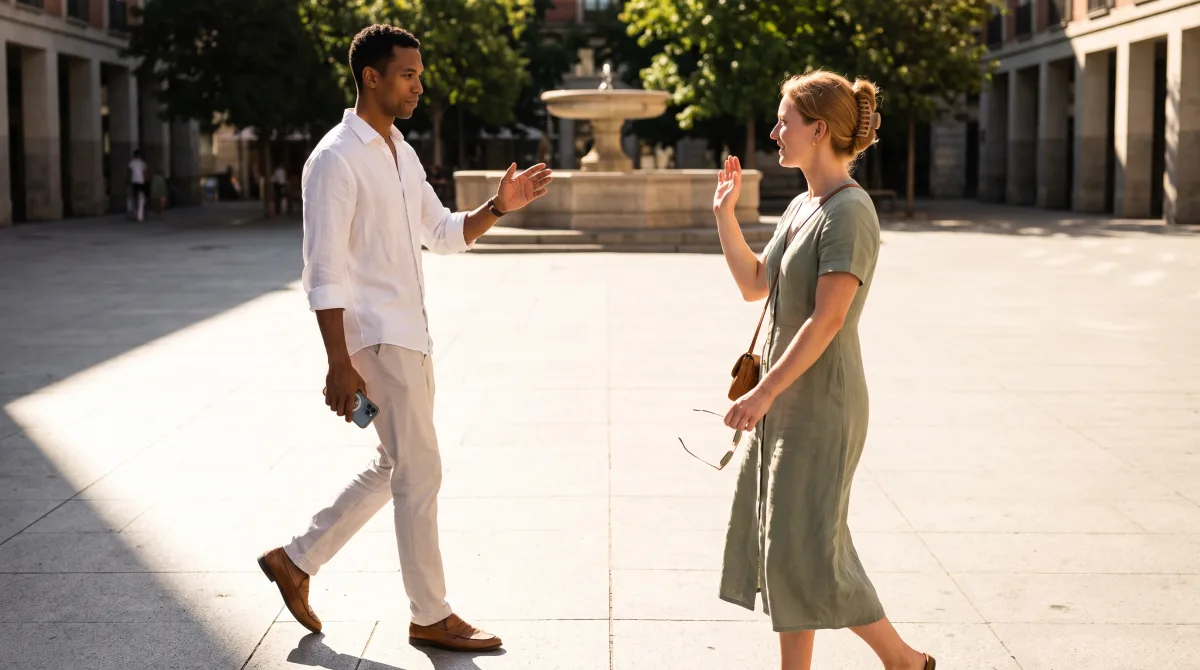
The other thing worth saying out loud: on every platform, verified or not, the first meeting is still a first meeting with a stranger. Public place, own transport, someone told where you'll be. Deciding on purpose about who is worth that evening is work the badge was never going to do for you, and it is roughly the same work whether the app checked a passport or read a page of writing instead.
Are ID-verified dating apps safer than unverified ones?
Safer against one specific threat: cheap, high-volume fake accounts, which a document check genuinely does make more expensive to run. Not safer against a real person misrepresenting themselves: Toma and Hancock (2012) found daters lie frequently but subtly, and small lies pass a document check untouched. And each verified app carries a data risk an unverified one does not.
What does a "verified" badge on a dating profile mean?
It depends entirely on the app, and the badge rarely says. Some mean a selfie matched the profile photos. Some mean a government document was checked against a face. Some mean a phone number was confirmed. Ask which one before you read anything into it.
Can I be catfished on a verified dating app?
Yes, though it is harder. Verification raises the cost of a wholly invented persona, but the more common deceptions — an old photo, a shaved decade, an undisclosed marriage — are all made by people using their own real identity documents, which pass every check unchanged.
Is it safe to send my passport to a dating app?
It depends on answers most apps don't publish: whether the image is stored or discarded, who else handles it, and for how long. The specific risk is that a passport number cannot be reissued the way a password can, so a leak is permanent in a way other leaks are not.
Do dating apps delete your ID after verification?
Some do, some keep it, and many describe retention only in general terms. Look for a stated deletion timeframe rather than a phrase like "as long as necessary", and check whether the commitment covers the third-party vendor as well as the app itself.
What does Anketta ask for when you sign up?
Signup collects self-declared details — a display name, date of birth, gender, who you want to see, a city you type — and an eighteen-or-over declaration. A photo has two states, blurred and clear, and what a match reads first is your writing rather than a document.
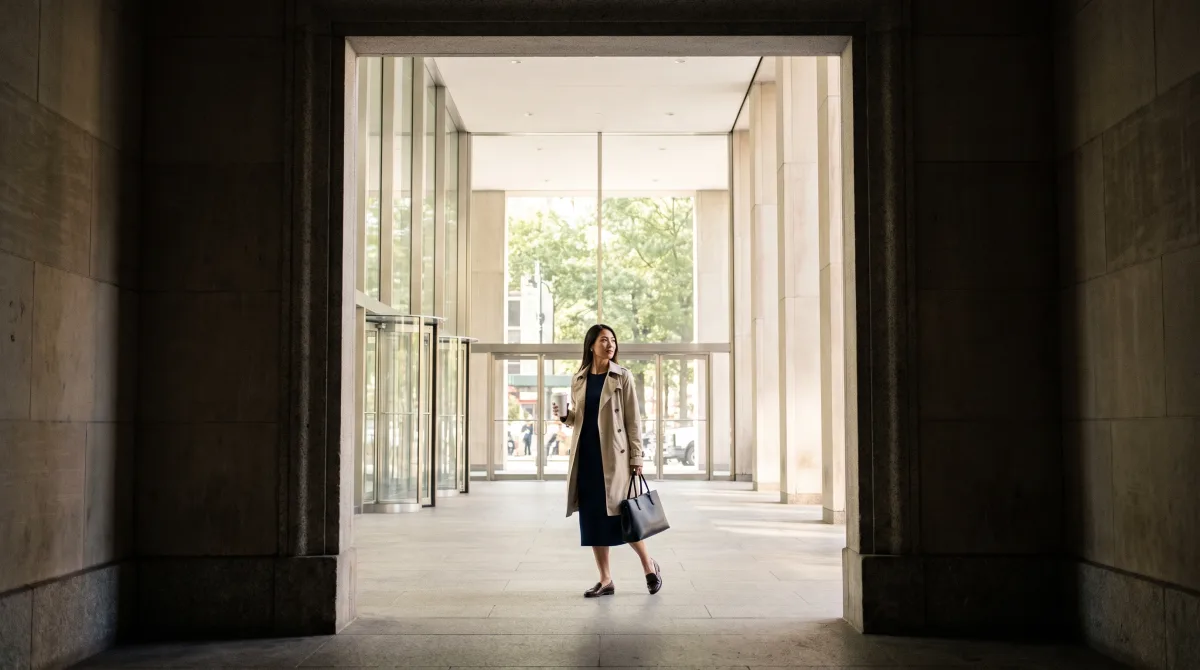
She is still waiting in the entrance hall, and the desk has already decided whether to let her in. What it cannot tell her, and never could, is anything about the person she is walking upstairs to meet.
Unsure about writing? Try reading first.