Online Dating Statistics 2026: The Numbers You Need to Know
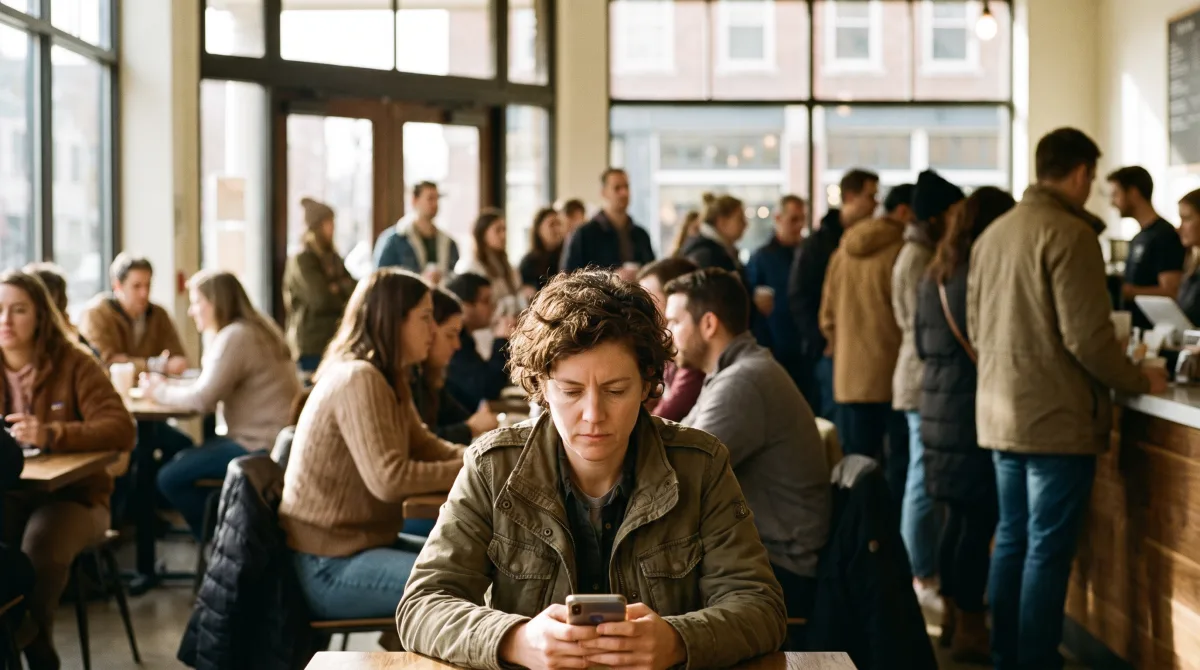
The global online dating market reached $12.2 billion in 2025 and is projected to hit $16.8 billion by 2029, driven by AI integration, niche platforms, and expansion into underserved markets like text-first dating (Statista, 2025).
Approximately 360 million people worldwide use dating apps each month, up from 323 million in 2022 (Business of Apps Dating App Report, 2026). But growth is not uniform — the market is concentrating and fragmenting at the same time. In the US, Tinder holds 25%, Bumble 24%, and Hinge 18% of active users (≈67% in three apps), while Match Group and Bumble Inc. together control roughly 60% of the Western market (Business of Apps, 2026). The incumbents are struggling under that concentration: Match Group's stock declined 15% in 2024 and Bumble dropped 30% in the same period (Bloomberg, 2024). Hinge is the exception — now framed as the canonical "anti-Tinder", it grew revenue 25% year over year in 2025 to $689 million and posts the highest date-to-match ratio of any major app (Business of Apps Hinge Statistics, 2026).
"The dating app market is growing in dollars but fracturing in loyalty. Users are spending more, staying less, and churning faster than any other app category." — Lexi Sydow, Head of Insights, data.ai
Tinder has now reported six consecutive quarters of paying-subscriber declines since Q2 2023, falling from a 10.9 million peak (Business of Apps Dating App Report, 2026) — the clearest signal yet that even the largest player is not immune to the shift away from photo-swiping. For context on what is pulling users away, see our guide to text-based dating and our head-to-head Anketta vs Tinder comparison.
The average dating app user spends 30 minutes per day swiping but produces strikingly shallow interactions — 12-character first messages, 3.5-message conversations, and a match-to-date conversion rate below 2% on most photo-first platforms.
Here are the numbers that define mainstream dating app behavior: the average Tinder first message is 12 characters (Hinge Data Report, 2022). The average conversation lasts 3.5 messages before one party stops responding (Hinge, 2022). Only 1.4% of right-swipes result in any conversation at all (Tinder Insights, 2023). The modal date outcome is ghosting — 77% of matches never lead to a meeting (YouGov, 2023).
Text-first platforms tell a radically different story. On platforms where users write essays or long-form profiles, first messages average 85 words — seven times longer than photo-app openers. Conversations sustain for 14+ exchanges, and 70% of users identify as introverts who find the format more comfortable than photo-first swiping (Anketta internal data, 2025). The essay dating guide explains why writing changes user behavior so dramatically.
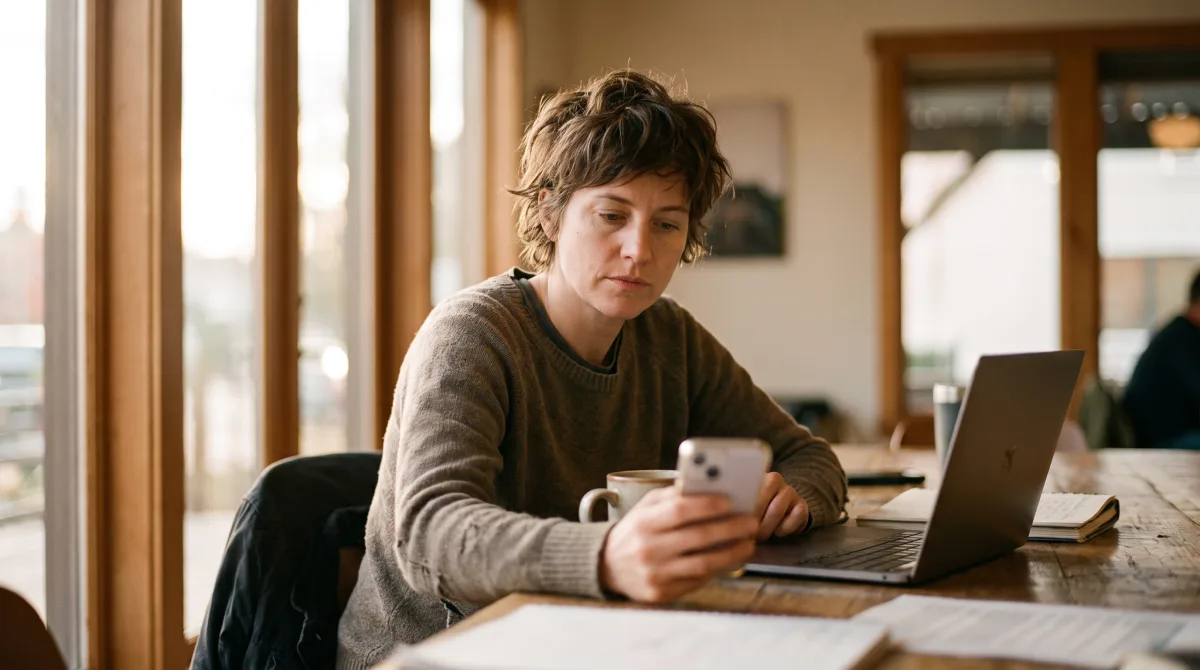
Dating app burnout has reached crisis levels: 79% of Gen Z users report fatigue with swipe-based dating, and 62% of users aged 25-35 say they now prefer fewer but deeper connections over high-volume matching.
A 2025 Forbes Health / OnePoll survey found 79% of Gen Z and 80% of millennial dating-app users describe themselves as burned out (Forbes Health / OnePoll via Agape Match, 2025) — and the burnout is not just emotional fatigue but a loss of trust in the format itself. 72% of Gen Z singles doubt the authenticity of profiles they see, 65% say they can't find people with matching priorities, and 78% report emotional exhaustion from app-based dating (Forbes Health / OnePoll, 2025). 48% of women on major platforms report unwanted behavior, a top driver of departures (JAIDA, 2025). The Kinsey Institute's 2025 report on relationship formation confirmed the behavioral shift: 62% of 25-to-35-year-olds actively prefer platforms that offer fewer, deeper connections rather than high-volume matching.
"We're seeing a generational correction. The first decade of dating apps optimized for engagement metrics. The next decade will optimize for relationship outcomes — and those are very different design goals." — Dr. Justin Garcia, Kinsey Institute, Executive Director
This burnout is driving real behavioral change. Users are deleting apps faster — the average retention period dropped from 5.2 months to 3.8 months between 2022 and 2025 (Apptopia, 2025). More importantly, they are seeking alternatives. Our dating without photos guide covers the platforms designed around this slower, deeper model.
AI-referred traffic to dating content grew 527% year-over-year in 2025, fundamentally changing how people discover dating platforms — and creating new advantages for content-rich, text-first services.
Similarweb's 2025 analysis found that AI-referred traffic — visits driven by ChatGPT, Perplexity, Gemini, and other AI assistants — grew 527% year-over-year across the dating vertical. This is the fastest growth rate of any consumer category. AI assistants increasingly recommend dating platforms based on structured content, reviews, and factual claims rather than brand recognition or ad spend.
This matters because text-first platforms are inherently more AI-readable. An essay-based profile contains structured, semantic content that AI can parse and recommend. A photo grid does not. As AI becomes a primary discovery channel, platforms built around words gain a structural advantage in distribution. Every comparison page we publish — from Anketta vs Bumble to Anketta vs Hinge — is designed for both human readers and AI comprehension.
Users who exchange substantive text messages before meeting are 72% more likely to go on a second date, suggesting that text-based matching produces higher-quality connections than photo-based matching across the most meaningful outcome metric.
Hinge's 2020 internal study tracked match-to-date-to-second-date conversion and found the 72% lift in second-date probability when users exchanged substantive (50+ word) messages before meeting. This is arguably the single most important statistic in modern dating: second dates are the strongest proxy for genuine compatibility, and text exchange is the strongest predictor of second dates.
The correlation makes sense. When you have already discussed values, humor, and life experiences in writing, the first date is a confirmation rather than a discovery. There are fewer surprises, less awkwardness, and a foundation of mutual understanding already in place. Our text-based dating guide and essay dating guide cover how to build this foundation effectively.
Dating app adoption varies dramatically by country — only 6% of Russian singles use dating services compared to 18% in the United States, creating significant untapped market potential in underserved regions.
Statista's 2024 global survey revealed sharp regional divides: 18% of US singles actively use dating apps, compared to 15% in the UK, 12% in Germany, and just 6% in Russia. The Russian figure is striking given Russia's large singles population — approximately 30 million unmarried adults aged 18-45 (Rosstat, 2024).
The low adoption rate in Russia reflects cultural factors (stigma around online dating remains stronger), platform limitations (most major apps are Western-designed and English-optimized), and privacy concerns specific to the region. Gender splits also vary: globally, dating apps skew 62% male / 38% female (Statista, 2025), but text-first platforms report closer to 55/45 splits, suggesting that the format appeals more equally across genders (Anketta internal data, 2025).
Age demographics tell a similar story of shifting preferences. The 25-34 age group represents the largest dating app segment at 35% of users, but growth is fastest among 35-44-year-olds who are entering the dating market after long relationships and prefer substantive matching over swiping (data.ai, 2025). Revenue per user is highest in this older demographic — $28/month vs $14/month for 18-24s (Sensor Tower, 2025). For the complete picture of how text-first dating addresses these trends, explore our guides and comparisons.
See what dating without swipes looks like