Text-based dating in Boston — Anketta
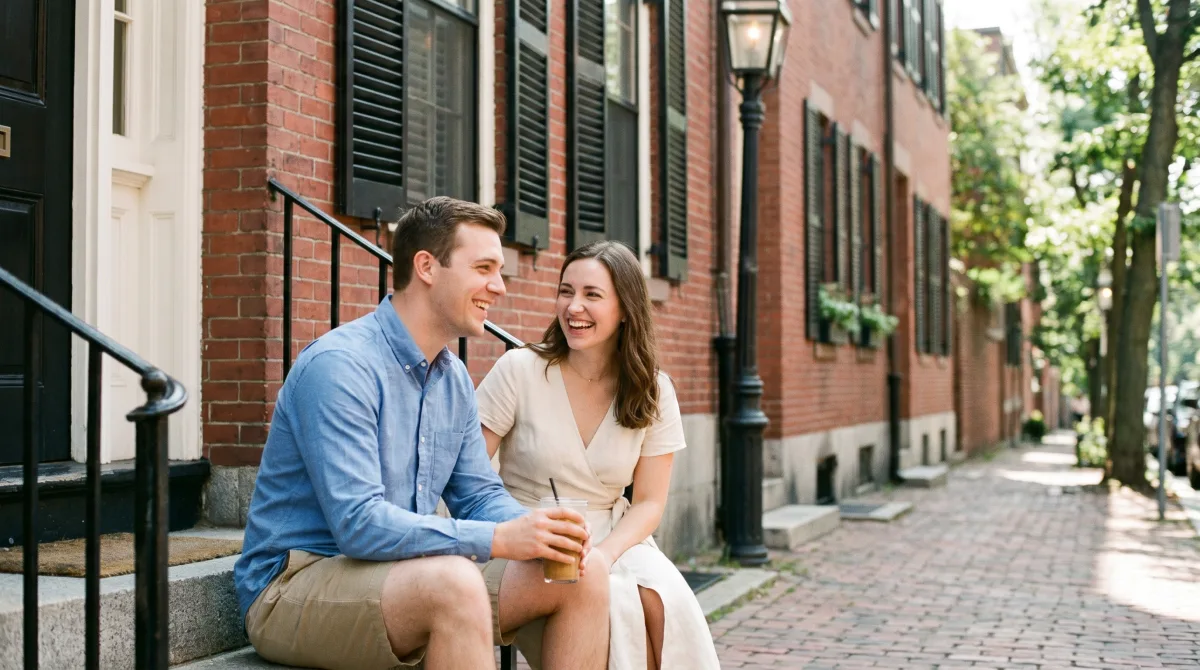
The City of Boston has 675,000 residents, with a metro of 4.9 million. ACS data places the unpartnered 25-39 cohort across the metro at over 500,000. Boston is a college town and a research town and a finance town stacked on top of each other, and the dating market is paradoxically thin in exactly the part that should be thickest: people who think for a living.
Standard apps misread the Boston market in a specific way. The city has a churn problem — undergraduates and graduate students cycle through every few years, and many leave once they finish their programs. The apps don't distinguish between the person who's here for a six-month rotation and the person who's putting down roots. Photo grids never told you who was actually building a life here.
Boston has more universities than almost any U.S. metro. Harvard, MIT, Boston University, Tufts, Northeastern, BC, Brandeis, Wellesley, Olin, Berklee, MassArt, Suffolk, Emerson, Simmons, UMass Boston, Lesley — over 250,000 enrolled students across the metro. Layer on the biotech and pharmaceutical cluster around Kendall Square (the densest concentration of biotech anywhere on Earth), the academic medical centers, the venture-funded tech corridor on the Charles, and the publishing tradition (Harvard Business Review, MIT Press, Beacon, Houghton Mifflin Harcourt).
This is a city where written argument is the form your work takes. A 2024 Harvard Kennedy School survey of 25-40 Boston-area residents found 75% rated "writes well and reasons clearly" as a top-three trait for long-term partners. A photo grid will surface none of that. A short manuscript will surface most of it.
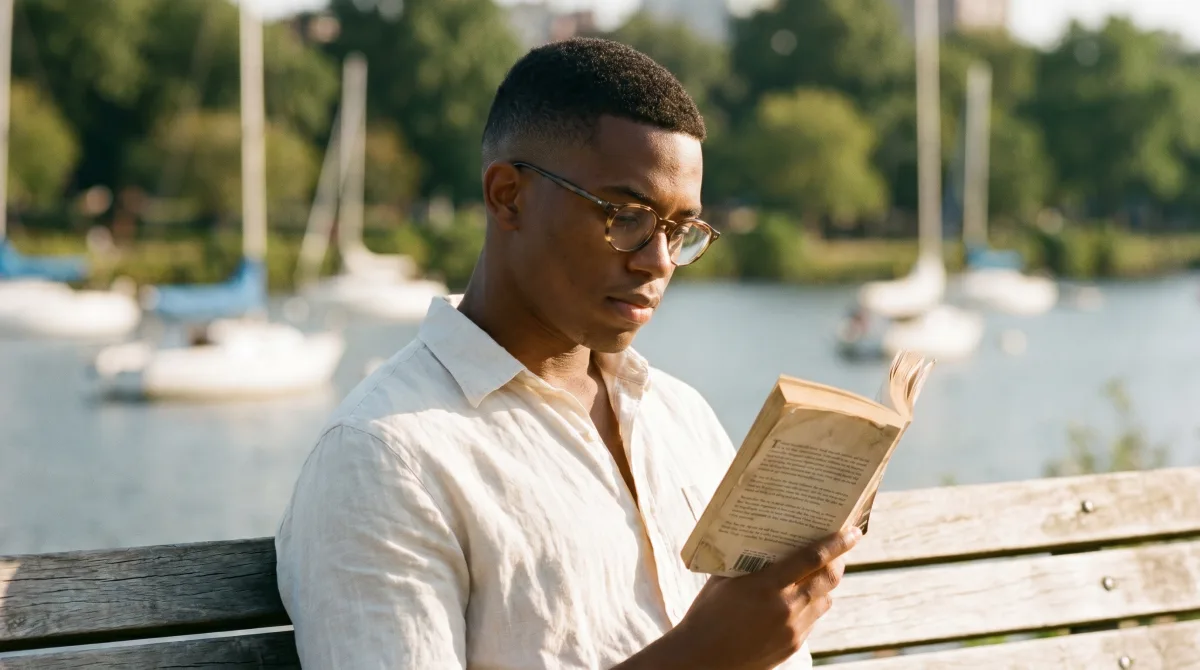
Anketta's idea is simple: write a manuscript — a short essay about who you are, what you value, and the kind of person you want next to you. Not "I love trivia and the Sox." Real writing, where the structure of your thinking is visible. An AI model reads the semantics of that text and matches you with people whose minds work compatibly with yours.
When a match opens, the 48-hour window starts. Long enough to write something real and exchange a real conversation; short enough that nothing drifts. Photos unlock after both sides commit to continue. By then you know who you're talking to.
In Boston the problem is filtering for register. Standard apps filter by age and distance. That tells you almost nothing here, because everyone within a 30-minute Red Line ride is in some adjacent academic or professional sphere — but their actual intellectual register varies enormously.
Anketta analyzes linguistic patterns — sentence rhythm, vocabulary, emotional register. Stanford research from 2018 (Ireland & Pennebaker, Language Style Matching) showed that linguistic similarity outpredicts shared-interests overlap for relationship stability. You can both go to the Coop, but if one of you reasons in formal proofs and the other in lyrical asides, you'll grind. Anketta filters on tone and structure first.
Boston has held onto an exceptional reading and lecture culture. Harvard Book Store and The Coop in Harvard Square, Brattle Book Shop downtown, Porter Square Books in Cambridge, Trident Booksellers on Newbury, Frugal Bookstore in Roxbury, More Than Words in the South End, the MIT Press Bookstore in Kendall, the Harvard Lecture Series, the Cambridge Forum, the Boston Athenaeum's talks. These rooms are where the people you actually want to meet show up.
The constraint with offline Boston: weather and the academic calendar. A 2024 NOAA summary recorded 100+ days of frozen precipitation annually, with sub-freezing temperatures stretching from December into March. Many January Tuesdays you do not get from Allston to Cambridge for a 7:30 reading. Anketta removes the constraint — you can be talking to a postdoc in Somerville while you're in the South End, with no overlap of physical schedule.
Boston rewards substance and disrespects fluff. The 48-hour window matches that — enough time to write a real essay, enough time to exchange a real conversation, not enough time for either of you to over-edit. Anketta users average 23 messages per 48-hour window, several times the first-week density on photo-first apps. The deadline forces engagement. There's a window; you use it.
Anketta is not for everyone, and that's deliberate. If you want quick casual matches, other apps do that. Anketta is for people who:
- Have run through the standard apps and recognize the same Charles River sailboat shot a hundred times
- Work in academia, biotech, software, medicine, law, finance, or any research field — and want a partner who can match your register
- Are a postdoc, faculty hire, or industry transplant new to Boston and want to meet people whose minds work the way yours does
- Will trade twenty minutes of writing a manuscript for skipping three months of dead first dates
There are already several thousand Boston manuscripts on Anketta — each written by someone who decided rigor was worth more than a Newbury Street pose.
Download Anketta, write your manuscript, and let the model do the rest. No perfect Esplanade photo required. Just tell us who you are and the kind of mind you want to find.
Boston has always rewarded people who could write clearly and reason rigorously. Text-based dating is one more Boston habit of preferring substance over surface. Read more on our About page or learn what Anketta is and how it differs from other services.