Dating for Lawyers: How Busy Attorneys Date Smarter
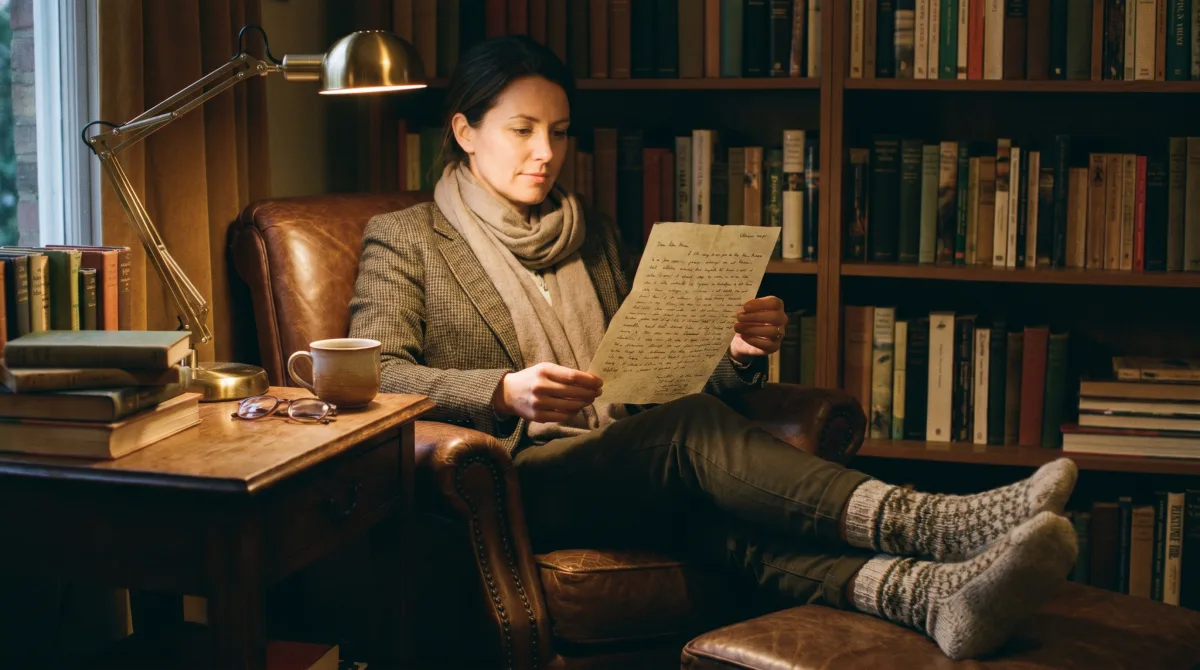
The best way for a busy lawyer to date is to stop spending the scarcest resource — attention — on a format that rewards speed over judgment. Photo-grid swiping is built for volume; a working attorney needs the opposite. The cost is real: the average single now spends $213 a month on dating, per the 2025 Match and Kinsey Institute Singles in America study. For someone billing in six-minute increments, the bigger spend is the hours, not the dollars.
Here's the part the dating-app marketing skips. The two things a lawyer protects most — billable time and a discreet professional reputation — are precisely what a swipe app burns through first. A profile photo is a screenshot waiting to happen, and an endless swipe queue is a billable afternoon disappearing one face at a time. The fix isn't more discipline. It's a format that values the skill you already have in surplus: reading carefully.
Write the version of yourself a careful reader would noticeDating is hard for lawyers because the job leaves little of the two things modern dating demands most: unscheduled time and emotional bandwidth. Long hours, hard deadlines, and the habit of guarding what you say in public all collide with apps that expect constant availability and a face on display. The result is a profession that's articulate on paper and stalled on the app.
There's a quieter cost, too. A 2025 peer-reviewed study in Social Media + Society found that people felt lonelier when they used dating apps for social approval, but not when they used them to pursue relationships (Stevic et al., 2025). Lawyers, already prone to isolation in a demanding profession, are exactly the group for whom a validation-driven app makes the loneliness worse — and a relationship-driven one doesn't. The format you pick isn't neutral.
"The practice of law is a jealous mistress. It requires a long and constant courtship. It is not to be won by trifling favors, but by lavish homage." — Joseph Story, U.S. Supreme Court Justice
The line is two centuries old, and lawyers still quote it ruefully. The point for dating is simple: if the profession already demands constant courtship, the last thing it needs is a romantic life that demands the same constant, low-yield attention.
You save time by changing what the app asks you to do, not how fast you do it. A swipe app asks for a half-second verdict on a photo, repeated hundreds of times for a handful of matches. A text-first app asks you to read one thing and respond to it — fewer profiles, but each one already filtered to people whose writing you actually want to answer. The same hour produces depth instead of volume.
Compare where the hour goes:
| Swipe-first app | Text-first app for professionals | |
|---|---|---|
| Per-profile time | ~1.5 seconds, hundreds of times | Reading speed, far fewer profiles |
| What you judge on | A photo, instantly | Someone's actual writing |
| Reputation exposure | A photo that can be screenshotted | No photo; PII server-blurred to strangers |
| What the hour yields | Match volume, mostly noise | A short list worth answering |
| Skill it rewards | Snap appearance verdicts | Close reading — the one you already bill for |
The table shows the trade. But time is only the first scarce resource a lawyer is protecting. The second one — your name — is the one most apps quietly put at risk.

Yes, and discretion is now a design feature, not an add-on. The exposure problem on conventional apps is structural: your face is your profile, and a face is trivially screenshotted, reverse-searched, and forwarded. For an attorney whose name carries professional weight, that's a real risk — opposing counsel, a client, or a junior associate could surface your profile in seconds. A photo can't be un-seen.
On Anketta no photo is visible before a match, so there's nothing for a browsing colleague or opposing counsel to screenshot or reverse-search. More to the point, contact details are protected by server-side PII blur: if someone who isn't a mutual match lands on your manuscript — including via a shared link — phone, email, and address are redacted by the server before the page is ever sent. There's no DevTools trick to reveal them, because the raw text never reaches the browser. The same privacy logic that makes public-figure dating workable applies cleanly to a profession built on confidentiality.
They tend to, because the format rewards a skill the profession trains relentlessly: precise, persuasive writing. A swipe app flattens a litigator and a stranger into the same one-second photo verdict. A text-first app does the opposite — it surfaces exactly the verbal nuance a lawyer spends a career sharpening, and matches on it. Here's how an attorney plays to that strength:
- Write the brief, not the billboard. Set your intent and write a free-form manuscript the way you'd draft an argument — specific, structured, no filler. Substance is the surface area that matching runs on.
- Argue from a fact, not an adjective. "Driven and detail-oriented" reads as nobody. The Tuesday you spent re-reading one paragraph until it was right — that's a fact a careful reader stops on.
- Let your reading do the filtering. On a text-first app you highlight the phrases that land with you; each highlight teaches the system what to surface more of. Your professional instinct for the load-bearing sentence is exactly the instinct that trains a good queue.
- Use the bounded window deliberately. When you match, a 48-hour window turns it into a decision rather than an open tab — a deadline a lawyer can actually respect.
- Don't outsource your voice. The version of you a thoughtful partner recognizes has to be written by you — the same way no associate can write your closing for you.
Every step lands on the same act: writing well, and reading closely. Lawyers don't need to learn that skill. They need an app that finally rewards it — the way other demanding professionals and analytically-minded daters like programmers have started to.
Write the manuscript a careful reader would stop onWhat is the best dating app for lawyers?
The best fit is a text-first, photo-free app that rewards close reading and protects your name. Conventional swipe apps spend a lawyer's two scarcest resources — billable time and a discreet reputation — fastest. An app that matches on written manuscripts and blurs your contact details to strangers reverses both.
How do busy lawyers find time to date?
By changing the format, not adding hours. A text-first app shows far fewer profiles, each already filtered to people worth answering, so the same hour yields depth instead of a few hundred half-second swipes. Lawyers are short on attention, not options — a format that respects that converts better.
Are dating apps safe for a lawyer's professional reputation?
On photo-based apps, not entirely — a profile photo can be screenshotted, reverse-searched, and forwarded. A photo-free app removes that exposure, and server-side PII blur means anyone who hasn't matched with you can't read your phone, email, or address, even from a shared link. The same protection matters to anyone dating later in life with a career and a name to safeguard.
Why do lawyers struggle on swipe apps?
Because swipe apps reward speed and constant availability — two things the profession leaves in short supply. They also push validation over relationships, which research links to higher loneliness (Stevic et al., 2025). For an articulate, time-poor professional, the format works against the person using it.
Do text-first dating apps work for professionals?
They suit professionals especially well. Removing photos shifts the first impression to someone's writing, which carries far more about how a person thinks than a posed image does — and writing is the one skill lawyers already have in surplus. The format rewards precision over performance.
Can a lawyer date privately without revealing contact details?
Yes. On Anketta, phone, email, and address are server-blurred for anyone who isn't a mutual match — the API never sends the raw text to non-matched viewers. There's no client-side workaround, so you can write candidly without worrying a colleague who finds your profile can extract your details.
A lawyer's whole craft is paying close attention to words other people skim. Online dating has grown into the default way couples meet — about three-in-ten U.S. adults have ever used a dating app, per the Pew Research Center (2023) — so the only real question is whether the app rewards that craft or wastes it. The one that rewards it asks you to write something true and read someone closely, which is the work you already do every day.
Unsure about writing? Try reading first.