Sober Dating: What Actually Changes When You Don't Drink
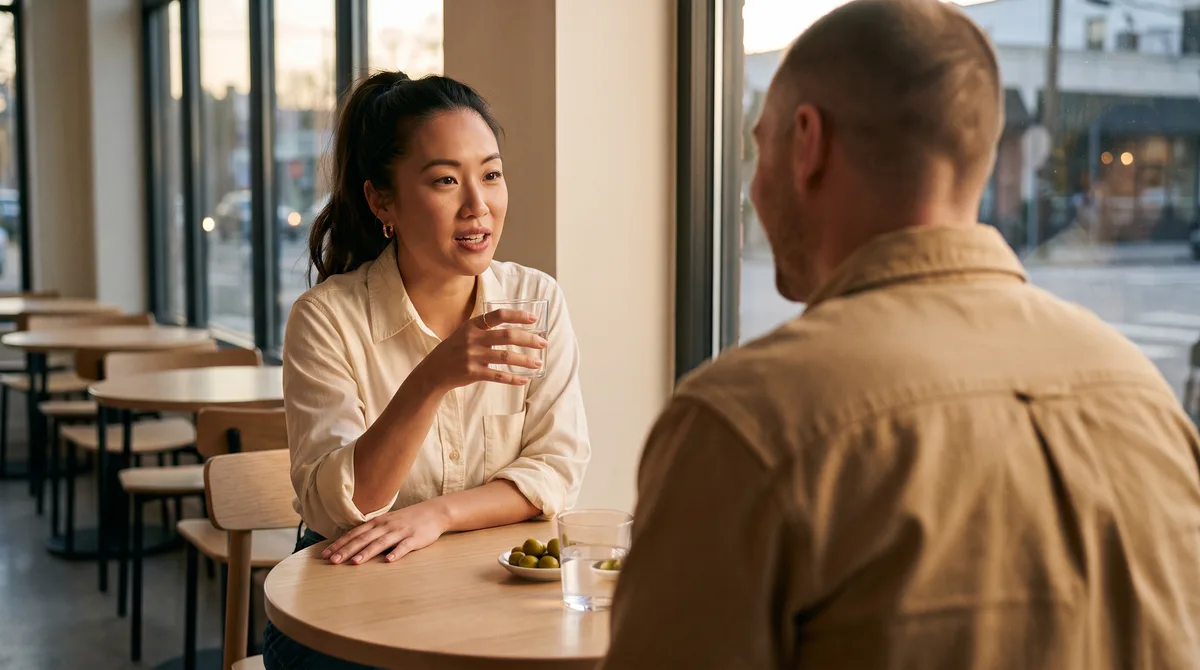
54% of U.S. adults say they drink alcohol at all, the lowest share Gallup has recorded in its nearly 90-year tracking history (Gallup, 2025), down from 62% just two years earlier, in 2023. Dating culture has not caught up. The default first date is still a bar, and "what are you drinking" still does most of the work of breaking the ice.
Sober dating is not one audience. It covers someone sober-curious, skipping a drink some nights and not others, and someone in recovery, for whom not drinking is a boundary rather than a preference. Both are more common than a bar-default dating culture assumes, and neither one has ever had to put the reason into a full sentence before — a first date rarely asks for one. Both are also, without quite naming it that way, dating on purpose rather than on autopilot.
Write down what "no, thanks" actually means for youBecause for two people who both drink comfortably, a bar date genuinely works: a shared ritual, a built-in activity, a two-drink buffer against dead air. That is not a flaw to fix. It is just not universal, and it is a bad default for anyone who has opted out.
A drink also lowers the bar for what passes as chemistry. A 2019 study in Substance Use & Misuse found that it narrows mental resources by modifying the scope and focus of attention (Lac & Donaldson, 2019), the mechanism researchers have called "alcohol myopia" since Claude Steele and Robert Josephs first named it in 1990. Two drinks in, a mediocre date reads as easy. Sober, you are testing the actual conversation, with nothing narrowing your attention for you. None of that makes a sober date better by default. It makes it harder to fake.
Pop psychology calls the same effect "beer goggles." Researchers call it myopia. Either way, it explains why a bar date can feel electric in the moment and forgettable by Wednesday — the spark was real, but so was the substance doing part of the noticing for you.
They share a first date and not much else. Sober-curious means drinking less, or not tonight, as a preference that can flex with the occasion. In recovery, not drinking is a boundary a good date does not test, treat as temporary, or try to talk you out of.
| Sober-curious | In recovery | |
|---|---|---|
| What "no thanks" means | A preference, some nights more than others | A boundary that does not flex |
| What a slip costs | An ordinary night | Something much larger than one drink |
| What a date needs to get right | A venue that is not just a bar | Not treating sobriety as a phase to wait out |
More than half of British Gen Z, 51%, already skip alcohol on a first date, against 46% of everyone older, in a 2025 survey (Ripple Research, 2025) that the dating app Feeld published. Sober-curious is the trend line. Recovery is the boundary underneath a much smaller, much more serious slice of it.
Not exactly, though the caution behind that advice is real. In one analysis of relapse episodes across a range of addictive behaviors, negative emotional states and interpersonal conflict together triggered more than half of every relapse recorded (Larimer, Palmer & Marlatt, 1999), and a new relationship supplies both in steady doses. That is why many counselors suggest waiting until sobriety feels boring before adding a relationship on top of it, not as a moral rule but as a sequencing choice.
The same analysis put a third trigger, social pressure to drink, at roughly another fifth of relapses on its own — and a new relationship can apply all three at once, without either person meaning to.
In practice that means naming a rough timeline to yourself before anyone else is involved, rather than treating every promising conversation as the exception to it. Deciding that on paper is easier than deciding it in the middle of actually liking someone, which is exactly when it gets hard to decide anything at all. If any of this touches a harder question than dating timing, that is a conversation for local support services, not a blog post.
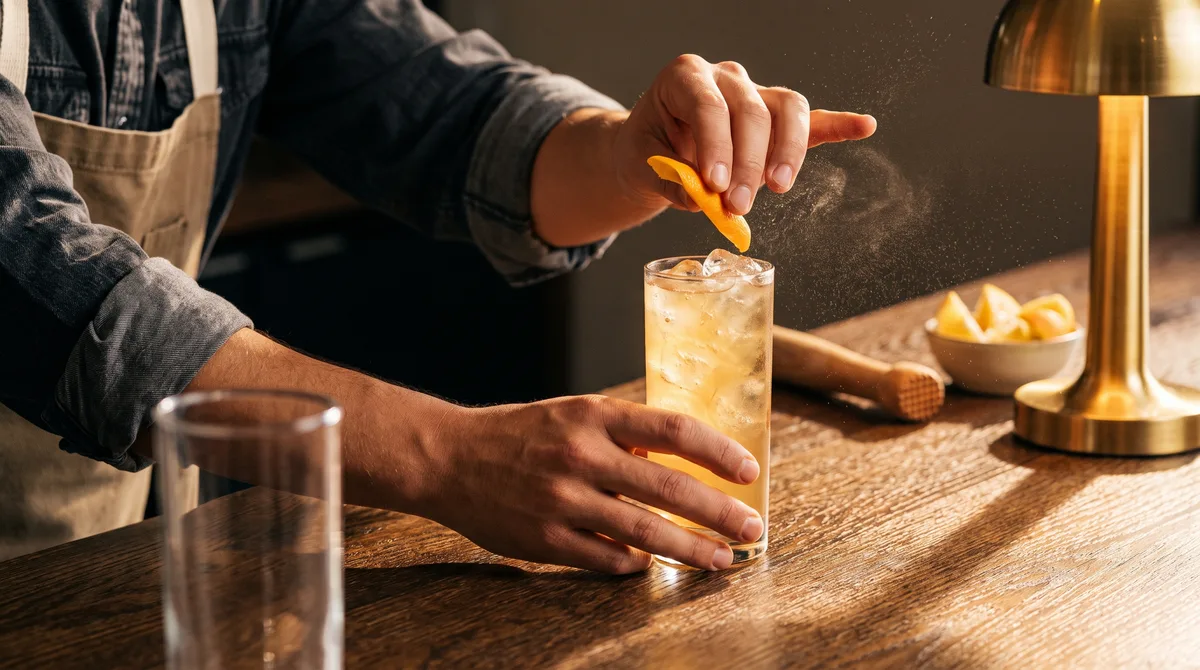
Anything that gives the evening a shape a drink used to provide. The point is not finding an alcohol-free substitute for a bar — it is picking something that does not need one. Sober-curious or in recovery, the goal is the same: an evening that does not lean on a drink to feel like it is going somewhere.
- A hike, a climbing gym or a walk with an actual destination, so the activity fills the silence a drink used to fill.
- Morning coffee instead of evening drinks — different energy, and no "one more round" clock running underneath it.
- A bar or restaurant with a real mocktail menu, not a Sprite with a lime wedge apologizing for itself.
- Something with your hands — a pottery class, a market stall, a cooking session — so there is a task to fall back on besides talk.
- A second coffee instead of a second bar, if the first date needs a shorter runway than a full dinner.
None of these need explaining to a date who already gets it. The ones who need the whole case made for them, twice, are the ones worth noticing early — that reaction is information too, and it arrives faster than a second date would.
Say it in your own words before the first date doesWrite it, before it needs saying out loud over a menu. Anketta's matching runs on the manuscript itself, not a photo, so "I don't drink" gets to be a full sentence with a reason in it, instead of a fact someone finds out mid-date. Writing that sentence down first costs nothing if it matters to the other person; saying it for the first time at a bar costs the whole evening.
The reader on the other end underlines what actually lands, not a tag — sober-curious this year, four years sober, whatever happens to be true. A line about why you stopped, or why you never started, gets marked the way any other honest sentence does, which says more about whether it will matter to them than a label ever could. Writing your own version of it is the part that has to happen before anyone reads it. A label would have been faster to write and easier to skim. It would also have said nothing about the actual reason, which is usually the only part a good match cares about.
Harder at first, better on the terms that count. You lose the two-drink shortcut to feeling instantly at ease, and you gain an actual, sober read on the person sitting across from you — closer to the one you will actually get on a second date, a fifth date, and every ordinary Tuesday after that.
"One of the wonderful things about being sober and dating is that you have a clear head, which means you're able to be more present with the other person."
— Junie Welsh, LPC-MHSP, substance abuse therapist, quoted in Wondermind
Real chemistry survives a second date with nothing in either glass. The alcohol-assisted kind mostly does not, which is worth knowing before the first date, not after the fifth one that never should have happened.
Is sober dating the same thing as a digital detox from dating apps?
No. Digital detox dating is about screen time and app fatigue — deleting the apps, not the drink. Sober dating is specifically about alcohol, on or off an app. You can do either without the other: quit drinking and keep every app installed, or delete every app and keep drinking exactly as before.
Do I have to bring up not drinking before the first date?
No, but naming it early saves you both a wasted evening. A sentence in your own words, written before anyone's watching, reads calmer than explaining it out loud over a menu while a server is already waiting on your order. Early and low-stakes beats sudden and cornered.
What if my date orders a drink and I don't?
Let them. One person's glass does not obligate the other to match it, and a date worth having again will not treat your order as a topic for debate, a joke or a project. If it becomes any of those three, that is the actual answer you needed.
Does skipping alcohol mean less chemistry, not more?
Less of the manufactured kind, possibly more of the real kind. Alcohol blurs the edges of whatever's easiest to notice in the moment; sober, you are reading the whole person across the table, which takes longer to register and tends to hold up better a week later.
How long should I wait to date after getting sober?
Long enough that a relationship is not quietly covering for the thing you just stopped doing. Many counselors point to roughly a year as a marker, though the more honest answer is "until sobriety itself is boring" — a line that lands on a different date for everyone.
Is there such a thing as a "sober dating app"?
Not exactly — no major app filters specifically for non-drinkers today. What exists instead are formats that do not lean on alcohol by design: no bar-shaped default date, no photo grid asking you to look fun in a rooftop bar photo. That is a side effect of the format, not a sobriety feature, and it is worth knowing the difference.
Are dating apps actually built for people who don't drink?
Rarely by design. Most dating-app defaults — a photo grid, a swipe, a bar-shaped date at the end of it — assume a drink helps close the gap. A format built around writing instead was never depending on alcohol to loosen anyone up before they got interesting. The manuscript was already going to say the interesting part.
Unsure about writing? Try reading first.