Dating for Book Lovers: Reading Taste as a Compatibility Clue

What a person reads, and how they read it, predicts compatibility in ways a curated photo grid structurally can't. A shelf tells you what someone chose to spend hours inside; a highlighted paragraph tells you which sentence stopped them cold. Apps built around six best-angle photos were never designed to carry that kind of information, which is exactly why book lovers keep compressing an entire reading life into one "I love reading lol" line.
Anketta's manuscript is built for that specificity instead. There's no photo grid and no swipe — you write a free-form self-portrait, and a match signals interest by highlighting an actual line in it. When someone highlights the paragraph where you describe crying on the train over a specific novel's ending, that highlight is evidence they registered the exact thing you said, not a generic love-of-books tag.
Write the reading life a bio field could never hold.Meeting through friends used to do invisible compatibility screening for you — someone who already knew you both had a rough sense of whether your tastes lined up before an introduction ever happened. That filter has largely disappeared. According to Rosenfeld, Thomas & Hausen (2019), about 39 percent of heterosexual couples reported meeting their partner online by 2017, overtaking meeting through friends as the most common way American couples now meet.
That shift matters more for book lovers than it sounds. A friend who already knew you both read introduced you knowing the shelf overlap; a dating app has no such introduction to lean on, so it has to recover that signal some other way — which is exactly the gap Anketta's highlight-based matching is built to close.
Yes, at least temporarily, and the effect is specific to literary fiction rather than reading in general. Kidd and Castano (2013), published in Science, ran five experiments and found that people who had just read literary fiction scored higher on tests of theory of mind — the ability to infer what someone else is thinking or feeling — than people who read nonfiction or genre fiction.
Later replications didn't all confirm how long the effect lasts, but the underlying idea is intuitive to anyone who dates a serious reader: sitting inside a character's interior life, which is the whole point of literary fiction, is a rehearsal for reading a real person's interior life. If you want a partner who's good at inferring what you actually mean, someone who reads that way for pleasure is a reasonable place to start looking.
A favorite-books list is a highlight reel — the five titles someone is proud to be seen with. Annotations and rereads are the opposite: unplanned, private, made with no audience in mind, which is exactly what makes them harder to fake.
- What made them stop. An underline mid-page marks the exact sentence that hit, not the ending everyone quotes.
- What they argue with. A margin note pushing back on the author is a window into how someone handles disagreement, long before a first date does.
- What they return to. A book reread three times says more about someone's actual emotional loop than ten books read once and shelved.
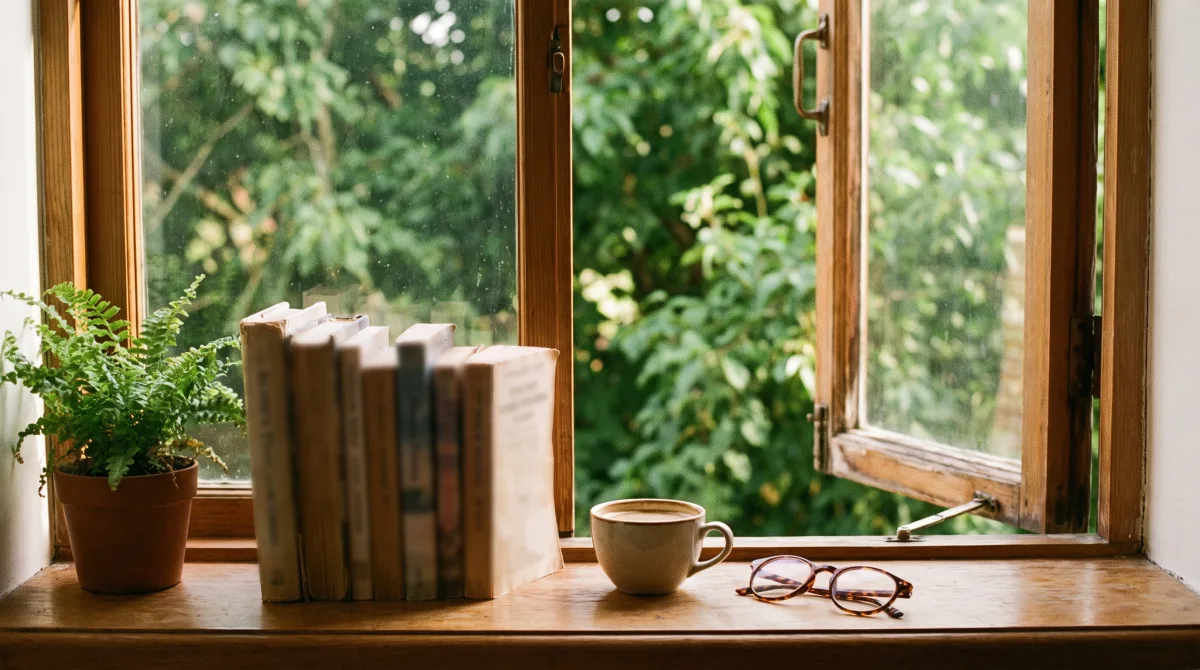
So the next time the instinct is to just write "I love reading," open a manuscript and describe the paragraph that argued with you instead.
Try describing the book that argued with you.Book lovers aren't a niche demographic hunting for a niche app — they're most of the dating pool. According to Pew Research Center (2021), roughly 77 percent of American adults read a book in some format in the past year, which means the person scrolling past your profile on a photo app is statistically a reader too. That app just gives them nowhere to say so.
Here's how the reading signal actually surfaces across formats:
| Where reading taste shows up | Photo-grid bio line | Reading-app title sync | Anketta manuscript |
|---|---|---|---|
| Specificity | A "bookworm" tag or a shelfie | A synced list of titles, no context | The passage someone wrote about and the line a match actually highlighted in it |
| Effort to fake | Low — stage a bookshelf photo | Low — a five-star rating costs nothing | High — faking a specific reaction to a specific book is hard to sustain |
| What a match can act on | Little beyond "we both read" | A shared title, maybe | The exact sentence that mattered, already highlighted |
There's no photo and no swipe — you write a free-form manuscript, and matching starts when someone highlights an actual line in it as something they respond to. If that line is about the book you reread every winter, the system registers that specific phrase, not a generic "loves reading" tag, and starts surfacing more manuscripts that share it.
That's the mechanic behind Anketta's whole approach to text-based dating: the more specifically you write about how you read, the more precisely the recommendation model can find someone whose reading life actually rhymes with yours, not just someone who checked the same "interests" box.
Not replace — reorder. Nobody's claiming a shared love of Tolstoy substitutes for physical chemistry forever. The claim is narrower: when the first thing you know about someone is the specific paragraph that moved them, attraction has something real to build on before either of you has seen a face.
Dating for writers is the flip side of this same shift — that piece is about people who define themselves through how they put words together; this one is about what happens when the thing someone reads becomes the compatibility signal, not the thing they write. If you'd rather ease in with someone else's manuscript before writing your own, dating for introverts covers exactly that on-ramp — and if books aren't your specific taste but genre and practice rhythm are, dating for musicians makes the same specificity argument one craft over, the same way a gallery habit does for people who read paintings instead of pages.
A shelf of books someone actually finished is a longer, harder-to-fake autobiography than any six photos could be. The question was never whether reading revealed character. It was whether a dating app would ever bother to ask.
Unsure about writing? Try reading first.What does "dating for book lovers" mean on Anketta?
It means your reading life becomes part of your actual manuscript instead of a one-line bio tag — the specific books, passages, and reactions you write about are what a match highlights and responds to, not a generic "I love reading" checkbox.
Why does reading taste predict compatibility better than a photo?
A photo shows how someone looks in six chosen frames. What someone reads, argues with, and rereads reflects values, curiosity, and emotional range built up over years — signals a curated grid was never built to carry.
Is this only useful for people who read "literary" fiction?
No. The signal isn't genre snobbery, it's specificity. Someone who can describe exactly why a thriller's ending wrecked them is giving you more real information than someone who lists five prestige novels with no detail.
How does Anketta know what someone reads if there's no bio field for it?
There's no dedicated field because there doesn't need to be one — the manuscript is free-form, so reading comes up naturally in whatever section someone chooses to write it into, the same as any other part of their life.
What if my match hasn't read the same books I have?
That's fine — the signal isn't title-matching, it's reading behavior. Someone who rereads, underlines, and argues with books is showing you how they engage with a story, which matters more than whether you've both read the same title.
Does this replace physical attraction entirely?
No, it resequences it. You get real signal about how someone thinks and feels before either of you has seen a face, so attraction has more to build on by the time it does show up.