Meeting Your Partner's Friends: When to Do It and Why

Meet them once the two of you are clearly a couple, and let the invitation come at your partner's pace rather than turning it into an audition on the third date. It is worth a little care, because approval travels: in a two-year study of 101 dating couples, partners who felt their parents and friends backed the relationship reported better relationships, and the female partner's perceived support went with more stable ones (Sprecher & Felmlee, 1992).
No study fixes the date, and anyone who gives you an exact week is guessing. What you can use is a sequence: the two of you settle what you are, then the friends enter, then, later and separately, the family. If you are still working out whether you are a couple at all, when to meet in person and the talk about what you are come first.
Write the way you actually talk about your people, and see who answers in kind.It usually means they are starting to treat you as part of their life, not as a separate appointment. An invitation to a friend's birthday or a Saturday dinner is a small public statement, and the friends will read it as one before you have said a word.
It is not a proposal. Plenty of people introduce a new partner early because their friends are their whole social world, and plenty hold back for months out of habit or privacy, not doubt. Treat the invitation as information about where they place you, and treat a long delay as a reason to ask a plain question, not to draw a conclusion.
It predicts how committed you both feel, and through that, whether you stay together. In a seven-month study of 215 people in relationships, those who felt their social network disapproved at the start were more likely to have split by the end (Lehmiller & Agnew, 2007), and the link ran through lower commitment, not around it.
The mechanism is not that friends see the future. It is that approval or doubt changes how the couple feels, and a feeling that repeats at every dinner wears on commitment. The other half of the story runs the same direction: Sinclair, Felmlee, Sprecher & Wright (2015) ran a survey of 858 people and two experiments, and approval made people feel more love for a partner.
Read the arrow carefully. These studies measure what a person believes the network thinks, not the network's verdict, and a couple who is already struggling may perceive more doubt. Approval is a signal worth hearing, not a forecast you can bank.
Keep it short, arrive curious, and aim to be remembered as easy to be around, not as impressive. The friends are not running an interview. They are checking one thing: whether their friend is the same person when you are in the room.
- Learn three names before you walk in. Ask your partner who will be there and one fact about each, so the first minute is a conversation and not an introduction ritual.
- Ask the friends about themselves first. People who are asked a real question rarely remember what they asked back.
- Do not perform your partner's history. Skip the "so how did you two meet" retelling unless someone asks; let the stories come out sideways.
- Let your partner be the one who steers. If they drift to their friends for twenty minutes, that is normal, not a verdict.
- Leave while it is still going well. One good hour beats a long evening in which you run out of material.
A group is faster and lower-stakes for you; one friend at a time tells you more about how your partner is with the people closest to them. Most couples drift into the group first because it comes with an occasion, and that is fine as a start.
| Group night | One close friend | |
|---|---|---|
| Pressure on you | Spread across many people | Concentrated on one person |
| What you learn | How your partner is in their wider circle | How they talk with the person who knows them best |
| Risk | You blur into the crowd or get the loudest friend's impression | One strong opinion carries more weight than it should |
| Good for | First meeting, a birthday, a casual dinner | The second or third meeting, once you know who matters |
Start wide and narrow later. The friend your partner calls first after a bad day is the one whose opinion actually counts, and you will meet them in a smaller room.
Do not chase them, and do not turn your partner into a referee. Give it a few more meetings, because a first impression at a loud table is a thin sample, and watch how your partner behaves between the two sides. That behavior tells you more than anything the friends said.
One finding is worth keeping close. In the Sinclair et al. (2015) work, people with a strong wish to make their own decisions were buffered against disapproving networks. That is not an instruction to ignore your partner's friends. It means a friend's doubt is an input you can weigh, not a ruling.
Friends do try to steer couples: in a survey of university students about a relationship in their circle, Sprecher (2011) found that about two thirds of the respondents believed their behavior had influenced how it turned out. If someone is quietly working against you, you are probably not imagining the pressure.
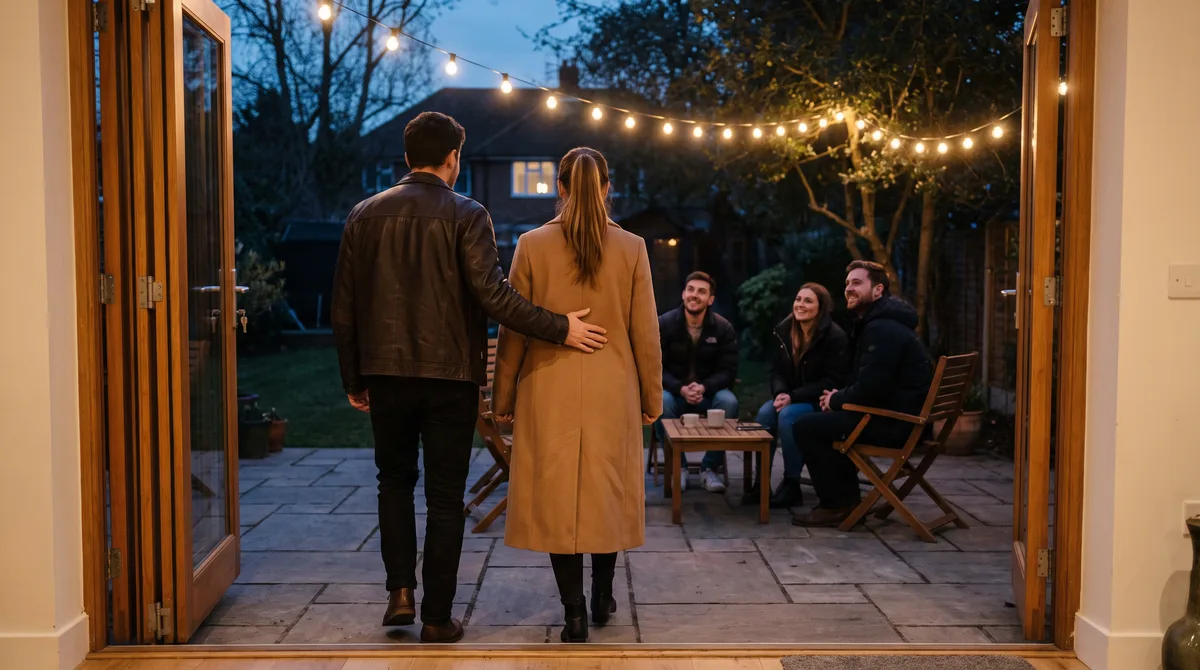
The same logic applies in reverse, and the same caution. Your friends' reaction is real information about how you look from outside, and it also comes with their loyalties, their history with you and their mood that night. Ask them what specifically bothered them before you decide it matters.
If the doubt is about how the person treats you, that deserves a careful look; the green flags and red flags are a better checklist than a group chat. If the doubt is about style or taste, it often fades. The friendfluence that lets a group chat decide who gets a second date is also how a good partner gets dropped for being a bad fit with the loudest voice.
If you would like to see how someone describes their own people before you meet any of them, read a few manuscripts and notice how they write about their friends.How soon is too soon to meet their friends?
Before the two of you have settled whether you are together. Friends treat an introduction as a statement about status, and an introduction that runs ahead of the relationship leaves both of you explaining something that has not been decided yet.
Should you meet their friends before their family?
Usually yes. Friends are a lower-stakes audience, and a good evening with them makes the later family meeting easier. Family, with its own history and expectations, is a separate piece and works best once friends have already seen you together.
What should you wear to meet your partner's friends?
What you would wear to the same evening without them: a dinner, a backyard, a bar. The goal is to look at ease in the setting, not dressed for an interview, and your partner can tell you the usual register in one line.
What if you are the only one who doesn't know anyone?
That is the normal case. Ask your partner for a quick map of who is who, find the one person who looks unsure too, and let your partner introduce you, not rescue you. Two people who are both new find each other by the end of the first hour.
Do your partner's friends decide whether the relationship works?
No. In the studies, perceived approval shifts how committed couples feel and, through that, whether they stay, but it is one input among satisfaction, alternatives and investment. The friends set the weather. The two of you decide whether to stay in it.
Is it a bad sign if they never introduce you to their friends?
It is a reason to ask, not a verdict. Some people keep their circles separate for months by habit. If the answer after a few months is a shrug and no plan, define the relationship out loud by asking what they see for the two of you, and listen to the reply, not the silence.
The friends will remember how you laughed at the end of the table, and the partner will remember who stayed near them when the room got loud.
Unsure about writing? Try reading first.