Voice Messages in Dating 2026: Do Voice Notes Beat Text?
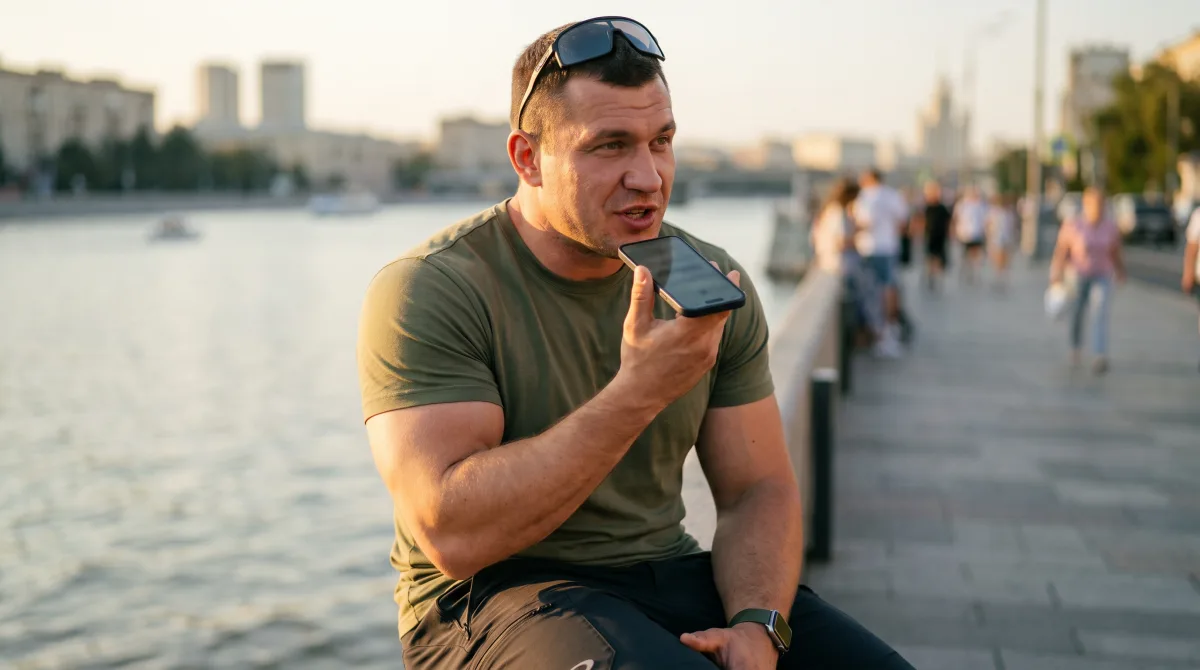
Voice notes stopped being a quirk and became a default. By 2026, the in-app voice message — a tap-and-talk clip you fire off instead of typing — is woven into Hinge, Bumble, Tinder, and every messenger daters spill into once a conversation moves off-platform. Hinge's own data shows the pull: profiles with Voice Prompts are 32% more likely to lead to a date Hinge (2026), and 35% of Gen Z daters say they want to receive more Voice Notes from the people they're talking to Hinge (2025).
But "more popular" is not "better for everyone." Voice is high-bandwidth for emotion and low-bandwidth for everything else — it can't be skimmed, can't be searched, can't be edited, and can't be heard in a quiet office. The question worth asking in 2026 isn't whether voice notes won. It's when they win, and for whom they quietly lose.
Write the version of you worth hearing — in your own words first.Voice transmits pace, confidence, warmth, hesitation, and accent — the whole emotional layer that text strips out. That's why hearing someone moves faster than reading them. Hinge found that 65% of its singles believe hearing someone's voice would help them gauge interest before meeting Hinge (2021).
The acoustics back the instinct. Pitch and tempo shape perception before a single word lands. As Psychology Today summarizes the research, "individuals with low-pitched voices are generally perceived as more confident, strong, and authoritative" Psychology Today (2019). Fast talkers read as charismatic. None of that survives a text bubble.
What voice does well:
- Emotional register. "I'm fine" is ambiguous in text. In voice it isn't — you hear whether it's actually fine.
- Pace and energy. Speed of speech tracks loosely with temperament, and many people "hear" compatibility in rhythm before they can name it.
- Accent and origin. Regional markers and idioms land instantly — a real advantage for diaspora dating and cross-cultural matches.
- Comfort signals. A voice note sounds relaxed or nervous. Text hides both.
- Hands-free intimacy. A clip is easy to record on a walk or commute when typing a paragraph isn't.
A voice note can compress into thirty seconds what fifty text messages circle around. That's its real edge — not novelty, but compression.
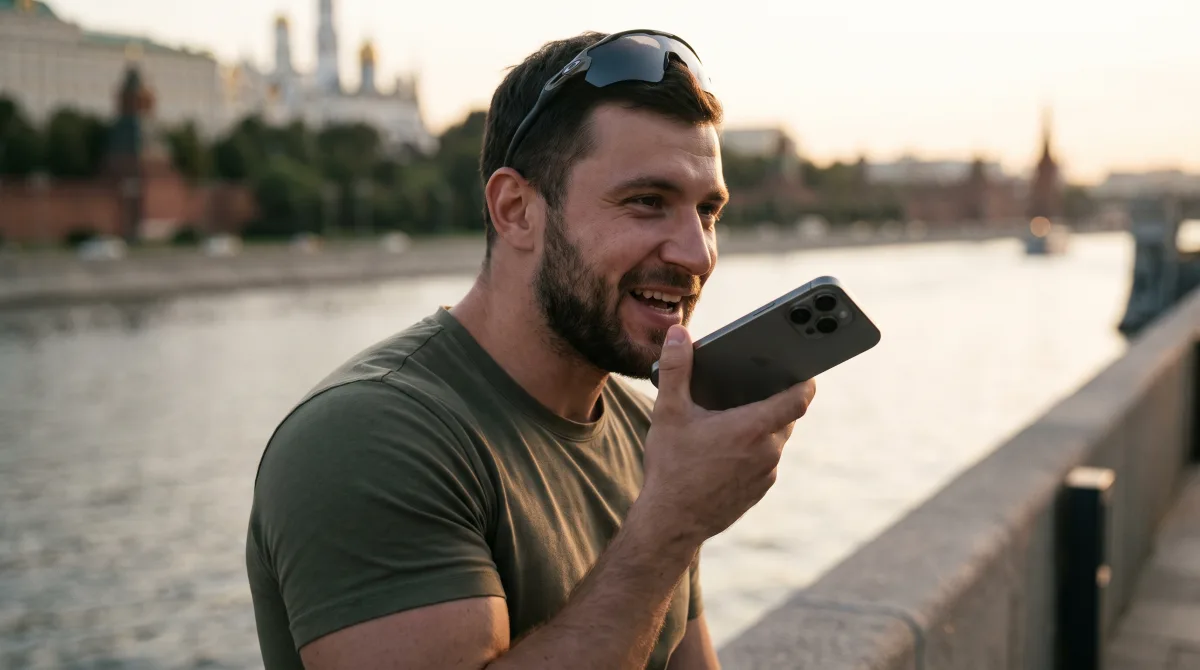
Voice fails introverts, dies in noisy rooms, demands privacy, can't be skimmed, and — crucially — can't be edited. For anyone who needs a beat to think before answering, that last one turns a "fun" feature into a low-grade anxiety machine.
The honest cost ledger:
| Strength of voice | The matching downside |
|---|---|
| Carries emotion instantly | No edit, no take-two — the first pass is the only pass |
| Feels personal and warm | Demands privacy to send and to receive |
| Fast to record one-handed | Slow to consume — 60 seconds of audio is 60 seconds of your life |
| Hard to fake on the spot | Impossible to skim, search, or quote back later |
| Great for extroverts | A wall for people who think by writing |
A 60-second voice note takes a full minute to hear. The same information in text takes ten seconds to read and stays searchable forever. "What did we say about Friday?" is a two-second scroll in a text thread and a re-listening chore in a voice thread. And in an open-plan office, on a packed train, or next to a sleeping partner, an unsolicited voice note is just a notification you can't open. Text is private by default. Voice never is.
There's also the people-shaped cost. Some daters think by writing — they need to draft, delete, and reread before they hit send. For them a voice note removes the one tool that lets them show up at their best. This is the same population that gravitates to text-based dating in the first place, and pushing them to "just send a voice note" asks them to perform on someone else's terms.
Voice works for extroverts, drivers and people whose hands are busy, and emotionally expressive communicators. It works against introverts, people on tight office schedules, reflective communicators who need time to compose a reply, and anyone in a privacy-sensitive setting.
| Voice notes work for | Voice notes work against |
|---|---|
| Extroverts who think out loud | People who think by writing |
| Drivers, cooks, parents — hands busy | Office workers with no privacy |
| Emotionally expressive communicators | Reflective, draft-first communicators |
| Bilingual / accent-curious daters | Privacy-sensitive professions |
| Younger cohorts comfortable on mic | Anyone in a noisy or shared space |
The split isn't about who's "better at dating." It's about which medium lets a person be themselves. Some people are most honest with a microphone in their hand. Others are most honest with a backspace key. A platform that forces everyone onto one channel quietly filters out the ones who don't perform well on it — which is exactly the failure mode text-vs-photo dating was built to fix on the photo side.
The big apps are pushing voice toward the front of the funnel; text-first platforms keep it at the back. That split is a small instance of the larger divergence mapped in the state of AI dating in 2026: platforms that use a new channel to keep you engaged versus ones that use it only after a real decision. Hinge built Voice Prompts — short recorded answers that live on your profile — and reports the 32% date-conversion lift above. Bumble and Tinder have both tested voice as an opening move: voice-first matching pilots and voice icebreakers that replace the first typed line. The bet is that hearing someone earlier filters faster.
Anketta takes the opposite stance, and it's deliberate. Anketta has no profile photo and no swipe gesture — you find people by reading their manuscript, highlighting a phrase that lands, and pressing the heart. The match is built entirely on what someone wrote, not on how they sound. Voice never enters the matching layer at all.
What that buys you: by the time a voice note is even possible on Anketta, two people have already chosen each other on the strength of their writing. There's a 48-hour window after a mutual match where either side can still walk away — and only after that do the voice-or-text questions in this article actually apply. Voice on Anketta is a deepening tool inside a connection, never a screening tool at the door. The screening already happened, in prose.
This is the cleaner version of the whole debate. You don't have to decide whether you're "a voice person" to get matched. You write your first message — or get one — and the medium question waits until there's actually someone on the other end worth recording for.
Match on what you wrote, not how you sound on a mic.Don't send a voice note in the first five to ten messages with a new match. Build comfort in text, then let voice arrive as a signal of deepening — not as a shortcut. Keep clips under 60 seconds. And always leave the other person an easy out.
A practical playbook:
Pacing.
- First 5–10 messages: text only. Let rapport form on the medium that lets both people edit.
- Introduce voice after mutual interest, as a step toward closeness — not before.
- Ask once whether voice is welcome before you make it your default.
Length.
- Under 60 seconds: fine, the normal range.
- 60–120 seconds: only for genuinely loaded moments — an apology, a real story, something that needs your actual voice.
- Over 120 seconds: almost always better as text, or as an actual call.
Context.
- Avoid early morning and late night, when the other person may have no privacy to listen.
- Don't lead with voice in the first five minutes of a brand-new chat — it's intimacy the connection hasn't earned yet.
- Never use a voice note as "more effort, less thought." People can hear the difference.
The out.
- If someone says "can we keep it to text?" — that's a format preference, not a rejection.
- Don't push. The person who needs text isn't less interested. They're just more themselves in writing.
If your dating chat keeps stalling regardless of medium, the fix is usually upstream — in what you open with. Sharper conversation starters carry a thread further than any voice note can rescue. And two trends worth watching as they mature alongside this one: the decline of the video date as a screening ritual, and the rise of a text-style dress code — how the way you write becomes its own first impression.
How many daters actually use voice notes?
There's no single global figure, but the demand is documented: 35% of Gen Z daters told Hinge they want to receive more voice notes, and 65% of Hinge singles believe hearing a voice would help them gauge interest. Adoption skews younger, and skews toward people comfortable speaking unscripted.
When is voice genuinely better than text?
In emotionally loaded moments, for bilingual or accent-curious daters, and for people whose hands are busy — drivers, cooks, parents. It also works as a signal of deepening once a comfortable text rapport already exists. Voice compresses emotion that text spreads across dozens of messages.
When is voice worse than text?
In the opening messages with a stranger, on a tight office schedule, for people who think by writing, in noisy or shared spaces, and in privacy-sensitive professions. Anyone who needs to draft and reread before answering loses their best tool the moment voice replaces text.
Why doesn't Anketta use voice for matching?
Anketta matches on writing alone — you highlight a phrase in someone's manuscript and press the heart. There's no photo before a match, and no swipe. Voice is supported inside a chat after a mutual match, but it never touches who gets surfaced to whom. The screening happens in prose, so you don't have to be "a voice person" to be seen.
Is sending a voice note too soon a red flag?
Not a red flag, but usually a misread. An unsolicited 90-second voice note in the first exchange asks for intimacy and privacy the connection hasn't earned. Build the thread in text first; let voice arrive when there's something worth hearing in it.
What's the ideal length for a dating voice note?
Under 60 seconds is the safe norm. Reserve 60–120 seconds for genuinely weighty moments. Past two minutes, split it into text or just call — a long monologue is harder to answer than a short one, and it tilts the conversation off balance.
The medium was never the point. The connection is. Voice is one more way to say something true to a person who already wanted to hear from you — and on Anketta, that order is the whole design.
Unsure about writing? Try reading first.