Soft Launch in 2026: Why Couples Are Hiding Each Other's Faces on Social Media
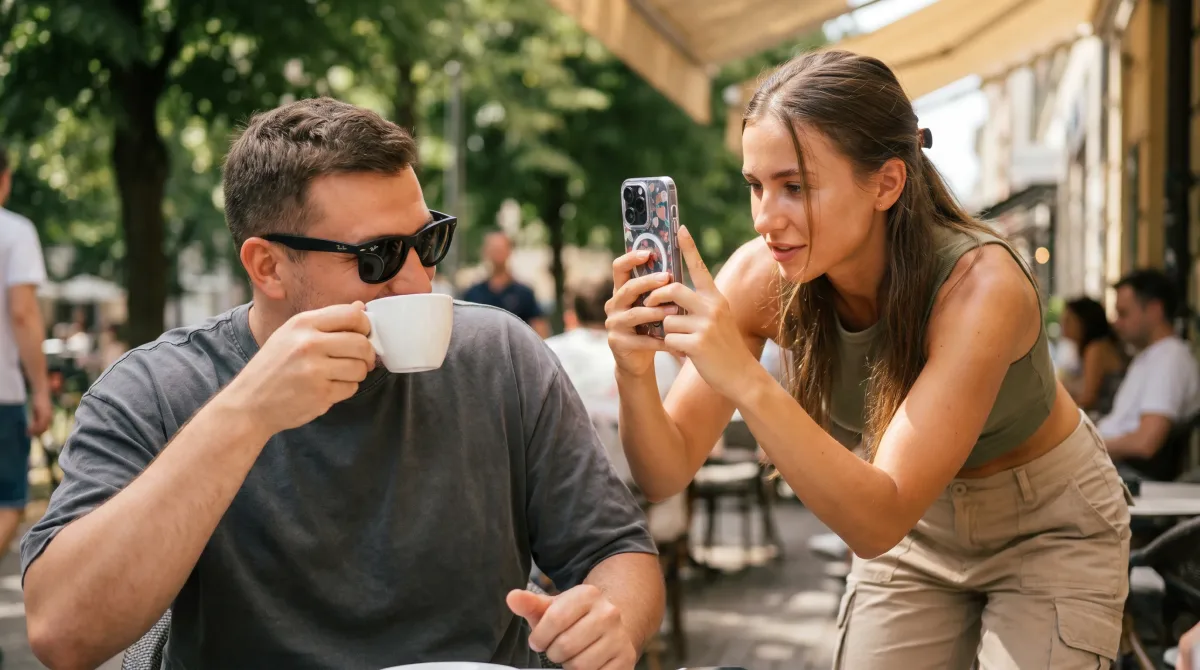
A "soft launch" is the deliberate introduction of a new relationship on social media in encoded form: a fragment of a hand at dinner, a silhouette in a frame, a shadow in a travel photo — without ever showing the partner's face or name openly. By 2026 this had become the dominant mode of relationship presentation for adults aged 25-40, displacing the open ("hard launch") introduction as the cultural default.
The trend formed during 2023-2024, and by 2026 the numbers were unambiguous:
- Sprout Social (January 2026) reported that 64% of Instagram posts about new relationships by users aged 25-40 used a soft-launch format — up from 27% in 2022.
- The TikTok hashtag #softlaunch had surpassed 2.1 billion views by 2025.
- A Pew Research (2025) survey found that 78% of respondents aged 25-40 felt that "openly introducing a partner in the first six months is too fast."
"The soft launch isn't about fear. It's about a new etiquette. The open introduction is becoming a marker of deep stability, not a marker of enthusiasm." — paraphrased from common framing across academic identity-research and trend-press coverage of the practice.
For broader context on the wave of authenticity-and-restraint norms shaping dating in 2026, see why text-based dating works.
A clear four-tier etiquette has emerged: invisibility (no presence in social media at all), soft launch (encoded hints), semi-official (face without name, or name without face), and hard launch (full introduction with name and face).
| Level | Description | When it's used |
|---|---|---|
| Invisibility | No relationship presence in any social media | First 1-3 months |
| Soft launch | Fragment of a hand, silhouette, joint photo without faces | 3-12 months |
| Semi-official | Photo together but no tag and no name; OR tag without a photo | 12-24 months |
| Hard launch | Full introduction: name, face, story | After 24 months or engagement |
This etiquette is especially strict for public figures and privacy-sensitive professions. A founder, a journalist, a doctor whose face is searchable — all have professional reasons to keep early-stage relationships off the public internet.
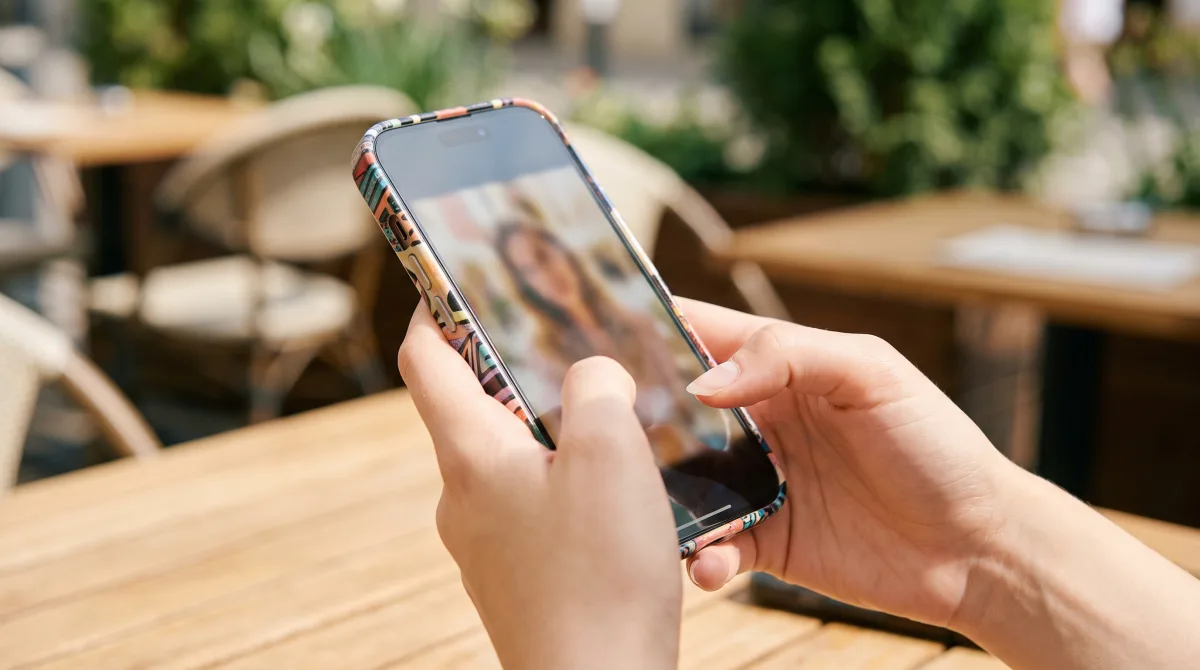
Three factors converged: fatigue with digital visibility (you've already given platforms too much), fear of social pressure (a premature introduction creates expectations), and the lived experience of public breakups (after which you have to delete every photo and explain it to everyone).
1. Digital-visibility fatigue. The cohort that grew up with Instagram is, in 2025-2026, actively reassessing how much it wants to share. Multiple surveys across the US and EU have flagged a steady decline in personal post frequency among adults aged 25-35 since 2024.
2. Social pressure. Publicly introducing a partner creates expectations: questions from parents, comments from friends, reactions from exes. Pew Research (2025) found that 62% of adults aged 25-40 felt that "openly introducing a partner in the first months puts unnecessary pressure on the relationship itself."
3. The cost of public breakups. After a hard launch, a breakup requires public cleanup: deleting photos, explaining to mutual followers, processing the public dimension of the loss on top of the private one. A soft launch keeps that cost low.
"I did a hard launch twice, and twice I had to delete everything six months later. The soft launch isn't a fear of commitment — it's just sense." — paraphrased from an Anketta user interview (2025).
The soft-launch norm is changing user expectations of dating platforms: more privacy, fewer public metrics, more user control over when and how their profile and partner become visible to others.
Concretely:
- Privacy as a primary feature. Platforms with end-to-end encrypted messaging (Hily, Pure) are growing faster than platforms where conversations are stored in plaintext on the server.
- No more open MAU/DAU bragging. Users are increasingly reluctant to publicly identify which dating app they're on — the app is no longer part of identity in the way a TikTok or Instagram presence is.
- Optional photos or text-only. Anketta (no photo before you match), Boo, and similar platforms naturally fit the soft-launch ethos because they keep early-stage profile visibility low by default.
- Verification without exposure. AI-driven photo verification can run on the back-end without ever publishing the photo publicly. The soft-launch generation expects this.
For a deeper look at how the privacy expectations have shifted across the industry, see data privacy in dating apps in 2026.
The main risks: communicative ambiguity ("are we together or not?"), absence of social validation that some attachment styles genuinely need, and cross-cultural / cross-class misunderstandings — soft launch is mainstream in major metros but reads as "they're hiding me" to parents and to older relatives.
Ambiguity. A soft launch without an explicit conversation often leaves one partner uncertain about where things stand. Pew Research (2025) found that 34% of couples in a soft-launch phase reported a mismatch in what they considered "our relationship" to be at any given moment.
Validation deficit. For people with anxious attachment, social validation is an important stability signal. A soft launch removes that signal. In those cases, an explicit conversation about the choice tends to work better than defaulting silently into the soft-launch posture.
Cultural and generational gaps. In major metros (NYC, London, Berlin) soft launch is the default and reads as normal. Among older generations and in less-online cultural contexts, it reads as "they're hiding you" or "they're embarrassed." This gap is especially hard in inter-generational family relationships, where the parents see the public absence as a signal about the relationship's status when it isn't one.
"A soft launch needs a conversation in advance. If both of you haven't agreed that this is what you're doing, one of you will read it as not wanting to be seen." — paraphrased from common framing in attachment-focused couples therapy (Sue Johnson and the Emotionally Focused Therapy tradition).
The best fits are text-first platforms without mandatory public presentation: Anketta (no photo before you match), Boo.world (personality-based), Pure (24-hour auto-deletion of messages and profiles). These platforms are architecturally built around privacy, which naturally aligns with the soft-launch norm.
Anketta: no photo before you match — optional, and revealed only inside an active match. The manuscript is a personal essay, visible only to confirmed matches. Nothing public. Full alignment with the soft-launch ethos.
Boo.world: personality-based matching (MBTI + Big-5), photos optional and surfaced only after several messages.
Pure: 24-hour auto-deletion of messages and profiles. Privacy-first by design.
Hily: end-to-end message encryption available as an option.
For the broader pattern of photo-optional dating going mainstream, see our guide to dating without photos.
What is a soft launch? The deliberate introduction of a new relationship on social media in encoded form: a fragment of a hand, a silhouette, a joint photo without faces. By 2026, 64% of Instagram posts about new relationships among adults 25-40 used this format (Sprout Social).
Why has it become the norm? Digital-visibility fatigue, fear of social pressure, the lived experience of public breakups, and a broader reassessment of how much relational signal belongs to the public internet. The hard launch has become a marker of deep stability rather than enthusiasm.
What are the risks? Communicative ambiguity (you need an explicit conversation), validation deficit for anxious-attachment styles, and cross-generational misunderstandings — soft launch reads as "they're hiding me" to anyone outside the metro-millennial-and-younger frame.
Which dating apps fit the soft-launch ethos? Text-first platforms without mandatory photo upload (Anketta, Boo), platforms with auto-deletion (Pure), and platforms with end-to-end encryption (Hily). Architecturally, these products are built around privacy in a way the major swipe apps are not.