Dating After 50: How to Date With Clarity, Not Caution
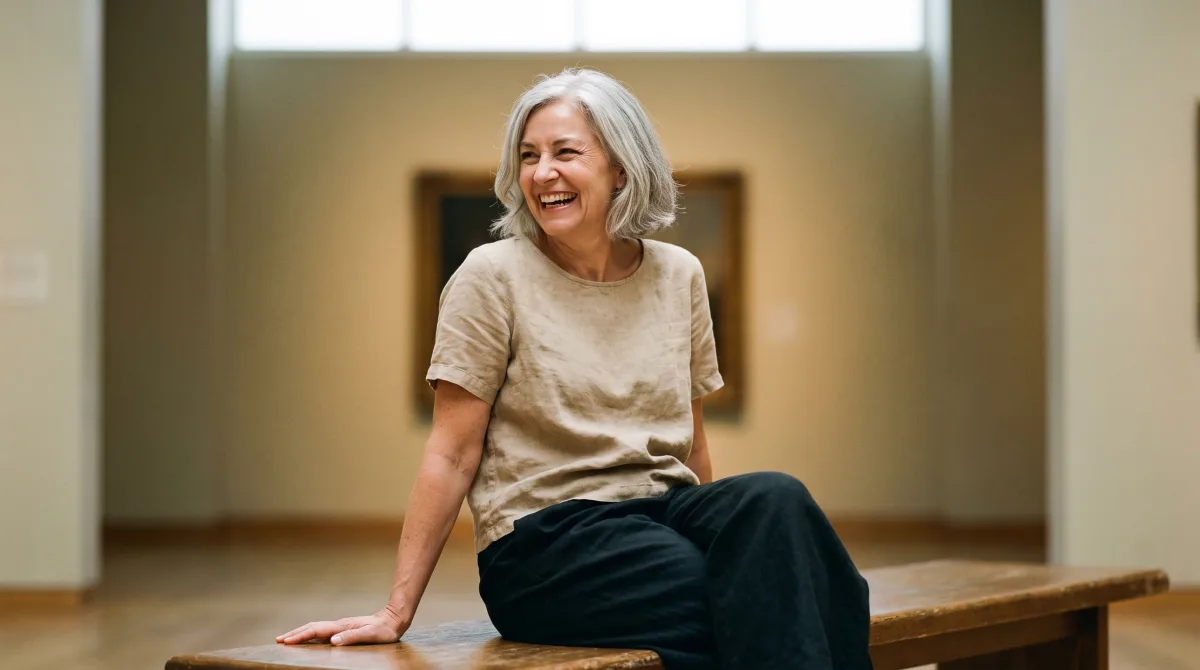
Dating after 50 is not dating after 40 with more candles on the cake. By this point most people are widowed or long divorced rather than freshly separated, often with grown children and a life they built on purpose — one they're not looking to dismantle, only to share. One-in-six Americans ages 50 and older (17%) say they have ever used a dating site or app, according to the Pew Research Center, and that smaller pool changes the math of who you'll actually meet (Pew Research Center, 2023).
The angle most advice at this age misses: it either apologizes for the topic or avoids it, when the real shift is structural. Photo-first ranking is at its most punishing exactly where you're most experienced and least interested in being scored on a face — and least willing to compete with a 27-year-old's skin under the same rules. A format that reads you before it ranks you inverts that math instead of asking you to win it. That's the case this piece makes, not a pep talk about how 50 is secretly 30. If you're a decade earlier in this shift, dating after 40 covers different terrain — this one is about what changes once the kids are grown and any divorce is long settled.
Write the manuscript a sharp, unhurried reader would actually finish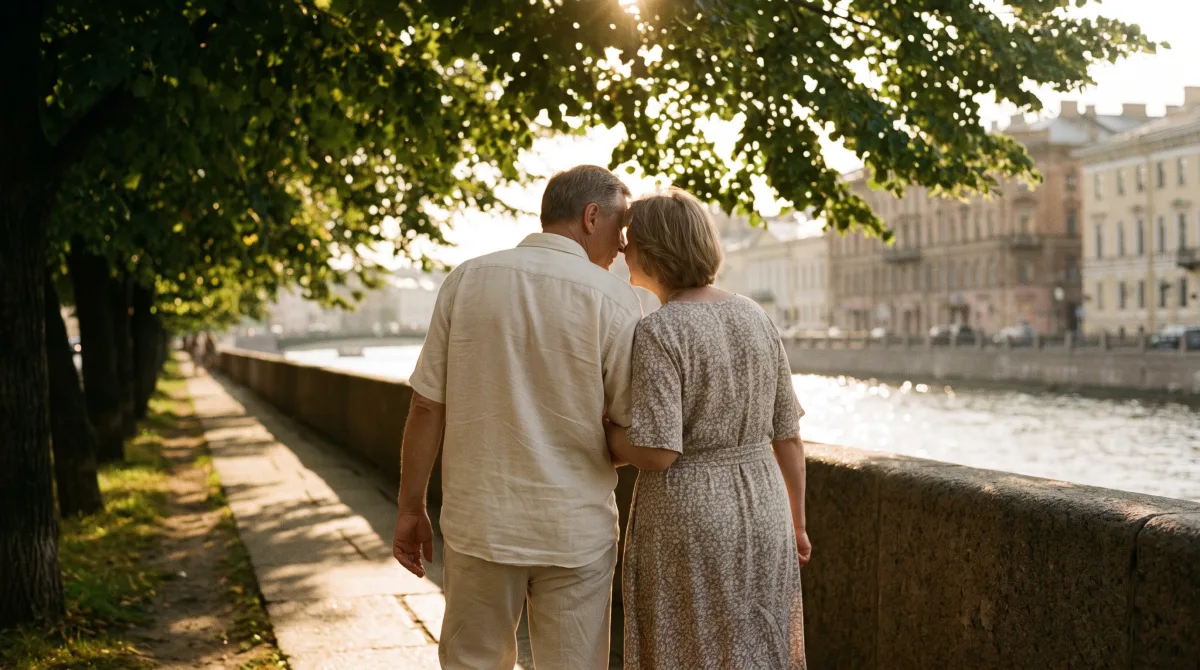
The pool gets smaller and more self-selected the older it gets. Pew found about a quarter of people in their 50s (23%) have used a dating platform, compared with 14% in their 60s and 12% at 70 and older — usage drops with age, so almost everyone still in it chose to be there rather than drifted in out of habit (Pew Research Center, 2023).
Most of the people you'll meet are divorced or widowed rather than never-married — a genuinely different starting point than dating after a divorce in your 40s, where a first marriage ending is often still the live wound. The pool also skews female, for a plain demographic reason: women live several years longer than men on average, so more women than men eventually find themselves back in this pool later in life, often after decades of marriage rather than after a breakup. Neither fact is a downside. It means the average conversation starts from more shared context — a career finished or finishing, kids who've moved out, a clear sense of what a second chapter should and shouldn't include — than it ever did at 25.
None of that explains why the apps themselves feel worse at this age than they did at 30. That's a design problem, not a demographics problem.
Because photo-grid ranking punishes exactly the trait that improves with age. Swipe apps run on a split-second visual judgment that skews younger by design — it rewards a recent, flattering photo, not the decades of judgment you've actually built. Someone in her late 50s competing on a 25-year-old's metric is playing a game engineered to be lost, regardless of how sharp, funny, or emotionally available she actually is.
| What a photo-grid app rewards at 50 | What a text-first read rewards |
|---|---|
| A recent, flattering photo | A paragraph that sounds like you |
| Winning a 1.5-second glance | Being read past the first sentence |
| Competing against every age on one visual scale | Being matched to people who highlight what you actually wrote |
| Starting the count over at zero | Fifty-plus years of judgment counted as the asset |
| An infinite deck to keep swiping | A queue that narrows toward fit |
So what do you actually put in a manuscript instead of a flattering photo? Start with what you're no longer willing to pretend.
Say it early and plainly — the same way you'd mention it to a friend setting you up. Grown children, a paid-off house, a Sunday routine you like, a marriage that ended in a hospital room rather than a courtroom: these are facts about your life, not liabilities to soften. Naming them upfront filters out mismatches before either of you spends a month finding out the hard way.
- Name your non-negotiables in the first paragraph, not the fifth message. Whether you'd combine households, how involved your kids will be, whether you'd relocate — say it before someone gets attached to an answer you never gave.
- Write about the life you have, not the one you're auditioning to escape. "I coach my grandson's Saturday league and I'm rebuilding a 1962 workbench" tells a stranger more than five adjectives ever will.
- Distinguish grief from readiness. If you're widowed, it's fine to say so — readers respond to honesty, not to a performance of being fully healed. What matters is that you're writing toward someone, not away from an empty house.
- Don't shrink your life to look available. A full calendar, close friends, a standing Thursday dinner read as stability, not as no room for someone new.
- Let the format do the vetting your patience shouldn't have to. You've already spent one lifetime finding out who someone really was after the fact. A format that reads before it ranks does some of that work before you invest an evening.
Writing that down is one thing; getting it in front of the right kind of reader is another. That's where the mechanism actually changes.
Yes, for the same reason it flatters good judgment at any age: nothing about your appearance appears anywhere before a match, so you're matched on a free-form written manuscript instead of a face — a face only arrives once someone has already responded to how you think. As you read other people's manuscripts and highlight the phrases that resonate — "raised three kids alone," "lost my husband in 2019," "not interested in starting over from scratch" — the algorithm learns what you actually want from what you mark, and narrows the next batch of manuscripts toward it.
To signal interest, you highlight a phrase in someone's manuscript as a like, then press the heart; when two people have both done that, a match forms automatically. There's no swipe, no split-second face-off, no visual scale to lose points on. It's personality-first matching in the plainest sense — judgment and character lead, and a face never gets a vote.
You can even hand someone your manuscript's public link the way you'd hand over a card at a museum opening: a share URL with a QR code that works before either of you has downloaded anything, with your contact details blurred until you actually match (more on that safety mechanism below).
Let fifty years of judgment do the filtering — write it downBecause the setup is unusually favorable for a scammer: a stranger with real savings, real loneliness after a loss, and genuine trust in the format. About half of online daters ages 50 and older (47%) say they've encountered someone they believed was trying to scam them (Pew Research Center, 2023) — nearly one in two, not a fringe risk.
Older daters often lean on the very thing that fails them here. A 2024 study of adults 65 and older found that "most of our participants relied heavily on profile or picture exploration as their primary verification strategy" (Fatima, Noah & Das, 2024) — checking a photo to decide whether someone's real.
"Most of our participants relied heavily on profile or picture exploration as their primary verification strategy." — Fatima, Noah & Das (2024), IEEE BuildSEC'24, on how daters 65 and older try to spot fake profiles
That instinct is understandable and exactly backwards — a photo is the easiest thing on a profile to steal. The full breakdown of what a stolen or AI-generated photo looks like up close lives in how to spot a fake dating profile, and the broader playbook for the emotional-manipulation side of these scams is in how to avoid dating scams — worth reading before your first message, not after a bad one.
One structural protection helps regardless of how careful you are. On Anketta, phone number, email, and home address are blurred for anyone you haven't matched with — the server never sends the raw text to an unmatched viewer, so there's no screenshot or inspector trick that reveals it early. After a mutual match, it unblurs for both of you automatically. You can write candidly about your life without handing a stranger the one thing a scam actually needs first: a way to reach you.
Yes — more deliberately than at any earlier age, because you have less patience for six parallel dead-end chats and more respect for your own evening. Anketta's matching adds a built-in pause: when two people both signal interest, a 48-hour window opens before anything becomes permanent, and either side can still walk away inside it.
If neither of you does, the match becomes permanent, the browsing surface locks, and the app collapses to just that one conversation — no infinite deck sitting behind it, tempting you to keep shopping mid-conversation. For someone who has already learned what a real partnership costs, that single-focus design isn't a limitation. It's the first mainstream dating mechanic built around slow, intentional matching instead of maximum volume — one real conversation instead of ten polite ones.
Is it harder to find love after 50?
It's smaller, not harder. Pew found 17% of adults 50+ have used a dating app, dropping from 23% in the 50s to 12% at 70+, so the pool narrows with age. The people still in it are there on purpose, which makes the average match more intentional, not less likely.
What's the best dating app for someone over 50?
The best format is one that leads with who you are rather than how recently your photo was taken. Text-first platforms like Anketta match on a written manuscript and learn preferences from what you highlight while reading, so decades of judgment become the filter instead of a liability.
Is online dating safe for people over 50?
It's as safe as the format's structural protections. Pew found 47% of daters 50+ have encountered a suspected scammer, which is why identity signals matter more than a flattering photo. Choosing a format that blurs contact details until you match removes the easiest opening a scammer has.
How do I write about my divorce or being widowed without it dominating my manuscript?
Mention it once, plainly, in a sentence or two — then move on to your actual life. "Widowed in 2021, still love to travel" tells a reader everything they need without turning the whole page into an obituary. Readers over 50 respond to honesty stated once, not repeated.
Do I need photos to date after 50?
Not before you match. Anketta's photo step is optional, and nothing you upload appears anywhere before someone has already read and responded to your manuscript — matching itself runs entirely on what you write. That removes the one axis age complicates while a stranger is still deciding, and centers the one it improves: your judgment.
Should I mention my grandchildren or grown kids?
Yes, briefly and warmly, the same way you'd mention any other part of a full life. It signals you have real relationships and a settled routine — read as stability, not as a closed door to someone new.
A face can be scored in a glance; fifty-some years of judgment can't — write it down, and let someone actually read the whole thing.
Unsure about writing? Try reading first.