Dating for Pet Owners: The Schedule You Didn't Choose
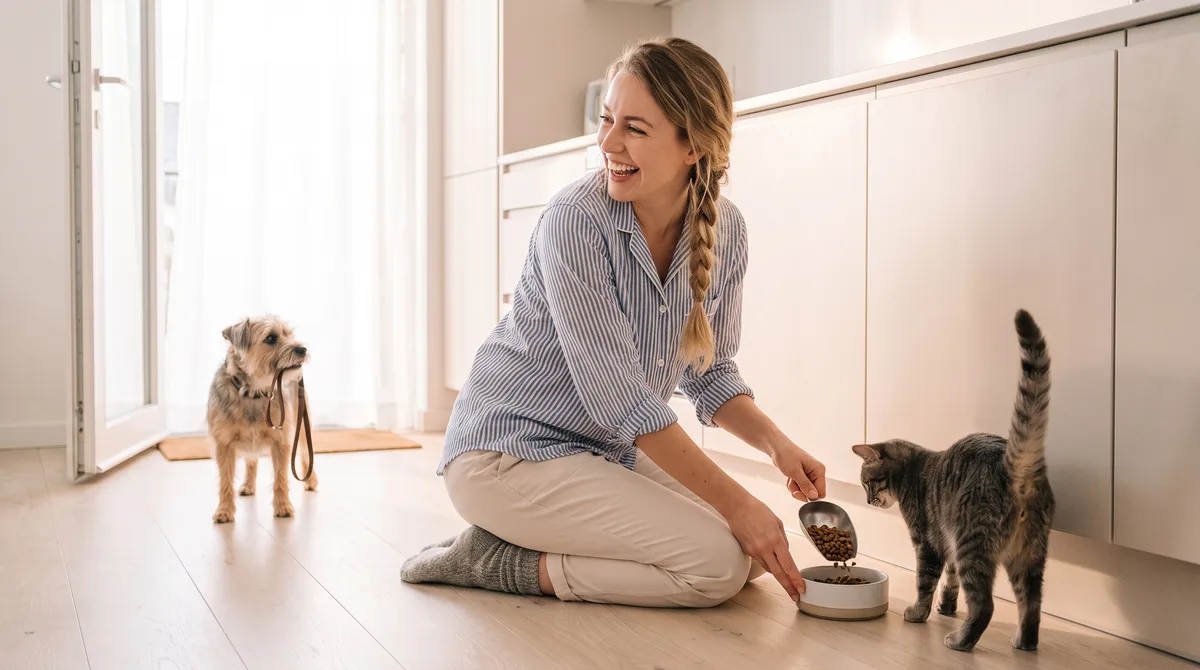
Nearly 75% of women in a 2014 survey of Match.com users who listed pet information on their dating accounts said they would not date someone who didn't like pets, against a far more even split among men asked the same question (Gray et al., 2015). A dog or a cat isn't a line item you can skip over. For a lot of the people you'll match with, it's a filter applied before the first message goes out.
Say you've matched with someone at nine on a Thursday, already picturing dinner on Friday. Then you remember the walk that happens at six the next morning regardless of how the night went — and six a.m. after a late dinner is a different kind of tired than six a.m. after nothing at all. Nobody explains that trade at nine p.m. It shows up three weeks in, the first time a weekend trip gets planned around a boarding reservation instead of around each other.
Write down what the pet actually costs youA dog doesn't negotiate its schedule. The walk happens twice a day whether last night's date ran long or not, and a weekend away means a boarding reservation, a sitter, or a partner who already knows the dog well enough to be trusted with it. Writing that routine down before the first message turns "I have a dog" from a one-line disclaimer into an actual account of the week — which is closer to what a new partner needs to know anyway.
A few places a dog's clock quietly overrides a date's clock:
- The walk that happens at the same two times every day, whether the night before ran late or not.
- The boarding reservation booked weeks ahead of any trip, before a weekend plan with someone new even exists.
- The vet visit that turns "who's free Tuesday?" into a question with exactly one right answer.
A cat asks less of a calendar than a dog does. Food and a clean litter box survive a full workday, and a neighbor with a spare key covers most weekends away — no boarding reservation, no fixed walk twice a day. What a cat doesn't soften is the deeper question a pet always raises about a partner: whether they show up for something that depends on them.
| What needs solving | With a dog | With a cat |
|---|---|---|
| The daily routine | Two fixed walks, rain or a hangover | A full bowl and a clean box, on a schedule that bends a little |
| A weekend away | A sitter or boarding, booked in advance | A neighbor with a key, most of the time |
| The overnight test | Whether a new person can handle 6 a.m. before coffee | Whether a new person can handle being ignored on arrival |
The same Match.com data found dogs were seen as a "better measure of a potential mate's caregiving capacity" (Gray et al., 2015) — proof of a routine someone actually keeps, not a story someone tells on a first date. A cat owner isn't excused from that same test. It just arrives later, usually the first time a new partner offers to feed the cat and gets ignored for an hour, or learns the hard way which chair is already spoken for.
Compatibility around a pet is rarely about liking the same animal. It's about tolerance — for shedding, for forty pounds on the bed at 3 a.m., for a routine that was already set long before this relationship started. A marriage and family therapist put the negotiation plainly:
"If it's your pet, and you say, 'I see that shedding bothers you, so I'm going to do the cleaning,' that's respecting the other." — Catherine Hastings, PhD, marriage and family therapist, WebMD (2010)
That's a small negotiation next to the bigger one most couples skip entirely: whether someone would end things over a dog or cat they never wanted in the first place, rather than adjust around one they did.
Say what the routine actually asks of a partnerYes, and the effect is large enough to measure. In a French street experiment, a man asking women for their phone numbers succeeded with a dog beside him far more often than alone — 28.3% of the time with the dog, against 9.2% without one (Guéguen & Ciccotti, 2008). It's a head start at the first hello, and nothing more: a relationship still has to be built by the person holding the leash.
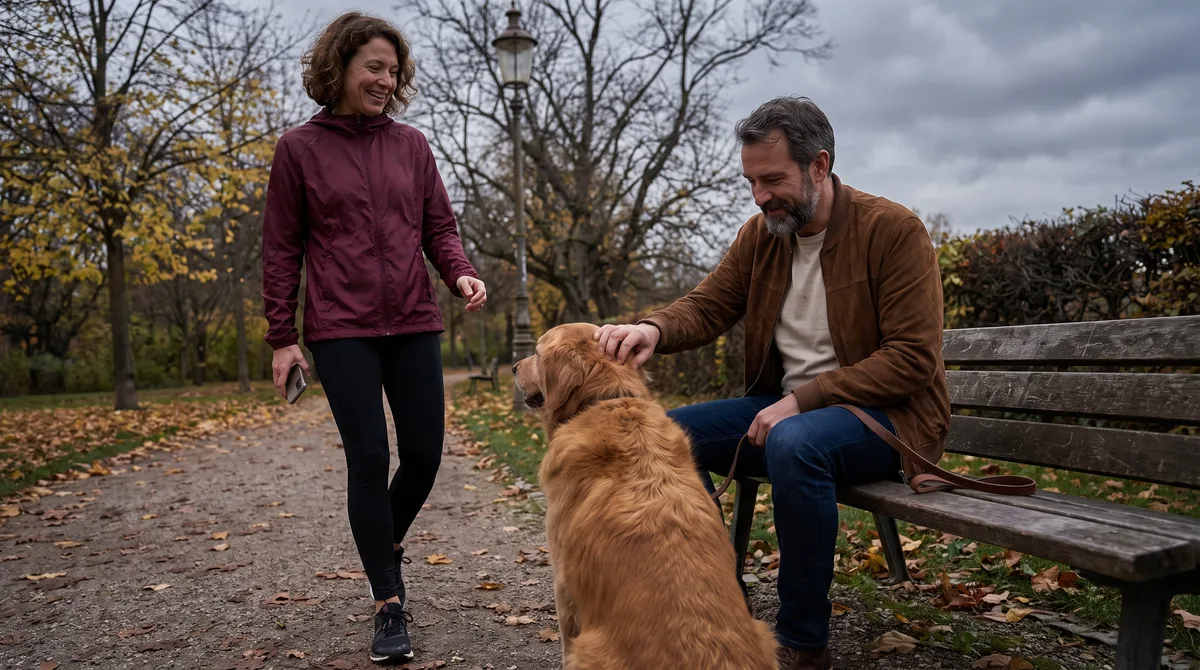
Dating apps built around a photo already do half of this work — a picture proves the dog exists, and readers respond to it the way that street experiment predicts. What a photo can't prove is what six a.m. actually looks like most mornings, or whether the relationship survives the vet bill that arrives the same week as rent.
Common enough that skipping the subject reads as an omission rather than an oversight. 53% of U.S. households owned a dog in 2025 (APPA, 2025). Whoever reads an account that never mentions a pet fills in the blank themselves. Renters run into the subject earliest: a pet deposit or a flat breed restriction on a lease can force the moving-in-together conversation before either person planned for it, the same way a partner's allergy forces it a year later.
Write it in full sentences, the way you'd explain it to a friend who's never owned a pet. Anketta's manuscript has no field for "pet person" to check and move past — nowhere to tick a box that stands in for the six a.m. walk, the vet bill that arrived the same week as rent, or a cat that has already outlasted two previous relationships.
Someone whose week is actually built around a dog or a cat has to write what that costs and what it gives back, and a reader can underline the exact sentence about the vet bill instead of a tag that just says "dog lover." That's closer to reading for the real shape of someone's daily life than any filter gets, and it's also just being honest, early, about what a shared home would need to absorb — before a lease, a lease renewal, or a second pet enters the conversation. Writing the routine down is the part that has to happen before anyone reads it.
Is this really different from dating someone who just says they like animals?
Yes. Liking animals costs nothing and asks for nothing. A dog's twice-daily walk, a cat's litter box, and either one's vet bills are recurring obligations that don't move for a good date. The difference isn't affection — it's whether the schedule and the expense are already built into someone's week.
Does owning a pet actually predict anything about how someone treats a partner?
Research suggests it correlates with a caregiving signal rather than proving one directly: dogs in particular were seen as a better measure of a potential mate's caregiving capacity, the same Match.com survey found. That's a signal worth noticing, not proof on its own — plenty of reliable people have never owned an animal.
What's harder to date around, a dog or a cat?
A dog, on the calendar — the fixed walks and boarding logistics are less forgiving of a spontaneous trip. A cat asks less of a schedule but raises the same underlying question about whether a partner shows up for something that depends on them, just with more warning before it's tested.
Does renting change any of this?
Often first. A pet deposit, a weight limit, or a flat breed restriction on a lease can force the moving-in-together conversation years before either person expected it — a landlord's rule doesn't care how compatible two people actually are, and ignoring it doesn't make the restriction go away.
Should you mention a pet early, or wait until it comes up naturally?
Naming it early saves both people time. Writing that paragraph down tells a reader exactly what they'd be signing up for — the actual morning, not a vague "animal lover" line — and lets them decide before eight months in, not after.
Does the phone-number effect mean owning a dog is basically a dating hack?
Not on its own. A dog gets someone noticed faster in a first encounter; it says nothing about whether that same person keeps the walk schedule, covers the vet bill, or handles a partner's allergy with any grace at all. The attention and the compatibility are two separate questions.
What's the one thing pet owners forget to mention until it's already a problem?
The actual cost — money, time, and the trips that now need a sitter. A relationship rarely ends over the animal itself. It ends over a routine that was never named out loud until a shared apartment made it impossible to ignore.
Unsure about writing? Try reading first.