Dating for Travelers: When Loving Travel Isn't Enough
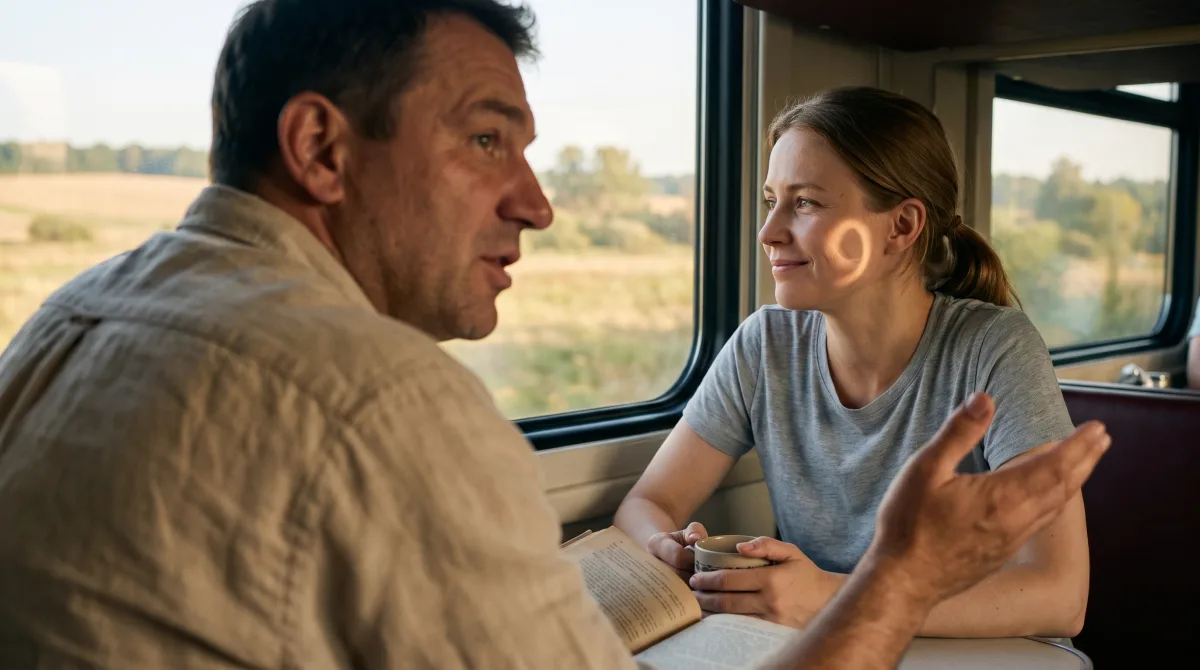
Two people can each write "I love to travel" on a dating profile and still be a poor match for each other. One books a return flight before the outbound one has cleared security; the other has never once known the exact day they're coming home. One measures a good week abroad in museums visited; the other wants three unplanned days and a beach with no plan past finding it. Loving travel isn't a compatibility signal by itself — the real question is which version of travel a person actually means.
That distinction matters more than it should be allowed to. A 2025 study in Leisure Sciences followed romantic couples for a year and found that how often they took a trip together barely predicted their later relationship satisfaction — what predicted it was the quality of what happened on those trips: whether the two of them actually engaged with each other, tried something new, talked, paid attention. Shahvali, Kerstetter, Tews, Mitas & Behrad Far (2025) put it plainly: the number of vacations was not a significant predictor of relationship satisfaction — frequency barely mattered. Travel itself was never the variable. How two people travel together is.
Write the manuscript that says how you actually travelBecause "I love to travel" collapses at least four separate questions into one phrase. Does this person plan every day in advance, or refuse to plan past the flight itself? Do they want a city with four museums a day, or a mountain with no phone signal? Do they sleep in hotels or split a hostel bunk room with strangers? Is two weeks a normal trip for them, or is two days already a lot to ask for? Two travelers can answer all four questions differently and both still be telling the truth about loving travel.
None of these are dealbreakers on their own — plenty of couples split the difference happily, one planning the mornings and the other refusing to plan the evenings. What actually causes friction is finding it out on day three of a trip you already paid for, instead of in a conversation you had months earlier.
- Itinerary versus no plan. One person's relaxation is knowing exactly what happens next; the other's relaxation is not knowing.
- Cities versus mountains. A love of travel doesn't specify a love of the same landscape — some people travel toward crowds and culture, others away from both.
- Hotels versus hostels. This is partly budget and partly personality — how much unpredictability, noise, and stranger contact a person actually wants on a trip.
- Two weeks versus two days. How much travel someone wants in a year varies more than whether they want it at all.
None of that shows up in a bio that says "wanderlust" next to three photos from three different countries. It shows up in how someone actually describes a trip that went sideways — a detail a photo can't carry, and a tag can't either.
This is a different question from dating someone who travels by choice — and a different one again from dating a digital nomad, whose entire address moves rather than just the person in it — here the absence is scheduled, not chosen trip by trip, and it repeats. The clearest research on this comes from an unlikely place: a 2025 study tracked 19 couples where one partner worked fly-in-fly-out (FIFO) rotations — weeks on a remote job site, then weeks fully at home — and found the workers' own relationship satisfaction dropped on the days they were away and recovered on the days they were home.
Forshaw, Alfrey, Vandelanotte, Gardner & Rebar (2025) traced the effect to something specific, not distance itself: it disappeared once the researchers accounted for how much time the couple actually spent talking during the away stretch. So the schedule isn't what wears a relationship down. What happens — or doesn't happen — during the gap is.

Some people are genuinely built for this rhythm — a stretch of full independence, then a concentrated, undistracted reunion, on repeat. Others find the unpredictability corrosive no matter how good the reunions are. Neither reaction says anything about how much someone loves their partner; it says something about what kind of daily texture they need a relationship to have. Worth finding out early — you can put your own version of that rhythm into words before it ever comes up on a first date, rather than three months in.
It gets tested by exactly the thing travel is good at hiding: ordinary life. A few days of shared novelty compress a normal dating timeline into something that can feel, in the moment, like months of getting to know someone — new places, no routines, nothing to be tired of yet. Then one of you flies home, or both of you do, in different directions, and the actual test starts: whether the version of each other you liked survives grocery runs, time zones, and a Tuesday that doesn't have a single new thing in it.
That isn't a reason to distrust it. It's a reason to notice which parts of the connection were about the place and which were about the person — and the honest way to find out is usually the boring one: what the two of you talk about once neither of you has anything new to report. The same study on couple vacations found the same thing in reverse: it isn't the trip that carries a relationship forward, it's whether the engagement that showed up on the trip keeps showing up once the trip is over.
Neither is the right answer by default — it's a question about what kind of daily rhythm you actually want, not a hierarchy. Two travelers understand each other's absences without having to explain them, and neither one has to apologize for wanting to leave again soon. But matching two unpredictable calendars against each other is its own kind of work, and "we'll figure out when we're both free" can quietly become the reason nothing gets planned at all.
Pairing with someone rooted solves the calendar problem and trades it for a different one: it only works if the rooted partner genuinely doesn't resent the solo stretches, and if the traveler actually comes home changed by wanting to be there, not just passing through between trips. Intentional dating is really the only honest approach to this question — deciding, on purpose, which trade-off you're choosing, rather than defaulting into whichever kind of person happens to show up next.
Write the travel rhythm a match can actually respond toNot as a list of countries. A list of countries says where someone has been; it says almost nothing about who they'd be like to travel with. The manuscripts that do useful work here tend to do three specific things:
- Describe the rhythm, not the route. Whether you plan a trip to the hour or buy one ticket and improvise from there tells a reader more than any stamp in a passport.
- Say what a bad travel day does to you. A delayed train, a closed border, a cancelled reservation — how someone handles friction on the road predicts more about compatibility than any bucket list.
- Say what coming home means to you, if it means anything. Some people are relieved to land; others are already looking at flights again by the second morning. A match deciding whether your rhythm fits theirs needs to know which one you are.
| On a typical dating profile | In an Anketta manuscript |
|---|---|
| "Loves to travel" — a tag, identical to everyone else's | A description of the actual rhythm: planned or improvised, city or wilderness, a hotel someone else booked or a hostel bunk shared with strangers |
| A grid of landmark photos | No photos before a match — the writing carries the detail a photo grid can't |
| One line about wanderlust | Enough specific detail that a match highlights the one sentence that sounds like their own last trip |
That's the actual mechanic behind text-first dating as a format: there's no photo before a match, so a reader responds to the specific sentence that sounds like their own kind of trip, not to a beach photo that could belong to anyone. How Anketta works in practice is simpler than it sounds — you write, someone highlights the line that actually lands, and the conversation starts from that line instead of a photo neither of you had to think about. You can start writing before your next trip, and it's still there, unfinished or not, whenever you get back to it.
Is "loves to travel" a red flag on its own?
Not a red flag — just close to meaningless. It's one of the most common lines on any profile precisely because it costs nothing to write. The useful information is in how someone travels, not whether they do.
Do I need to travel a lot myself to date someone who does?
No, but you do need to be honest about how much of their rhythm you actually want a part in — the traveling, the leaving, the coming back on their schedule rather than yours.
How do I know if someone's work travel will actually work with my life?
Ask what a bad week away looks like for them, and what they need from you during it. The research on this is specific: it's the contact during the gap that predicts how the relationship holds up, not the schedule itself.
Should I trust a connection that started while traveling?
Trust it enough to find out what's left once neither of you has anything new happening. The trip made the connection easy; ordinary life is what actually tests it.
Does Anketta match people by travel habits or by city?
City is one of the hard filters everyone sets — age, gender, intent, city. Travel style isn't a filter field at all; it's something a match reads in your manuscript and responds to directly.
Do I need photos to show off where I've been?
No. Photos are optional and never shown before a match. Whoever highlights a line about your travel style is responding to what you wrote, not to a photo from a trip.
Unsure about writing? Try reading first.Somewhere down the line the trip ends, the bags get unpacked, and what's left is either a person you'd have liked anyway or a very good few days — and the only way to know which one you found is to see what the two of you build on an ordinary Tuesday, with nothing new to look at and no train pulling either of you toward the next thing.