Dating for Dancers: When a Body Reads Faster Than a Text
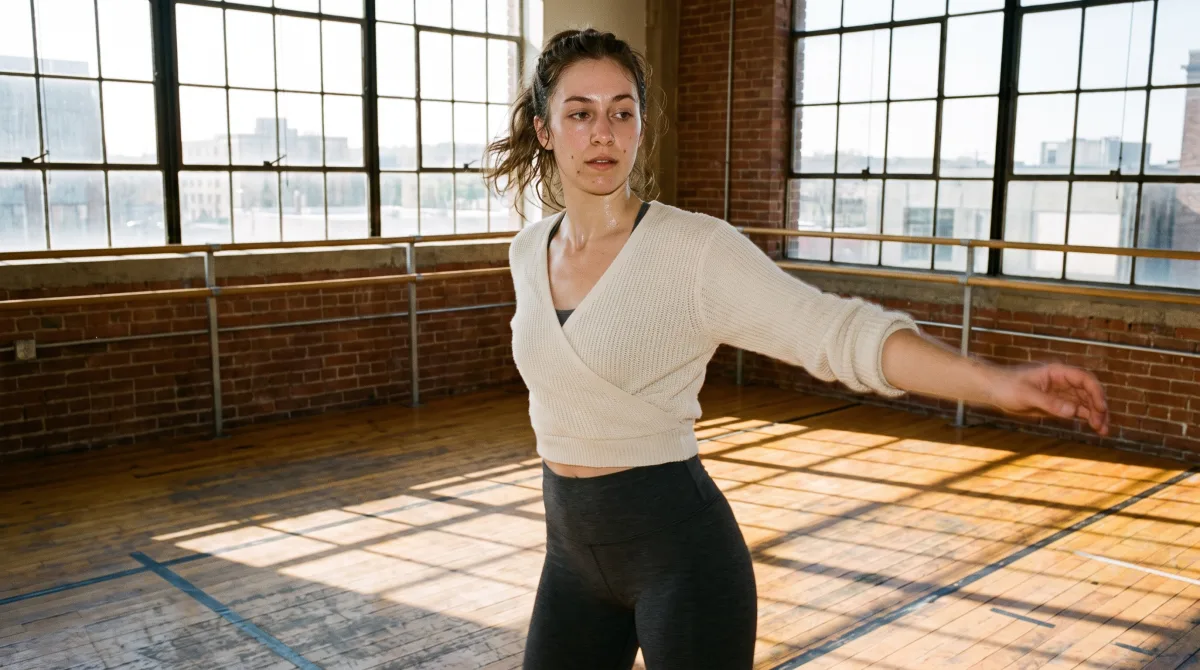
Because partner dance already trains a fluency most dating apps never ask for. A lead reads a follow's weight shift, the give in a shoulder, a half-second of hesitation before a turn — and adjusts before either person says a word. A 2015 study in Biology Letters found that 10 minutes of synchronized, full-body movement, independent of how hard people worked, measurably raised participants' pain threshold and how bonded they felt to the people they'd just moved with — Tarr, Launay, Cohen & Dunbar (2015). Moving with someone does something a shared interest alone doesn't.
That's the honest tension: a dancer already has a highly developed non-verbal vocabulary, and most dating advice assumes everyone is starting from zero. Anketta's manuscript doesn't ask a dancer to abandon that instinct so much as translate it — the same patient, close read a lead gives a follow's frame before committing to a move is what reading a manuscript before matching actually asks for. It's not the same channel. It rewards the same instinct.
Put that instinct into a manuscript, not a bio line.Almost nothing about the invitation, and everything about the ambiguity. At a salsa social, a tango milonga, or a swing dance, you might partner eight different people in one night, holding each one close for three or four minutes, and none of it commits anyone to anything. The uncertainty is the appeal, not a flaw in the system — nobody at the venue knows which dance is just a dance until it isn't.
"A good deal of the fun is never quite knowing when a playful exchange will become electrified with sexual energy." — Juliet McMains, dance professor, University of Washington
McMains (2019) teaches consent inside a university salsa course precisely because the scene runs on unspoken rules nobody writes down — partners rotate, a hand on the back means something different in tango than in West Coast swing, and the person you've partnered with every Tuesday for a year might never once have been asked out loud whether any of it was more than dancing. A manuscript doesn't fix that ambiguity on the floor, but it does something the floor can't: it gives you one place to say plainly, in your own words, whether you're actually looking — instead of hoping a partner reads the subtext right.
Because most apps assume a fairly normal week — a few weeknight messages, a Friday or Saturday date, a predictable evening or two of free time. A rehearsal block, a tech week, or a run of back-to-back shows doesn't pause for that. A company dancer or serious trainee might have three unpaid hours free on a Tuesday afternoon and nothing at all for the next ten evenings, including every weekend the app is quietly counting on.
- Tech week isn't a busy week — it's a blackout, phone included.
- An injury or a cross-training block eats the evenings a company dancer assumed were free.
- A regional intensive or a workshop weekend resets the momentum a new match built over two weeks, the same way a tour resets it for a touring musician.
Writing that reality into a manuscript up front does the filtering a five-photo profile never could — so say the schedule out loud in your own manuscript before anyone has to guess why three days went quiet.
Both, for different reasons. A hobbyist who social-dances salsa or bachata twice a week has a calendar that looks ordinary on paper — but their actual dating pool is often the same twenty or thirty people from class and socials, which makes a stranger on an app oddly unfamiliar by comparison. A company dancer has close to the opposite problem: a calendar too irregular for most apps' assumptions, and little energy left after a twelve-hour studio day.
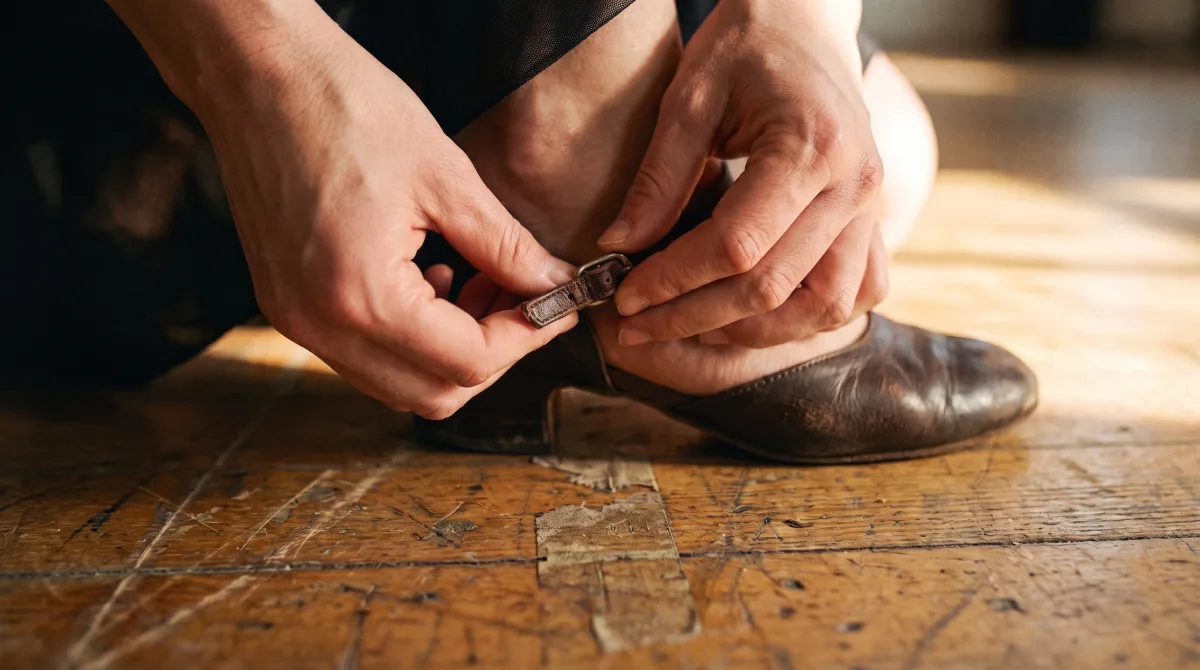
Neither version of this is more legitimate than the other, and writing about it honestly — the twice-a-week social scene, or the twelve-hour studio day — tells a reader which kind of life they'd actually be joining, which a photo of you mid-leap never quite manages to say.
Yes, in the sense that both are close reading. Judging a follow's balance or a lead's intention isn't guesswork — it's picking up small, specific signals and adjusting to them in real time, and a 2009 study in the Journal of Experimental Social Psychology found that the most stable, synchronized coordination between two moving bodies produced the strongest perceived rapport between them — Miles, Nind & Macrae (2009). Reading writing asks for the same close attention — just aimed at sentences instead of a shoulder.
| What you're reading | On the dance floor | In a manuscript |
|---|---|---|
| Weight and balance | A shift before a turn | A sentence that commits to a specific claim, not a hedge |
| Tension and ease | A held shoulder, a stiff frame | Guarded, vague phrasing versus one real detail |
| Timing | A half-beat of hesitation before a lead | How long someone lingers on one topic |
| Consent | An open frame, an accepted hand | What someone chose to include, unprompted |
| Attention | Eye contact held or dropped | What they wrote back about, not just that they replied |
The same way a musician's manuscript can hold this month's practice rhythm instead of a genre tag, a dancer's can hold what a Tuesday rehearsal actually felt like instead of a list of shows.
By not running on real-time chat in the first place. You write when you actually have downtime — after a rehearsal, on the bus between studios — and the highlight-then-heart mechanic works on that writing whenever it gets read, not on reply speed. Once two people match, a clear 48-hour window opens where either side can still walk away; if neither does, the match becomes permanent and the browsing tab locks — turning "quiet for three days because of tech week" into a bounded, known thing instead of open-ended dread.
Write it when you actually have ten minutes — not when an app expects you to.Not a resume of shows, and not a highlight reel — the specific, unglamorous detail a highlight reel cuts. What a call sheet actually does to a Tuesday. Why bachata over salsa, or contemporary over ballet, and what changed your mind once. What you noticed in your own body the first time a lift finally worked. Open your own manuscript and start with that instead of a photo caption.
Write toward:
- The specific reason you picked this form over another, not "I love to dance."
- One real detail from training or company life — a call sheet, an understudy week, a correction from a teacher that actually stuck.
- What the ambiguity of the social-dance scene taught you about reading people, said plainly instead of implied.
Skip:
- A photo caption pretending to be a bio ("dancer, coffee addict, dog mom").
- A list of companies or competitions with no sentence about why any of them mattered.
The floor never let you fake a lead. The page doesn't either — it just gives you longer than four counts to get it right.
Is dating within my own dance scene a bad idea?
Not inherently — plenty of couples meet at socials or in company class. The risk isn't the scene itself; it's the ambiguity. Dancing with someone weekly at a practica can feel like a relationship building before either person has said so out loud, so naming what's actually happening matters more than it would elsewhere.
How do I write about an irregular rehearsal or tour schedule without sounding unavailable?
Say it plainly, once. "Company life means blackout weeks I can't move" reads as information, not an excuse — especially written into a manuscript someone reads before matching, rather than explained mid-conversation after a new match already feels neglected.
Do I need professional company experience for this to apply to me?
No. A hobbyist who social-dances salsa or swing twice a week runs into the same ambiguity — is this dance just a dance? — and the same shallow dating pool, the same twenty people from class, that a trainee or company dancer does. Just on a smaller schedule.
What's the actual difference between a dance partner and someone I'm dating?
On the floor, almost nothing signals it — closeness, eye contact, and touch are part of the form itself, not proof of romantic intent. Off the floor is where the distinction has to be made explicit, in words, because the dance won't make it for you. It's close to what the term situationship describes off the dance floor, and naming it plainly is the only real fix.
Can writing about dance actually replace a photo of me mid-move?
It can do something a photo can't. A photo shows a pose; a paragraph can show why you picked the form, what one specific rehearsal taught you, or how you handle being everyone's partner at once in a scene where nobody's quite dating anybody.
Does matching still work if I can't reply for days at a time?
Yes — matching doesn't depend on speed. Manuscripts get written and read on your own schedule, and once two people match, a 48-hour window gives a defined stretch to talk before the match lapses or becomes permanent, instead of an open-ended chat quietly going cold.
Unsure about writing? Try reading first.