Dating for Buddhists: What Practice Actually Costs You
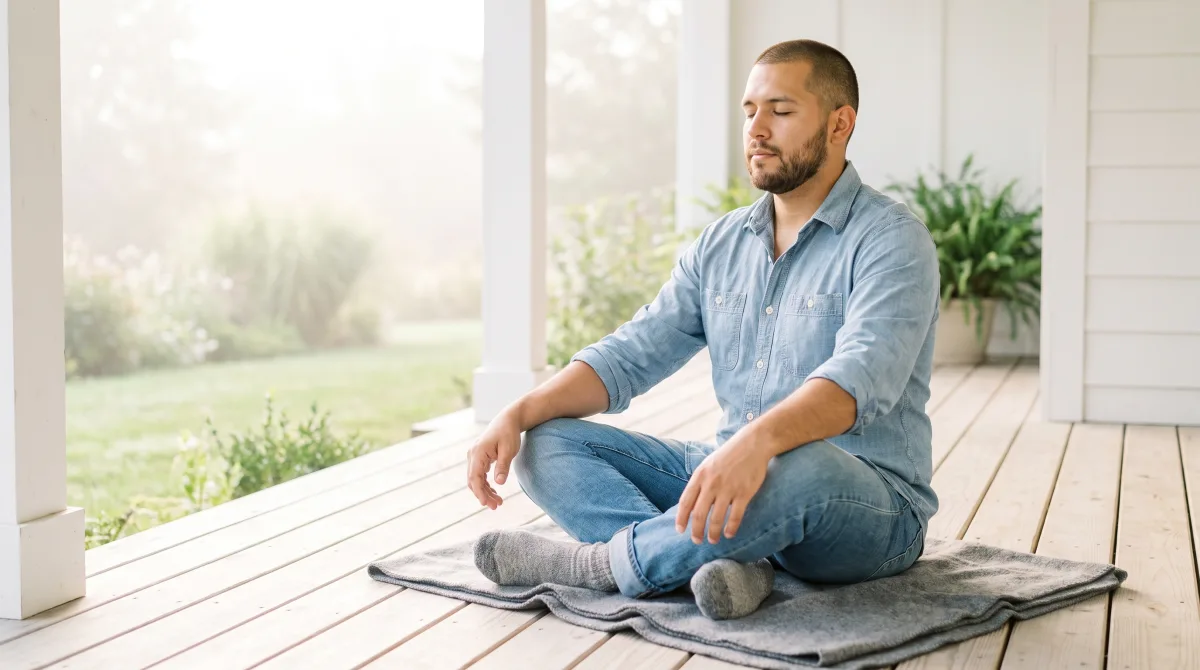
By 5:40 in the morning he has already been sitting still for forty minutes, and nobody on any dating app is awake yet to notice. A practicing Buddhist dater is someone for whom that hour, a set of precepts, and a specific vocabulary already shape the day — none of it survives being compressed into a photo grid and a one-line bio.
Nearly half of American Buddhists (48%) were not raised in the faith, Pew Research Center found in a March 2026 update — so most people writing "Buddhist" into a bio built that practice themselves, with no family shorthand to borrow. Anketta has no religion field either way: what the practice actually looks like only shows up because someone chooses to write it down.
Write the hours a photo can't showBecause the word has been stripped of its original meaning for nearly everyone who hears it, not only for a stranger reading a dating profile. A 2025 PLOS ONE study found that meditators and non-meditators alike frame mindfulness meditation mainly as personal development, not as a spiritual practice — the gap sits inside the word itself, not between believer and skeptic. Writing "I meditate," alone, tells a reader almost nothing they can use.
The same flattening happens to most of the vocabulary around a practice, and it runs in both directions — a word that sounds like therapy talk to an outsider is doing precise technical work for the person who wrote it.
| Word on a profile | How it usually reads | What it specifically means in practice |
|---|---|---|
| "I meditate" | A wellness habit, like yoga or journaling | A specific technique — breath, mantra or open awareness — tied to one lineage and usually timed |
| "Non-attachment" | Emotional distance, can't commit | A precise relationship to craving: not caring less, holding less tightly |
| "Impermanence" | A mood, a vague sadness | A working assumption behind most decisions, including how the relationship itself is expected to change |
| "Sangha" | An unfamiliar word, skipped over | The specific community someone practices with — usually a weekly, non-negotiable meeting |
Not a single confession of faith — in actual hours, closer to a part-time job held alongside everything else. A small peer-reviewed study of 33 meditators across Tibetan, Zen, and Vipassana traditions logged an average lifetime practice of 1,199 hours, and the same sample found that about half meditated daily or almost daily — not on retreat, just as an ordinary Tuesday habit.
That is not a hobby line in a bio. It is a standing appointment a partner eventually shares a house with, the way anyone shares a house with a job's early call time or a fixed Thursday shift. Essay-length writing is one of the few formats that can actually hold a detail that specific — a sentence someone actually writes is what tells a reader whether the sit is five minutes or fifty.
Not sex — the third of Buddhism's five precepts has never been a chastity rule, and reducing it to one is the first mistake almost every outside explainer makes. Traditionally it restricts specific conduct: relations with someone already promised to, or protected by, another commitment. Even that boundary is still being actively worked out by scholars, not settled folklore repeated unchanged for two thousand years.
A 2019 paper in the Journal of Buddhist Ethics spends an entire argument narrowing exactly what counts as the sexual misconduct prohibited by the Third Precept of the universal Five Precepts morality — an unusual amount of live scholarly disagreement for something most dating advice flattens into a single sentence. For most lay practitioners in daily life, it shows up closer to fidelity and honesty about what a relationship already is than to a restriction on dating itself.
Naming the specific sangha, temple, or teacher behind that precept is safe to be concrete about: Anketta blurs addresses and other identifying details from anyone who hasn't matched with you yet, so specificity doesn't hand a stranger your Tuesday schedule before you've decided you want them to have it.
Because a dropdown can only return a label, and the label was never the useful part. There's no religion field, no denomination list, no faith filter of any kind — hard filters cover age, gender, intent, and city, nothing about belief. What a reader learns about a sit, a precept, or the sangha someone drives an hour to reach only exists because they wrote it themselves.
That's a stance, not an omission. Anketta is built around people who care about shared values, not around sorting them by label — a faith filter would answer a question a manuscript already answers in more specific, more accurate detail, one paragraph at a time.
Say what your practice actually asks of a week
The word rarely predicts anything useful on its own — two people can write "Buddhist" and mean entirely different weeks. The specifics do the actual predicting, and they're exactly the kind a single word can't hold but a full sentence can, once someone bothers to write it down instead of leaving a label to do the work:
- The sit — how many mornings a week, and is it fixed or flexible around plans?
- The teacher or sangha — a specific group or center, and how often it actually meets.
- Retreat time — a weekend once a year, or ten days off the grid at a stretch?
- The precepts in practice — which ones are held strictly, and which are closer to an aspiration?
- Where it came from — raised into it, or built as an adult, and whether that difference matters to them.
Someone who practices seriously answers these without hesitating. Someone using the word loosely reaches for a line about "trying to be more mindful" instead — the same personal-development gap described above, restated as a first date.
Yes, and plenty do — the harder question isn't whether the other person meditates, it's whether they can live inside a schedule and a set of values that already existed before they arrived. A partner who treats an early sit or a retreat weekend as a quirky inconvenience is a different problem than one who simply doesn't practice but respects the hours it takes.
Intentional dating usually means naming the destination early enough that both people can decide whether they want to walk there together — and a sitting practice is one of the clearer destinations to name, because it already comes with a schedule attached. What it isn't is a requirement that both people share the same vocabulary; it's a requirement that one of them can actually explain it.
Is "Buddhist" on a dating profile the same as "meditates sometimes"?
No. Someone can call themselves Buddhist through upbringing, philosophy, or identity without a daily sit, and someone with an intensive daily practice may never use the word at all. The label and the hours are two different facts, and a bio only ever confirms one of them.
Do all Buddhists follow the same precepts the same way?
No. Traditions differ, and individual practice within a tradition differs further — some hold the five precepts as strict training rules, others as aspirations revisited daily. Asking which is far more useful than assuming either.
Should I name my specific tradition — Zen, Theravada, Tibetan — in my bio?
Only if the practice behind it is more informative than the label. "Zen, sitting most mornings" tells a reader something; "Buddhist" alone tells them almost nothing about your actual week.
Is it a problem to date someone who's curious about Buddhism but doesn't practice?
Not automatically. What predicts friction is whether curiosity turns into respect for the actual hours and precepts involved, or stays a vague interest that never adjusts around a retreat weekend.
How do I tell serious practice from someone using the word loosely?
Ask about the sit, the sangha, or the last retreat, and watch how quickly the answer gets specific. A vague answer about "trying to be more mindful" is the tell, not the accent of the word itself.
Does a serious sitting practice mean less time for a relationship?
Not less — differently shaped. The hours exist either way; a practicing partner already knows where theirs go, which is more than most non-practicing schedules can say about their own time.
The forty minutes on the porch were never a secret. They were just never going to fit in a photo.
Unsure about writing? Try reading first.