Dating for Classical Music Lovers: What a Concert Reveals
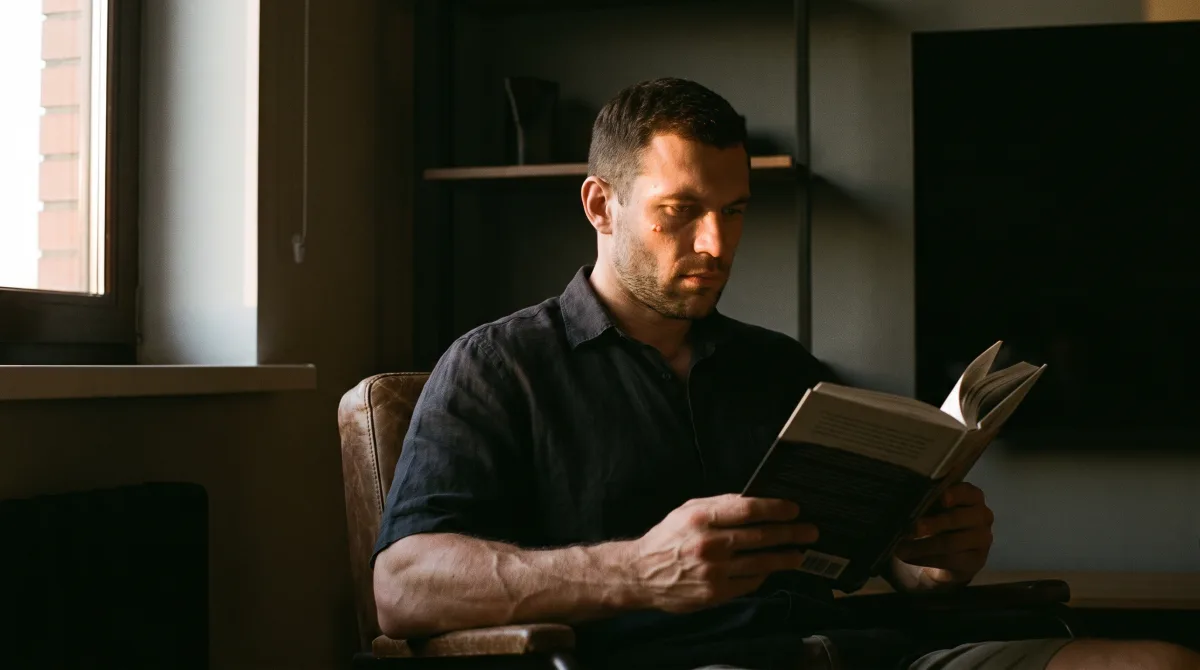
"Classical music" is one of the most commonly listed interests on a dating profile, and one of the least useful — as a filter, it barely narrows anything down. The context around it has shifted, too: meeting a partner now runs mostly through curated interest rather than through friends or family. Heterosexual couples in the U.S. are more likely to meet a partner online today than through personal contacts and connections at all (Rosenfeld, Thomas & Hausen, PNAS 2019).
Which puts more weight on the interest tag than it can actually carry. What separates two people who both write "classical music" isn't the label — it's whether a symphony gets someone's full attention or plays as background while they answer email. Anketta's manuscript has no genre checklist to tick: a reader can tell, from how someone actually writes about a piece of music, whether they were listening or just had it on — the same close attention Anketta's text-first format rewards more generally.
Write about the piece that actually held your attentionBecause it's one of the most commonly claimed interests on any profile, and it covers wildly different people under one label. Someone who puts a symphony on to fall asleep and someone who blocks out ninety minutes to sit with the same recording both write "classical music" in the same box. The label can't tell them apart, and a three-word interest tag gives it no room to try.
That's the actual gap — not taste, attention. Two people can share a favorite composer and still want completely different evenings, because the thing that predicts fit isn't which pieces someone owns. It's what they do with the piece once it's playing.
The difference is attention, not taste. A background listener treats classical music as company for something else — a piano concerto while answering email, a playlist chosen mainly for not being distracting. A deliberate listener sets aside the block of time a piece actually asks for and gives it the kind of attention they'd give a chapter, not a feed. Same composer, sometimes even the same recording — a completely different relationship to it.
| Background listening | Deliberate listening | |
|---|---|---|
| What the music is for | Company while doing something else | The activity itself |
| Where attention goes | Splits between the music and a screen | Stays with the piece, movement to movement |
| What "put it on again" means | Comfort, familiarity | Wanting to hear something specific inside it |
| What it predicts about a date | Fits an evening built around something else | Fits an evening built around the concert itself |
Neither column is the wrong way to listen. They're just different relationships to the same recording — which is exactly why "classical music" on a profile can't tell you which one you're talking to.
In a measurable, physical sense — yes. A 2024 study that monitored nearly 700 people across eleven live chamber-music concerts found that audience members' heart rates synchronized during the performance (Scientific Reports, 2024). The more interesting part is what actually drove the effect: it tracked people's structural, attentive listening — following the piece itself — more than it tracked how emotionally swept away anyone felt. Listeners who reported the most emotional immersion showed less synchrony, not more.
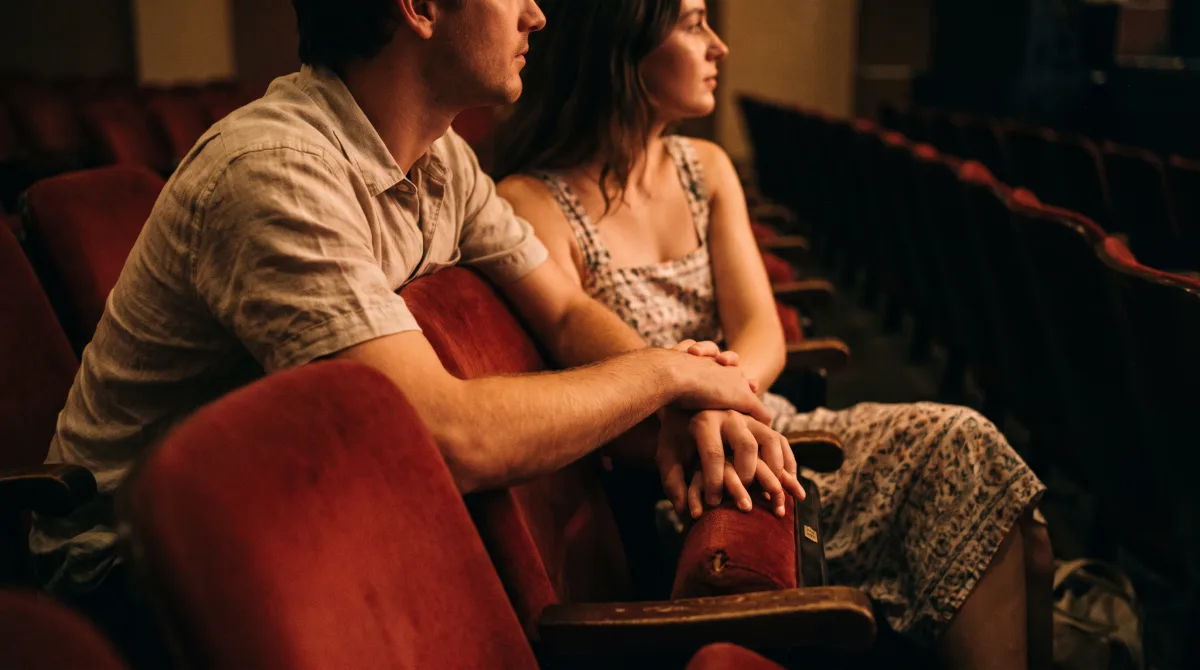
Which reframes what a concert date actually offers. It isn't mood lighting or a shared swoon — it's two people's attention landing on the exact same second, repeatedly, for the length of a performance. That's a rarer thing on a first date than most romance-coded settings actually manage, and it has nothing to do with either person's taste in composers.
Try dating built for people who actually pay attentionMore than most stated interests do. A landmark 2003 study of more than 3,500 listeners found that people who prefer what psychologists call "reflective and complex" music — classical, jazz, blues, folk — score measurably higher on openness to experience and curiosity than people who lean toward more upbeat, conventional genres (Rentfrow & Gosling, 2003, via BBC Science Focus). That's a real, replicated correlation, not folk wisdom dressed up as science.
It's also not the whole answer. Openness predicts curiosity in general — it says nothing about whether a specific evening, with a specific person, is going to hold anyone's attention. That's a narrower, more intentional question than any personality trait can settle, and it only shows up in how someone actually describes what a piece of music did to them rather than in the fact that they listen to it at all.
Because the audience is younger than the cliché suggests — the image of a graying subscriber base checking a program in reading glasses is out of date. In a 2026 survey of 8,000 adults across ten countries, run by Dynata and commissioned by the concert promoter Fever, 88% of the under-45s who had ever been to a classical concert had been to at least one in the past year (Classical Pulse 2026). That is a figure about how often younger attendees return, not about how many people attend at all — but the return rate is the part that matters if you are deciding whether a concert is a plausible second date.
Programming has caught up with that shift: casual-dress evenings, open rehearsals, and film-score or game-score nights sharing a season with core repertoire, because the old script of black tie and hushed formality was never actually what drew a full house. A first date at a concert in 2026 looks a lot less like a costume drama than most people assume, and a lot more like a Tuesday night with good acoustics.
Most of the decision happens before the tickets are bought, not in how formally either of you dresses for it.
- Pick a program you can actually sit through, not one chosen to signal taste — an evening you'd resent isn't a good first date no matter who's on stage.
- Sit close enough to actually watch, not just hear. Seeing the performers changes how attention moves through the piece.
- Let the music be the first thing you share, not a warm-up act for conversation — save the debrief for the walk out, not the seats before curtain.
- Talk about what you noticed, not what you already knew going in. A surprised reaction says more than a correct one.
- Don't book anything right after. The last movement should stay the last thing that happens for a while, not get talked over by dinner reservations.
The program itself matters less than whether it's worth writing an honest paragraph about afterward, instead of just adding "classical music" to a list.
By the time the hall empties, almost nobody remembers the program notes. What tends to stay with people is whether the person beside them was actually listening, in the dark, to the same eighty minutes they were — the same test a favorite book fails or passes on a profile, or the painting someone actually stopped in front of fails or passes in a gallery, just set to music instead.
Does liking classical music actually predict compatibility?
Only loosely. Preference for classical, jazz, blues, and folk correlates with higher openness to experience — a real, measured personality trait — but that's a broad tendency, not a guarantee two specific people will enjoy the same evening.
Is a classical concert a good first date?
Often, yes — it gives two people ninety minutes of genuinely shared attention with no pressure to fill silence, which is rare for a first meeting. It works less well as a first date if either person is only there to be seen enjoying it.
What if only one of you actually likes classical music?
That's fine as long as the other person is honestly curious rather than politely enduring it. A good concert doesn't require prior knowledge — it requires attention, and attention is available to a first-timer as much as to a season subscriber.
Do you need to know a lot about classical music to enjoy a concert date?
No. Knowing a piece's history can add context, but it isn't what the research above measures — attentive listening, not expertise, is what predicts a good shared evening.
Why do audience members' heart rates sync up at concerts?
Researchers found it tracks shared, structural attention to the music — everyone following the same phrasing and pacing — more than shared emotion. It's a measurable sign that two people were actually listening to the same thing at the same moment.
Is classical music only popular with older audiences now?
No — recent survey data shows adults under 45 make up the most frequent concertgoers in several major markets, not the rare young face in a room of retirees.
Somewhere between the first note and the last one, the program stops being the point of the evening — if it ever really was.
Unsure about writing? Try reading first.