Dating for Hikers: What Hour Seven on a Trail Tells You
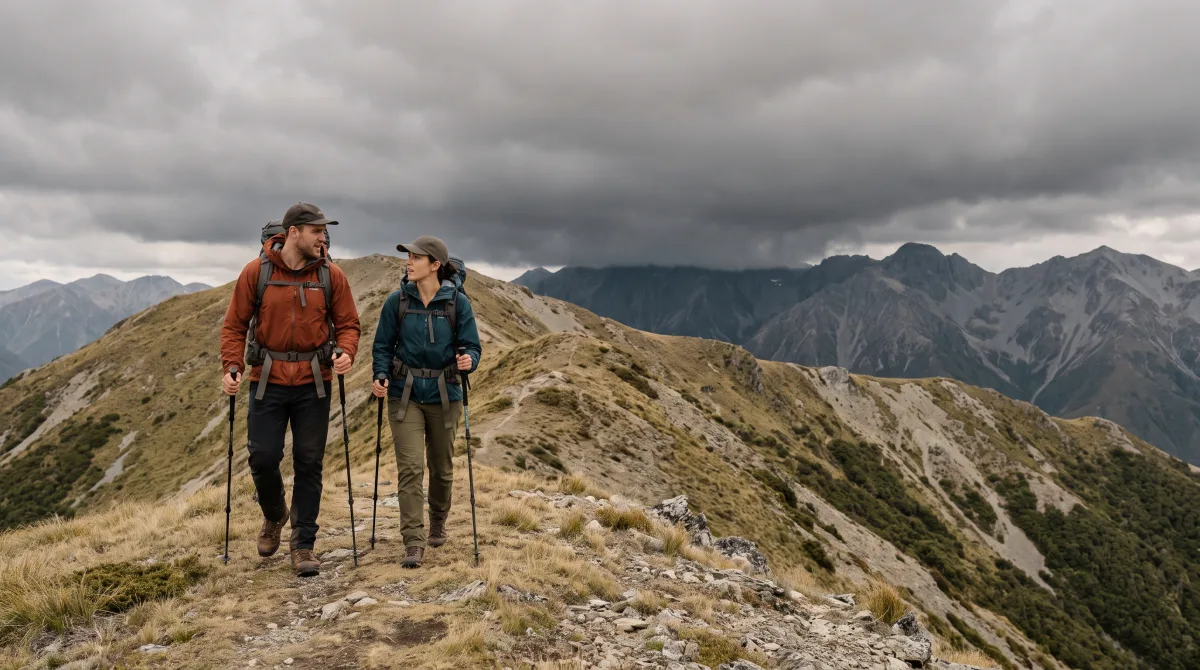
Hour seven, the pass still above you, weather stacking up in the west: dating for hikers is shaped by the one thing a hike cannot do, which is end early. It is a fixed commitment in conditions neither person controls, so it tests logistics and temperament far more than taste. Research published in 2015 on shared hardship found the bond forms through reflecting on the experience, not through the hardship alone. That makes a long day out an unusually honest test for people who meet through clubs and trailheads — and an unusually poor first date.
The research is worth naming precisely, because the mechanism is not the obvious one. Jong, Whitehouse, Kavanagh and Lane (2015), PLOS ONE studied Republicans and Unionists in Northern Ireland, and Bostonians after the 2013 marathon bombings. Shared negative experience tracked with a powerful sense of oneness — but the relationship ran through personal reflection on what had happened, not through the event by itself. Hardship on its own is just hardship. What binds two people is what they later make of it, in words, out loud or on a page.
Which is a strange lesson to take from a mountain, and the reason the best trail relationships are so talkative on the drive home.
The part worth writing down is what you made of the hard hours. Start there.The performance stops. Somewhere past the point where both people are tired, wet and out of small talk, the version of a person that a first date is designed to present simply runs out of fuel. You get the unedited one: how they treat a mistake, whether they go quiet or brittle, what they do with the last of the food.
Lauren Reiss's ethnography of Appalachian Trail and Long Trail thru-hikers, based on in-depth interviews with 13 hikers, put that stripping-away at the centre of what the trail does to people. One of her interviewees, hiking under the trail name Route, described it plainly:
"It's raw, it's real. There's no façade to hide behind. No money, no car, no job, no marriage, whatever." — a thru-hiker quoted in Reiss (2021), Journal for Undergraduate Ethnography
Reiss's hikers reported the same thing repeatedly: on a long trail the usual markers of status stop working, people sort themselves by something else, and the friendships that form do so fast. Her study is about community rather than romance. The mechanism transfers anyway — anything that removes the props also removes the ability to hide behind them.
Yes, and it is the compatibility question people are most reluctant to ask out loud. Two people who love mountains equally can be physically incompatible on a Saturday: one wants an eight-hour push, the other wants three stops for tea and a photograph of every lichen. Neither is wrong. Both will be quietly furious by lunch if nobody said anything at the trailhead.
There is a small, precise piece of evidence that pace is a relationship signal rather than a fitness one. Wagnild and Wall-Scheffler (2013), PLOS ONE tracked 22 people — 11 men and 11 women, aged 18 to 29 — walking a track alone, with friends, and with a romantic partner. Men slowed significantly to walk with a female partner. Walking with friends, of either sex, their pace did not significantly change. Humans have an energetically optimal walking speed, and leaving it costs you; the study's participants paid that cost for a partner and not for a friend.
That is a very small sample and a track rather than a mountain. Read it as one finding, not a law. Still, it names something every walking pair already knows: matching someone's pace is a choice, it is expensive, and over a long day you can see exactly who is willing to make it.
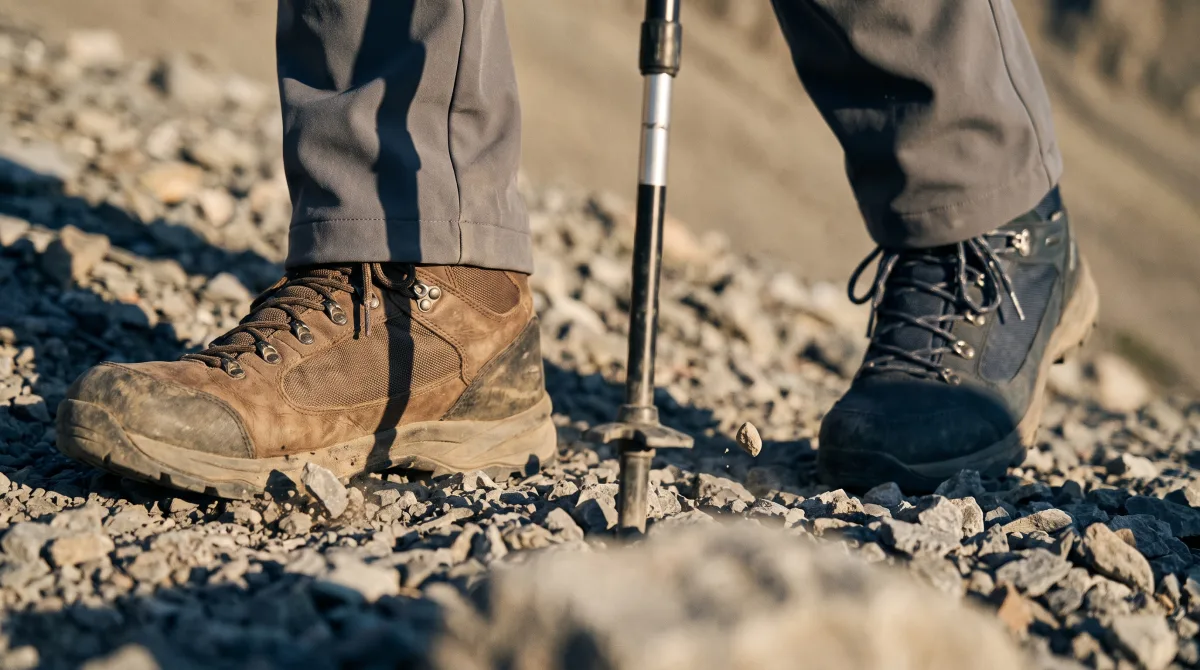
These two questions predict more about a trail relationship than any shared-interest tag. Planning reveals whose time gets spent; weather reveals risk tolerance, and risk tolerance is the one incompatibility that does not soften with goodwill. A partner who turns back early and a partner who pushes on will both think the other one ruined the day, and both will be sincere.
Settle these before a long day out, not during one:
- Who is actually route-planning, and did the other person agree to it or just not object? Silent delegation is the most common first fracture. It reads as trust on day one and as unpaid labour by trip three.
- What is each of you willing to turn back for? Name a real threshold — thunder on the ridge, a twisted ankle, sunset in ninety minutes. "We'll see how it goes" is not a threshold.
- What is the plan when you are separated by more than earshot? Pace gaps open on climbs. Agree on where you regroup before you need to.
- Who carries the extra weight, and is that decided or assumed? The tent, the water, the first-aid kit. Assumed answers curdle.
- What does either of you need once camp is up — company, or an hour of nobody talking? This one ends more trips than blisters do.
None of that is romantic. All of it is information you would otherwise buy at full price on the third day of a hut-to-hut traverse, which is the worst possible moment to discover a difference in how two people handle being cold.
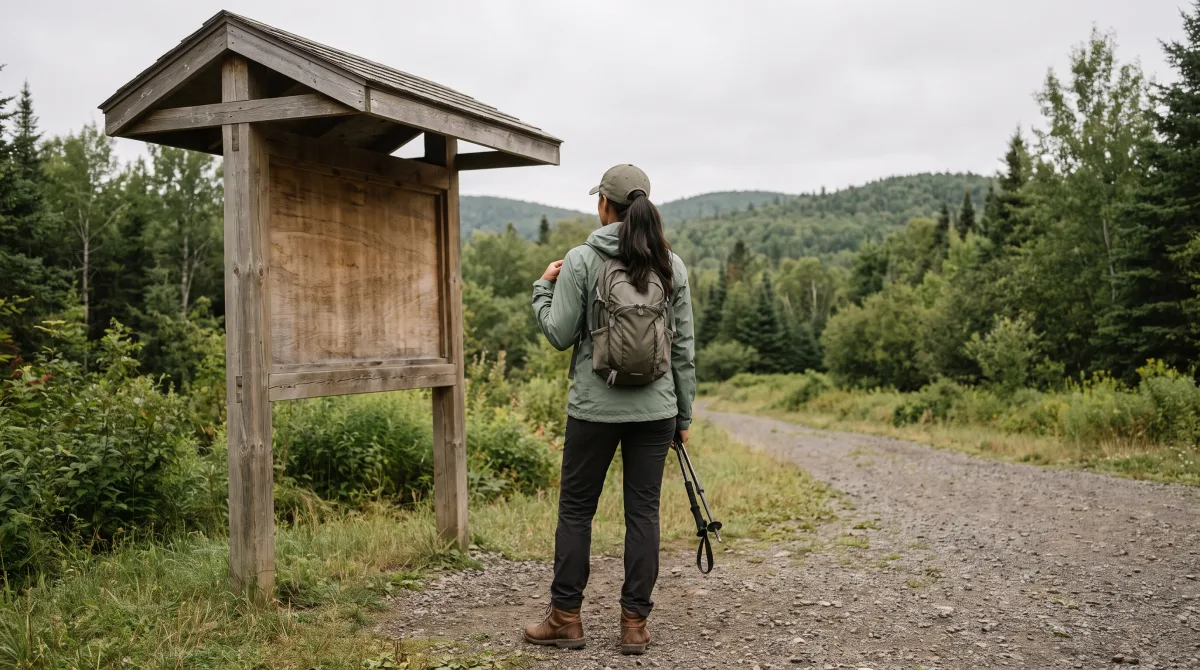
Because it is a picture of the twenty minutes that everyone enjoys. The summit is the part of the day with no information in it — nobody is cold, nobody is behind, the decisions are made. Everything a hiking partner would want to know about you happened in the four hours before the shutter, and none of it is in frame.
Scale makes this worse, not better. The Outdoor Foundation — the philanthropic arm of the Outdoor Industry Association, a trade body whose members sell the equipment in the photograph — reported that the outdoor recreation participant base hit a record in 2023, growing 4.1% to 175.8 million participants. Take the interested party into account and the direction still holds: "outdoorsy" now describes an enormous, internally contradictory crowd. It sorts nobody. A profile line about loving hiking has been dead on arrival for years, and adding a summit photo does not revive it.
| What the profile shows | What hour seven shows |
|---|---|
| A summit, in good light | Whether they can be cheerful in bad light |
| That they own the equipment | Whether they check yours before a descent |
| A distance and an elevation gain | Whether they'd have turned back at half of it |
| That they enjoy the outdoors | What they enjoy about it, and what they endure |
| One good day | The seventh hour of an average one |
The right column is the compatibility data. It arrives late, in person, after both people have already committed the weekend — which is exactly the ordering problem worth fixing.
Describe the day you turned back, and who you were with. That's the paragraph someone underlines.You get the reflection first and the trail second. Since the bonding effect in the research runs through making sense of an experience in words, the written version is not a substitute for the trail — it is the same ingredient, available earlier and much cheaper than a ruined weekend.
That is the whole shape of essay-based dating, and it fits outdoors people better than most. Instead of a photo grid, you write a manuscript — free-form, your own headings, no questionnaire and no prompts you have to answer. Describe the bothy night when the stove failed, the trip you called off at the col, the reason you keep going back to a range that is objectively not the most beautiful one. On Anketta nobody sees a face before a match, so the first thing a reader meets is that account of yourself. To signal interest they highlight a specific line and then press the heart. Marking a line is not a like on its own — which means the interest you receive is attached to a sentence you actually wrote, not to a view.
The slow part is deliberate, and so is the shape of what follows. A match opens a 48-hour window that becomes permanent only if both people actually write to each other; silence from either side ends it. It is the same logic as the trail, in miniature — a container with a fixed duration that neither person can quietly drift out of.
There is a practical trick for people whose social life is already outdoors. Once your manuscript is approved you get a shareable link and QR code that works away from the app entirely — handy at a club night or a hut, and any phone, email or address in the text stays server-blurred to anyone you have not matched with. The page is not indexed by search engines. Only the people you hand the link to can read it. If you want the fuller version of why the product is built this way round, it is on our about page.
Is a hike a good first date?
Usually not. A first date needs an exit, and a trail is deliberately built without one — an hour in, both of you are committed to the whole loop. A short walk in a park keeps the honesty and returns the exit. Save the full day for date three.
How do you date someone who hikes at a different pace?
Say the numbers out loud before you start, then design around them rather than pretending the gap is not there. Agree on regroup points, pick routes with natural waiting places, and let the faster walker take the heavier pack. The gap is workable. Silence about it is not.
What should outdoors people write in a dating profile?
Not the activity list. Write the specific day — the wrong turn, the weather you misjudged, the shelter you were relieved to reach. A stranger cannot respond to "I love hiking," but they can respond to a night you spent waiting out rain under a tarp with a person you barely knew.
Are there dating apps for hikers and outdoorsy people?
Several niche apps sort by activity, which mostly proves you both own boots. Sorting by how someone describes an experience is a different filter. On Anketta the manuscript is the profile, and interest arrives attached to a line someone chose to underline.
Is it a bad idea to date inside your hiking club?
It changes the stakes rather than the odds. A bad date with a stranger costs an evening; a bad date inside a club can cost you the club. One honest conversation about that risk, before anything starts, is the same skill as agreeing a turnaround time.
How long should the first trip together be?
Shorter than you want it to be. One long day out tells you nearly everything a weekend would, and leaves you both with a train home. Two nights is a commitment; earn it with the day trip first.
Every long day ends the same way: boots off, the map still folded to the wrong panel, and one honest sentence about the hour that was harder than expected. That sentence is the beginning of it. Anketta is where you can write it down before you spend a weekend finding out.
Unsure about writing? Try reading first.