Second Date Ideas: What a Good Second Date Actually Does

Say the first date went fine — better than fine, even. The conversation had a rhythm, nobody checked their phone, and the goodbye hug ran a beat longer than politeness required. None of that tells you what happens next.
A second date exists to test the one thing a single dinner can't: whether that ease was really about the other person, or just the charge of meeting someone new. Reis, Maniaci, Caprariello, Eastwick & Finkel (2011) had pairs of same-sex strangers talk for varying amounts of time. The more participants interacted, the more attracted they were to each other, and three things carried the effect: feeling that the other person was responsive, growing comfort during the conversation, and feeling that you knew them. The pairs weren't dating, but those are the same three things a second date gives you more of.
On Anketta, this dynamic starts earlier than the first date does: a match only becomes permanent once two people have actually written back and forth, so anyone who reaches an in-person meeting already knows a fair amount about how the other person thinks. A second date, at that point, isn't reintroducing yourselves — it's finding out if the version of them you got to know on the page and the version across the table are the same person. If any of this is making you replay your own first date, the details are worth writing down before they blur.
Write the version you'd want someone to read, not the edited one.A good second-date idea does two things a first date's coffee-shop meeting usually can't: it gives you something to react to together, and it runs long enough that the easy exit — "early morning tomorrow" — stops being believable at the one-hour mark. The same conversation topics that carried the first date will start to feel recycled by round two, so a shared activity can do some of the talking instead.
| Approach | What it tests | Good if... | Skip if... |
|---|---|---|---|
| Something new together | Whether you handle a little novelty or friction well as a pair | The first date felt easy but a bit safe | Either of you is exhausted or overcommitted this week |
| Repeat what worked | Whether the chemistry holds without a gimmick doing the work | The first date already had real momentum | You want more new information, not confirmation |
| A structured activity | Whether you cooperate, not just converse | You want to see how they handle a little friction | Either of you turns unpleasantly competitive |
The best second-date ideas share one property: they put you next to each other doing something, not across a table running through résumé questions again. This list runs roughly from low-key to more involved, so match it to how the first date went rather than to what looks impressive.
- A long walk with an actual destination. A market, a viewpoint, a coffee shop three neighborhoods over. Walking side by side removes the eye-contact pressure of a restaurant table, and having somewhere to arrive gives the date a natural edge.
- A class neither of you has taken. Pottery, a one-off cooking class, a beginner dance lesson. Being equally bad at something together does more for comfort than either of you being competent alone.
- A specific meal, not "dinner." The ramen place with one good seat at the counter, not a reservation chosen to be safe. Specificity signals you thought about them, not just about filling the slot.
- A game with actual stakes. Mini golf, bowling, chess in a park. Losing gracefully, or gloating a little, tells you more than another hour of getting-to-know-you questions.
- A live show with a low bar to attend. A small comedy set, an open mic, a local band. Shared reactions in real time, the laugh, the wince, tell you more than either person's opinion stated afterward.
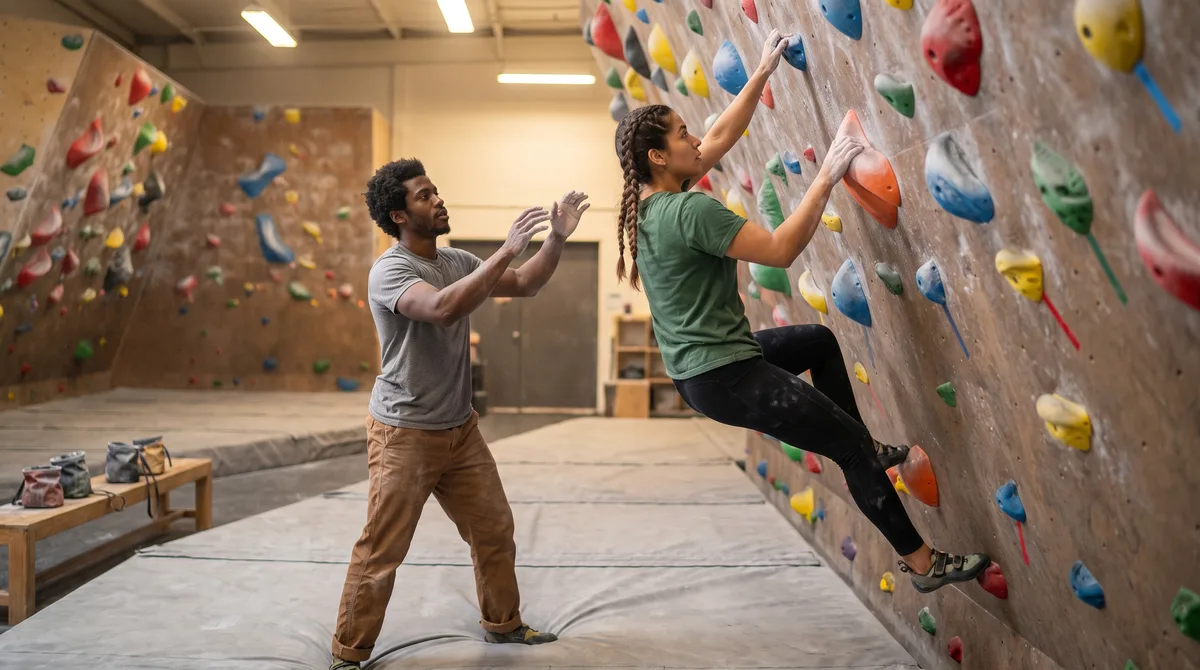
- Something with your hands. An axe-throwing lane, a climbing gym, a paint-and-sip. The unglamorous version of this is doing something a little challenging together and noticing who laughs first when it goes wrong.
- A repeat of the first date's location, done differently. Same bar, but order what they're having instead of what's safe; same park, but bring something to share this time.
Both work, for different reasons. Repeating a version of what worked tests whether the chemistry from date one holds up without the novelty of a stranger doing some of the work for you. Doing something new tests something else: whether you handle each other well when neither of you has the advantage of already knowing what to expect.
There's a well-known experiment behind that second idea: couples in the lab were assigned either a mundane task done individually or something novel and a little physically demanding done together, tied at the wrist and ankle. Their satisfaction was then measured by their own report and by raters, blind to the condition, who scored a conversation afterward. Aron & Tomlinson (2026), reviewing this line of research, put the result plainly:
"Those doing the task together showed significantly greater relationship satisfaction." — Aron & Tomlinson, Behavioral Sciences (2026)
Those were established couples, not two people on date two, so treat it as a hint about novelty rather than proof for a second date.
Neither approach beats the other by default. What both need is enough duration and enough shared attention that you're responding to each other, not performing two parallel monologues.
Long enough that neither of you can hide behind a tight schedule — call it ninety minutes to three hours, depending on the activity. Planning should rotate: whoever suggested the first date's location can let the other person choose this time, which signals the date is a collaboration and not one person auditioning for the other.
Often, yes. A merely fine first date mostly measures how you both perform under first-meeting nerves, not how well you get along. Researchers who study social anxiety have tracked a similar pattern across two back-to-back interactions with the same people, a brief wait in a waiting room and then a getting-acquainted conversation: Voncken & Dijk (2013) found that self-disclosure was the strongest predictor of how likeability developed from the first interaction to the second, for socially anxious and non-anxious people alike. Anxious participants made a worse first impression, and still improved.
That's the argument for going again even when the first date read as merely fine: the stiffness of a first meeting is mostly information about the format, not about whether the two of you get along at all. Say something true this time instead of something safe — the same thing writing an honest manuscript in the first place already asked of you before the first message went out.
If the awkwardness of date one is still hanging over you, don't let it decide anything by itself.
Try saying the truer version out loud — or write it first.Skip:
- Re-running the same three getting-to-know-you questions from date one — you already have the answers
- Treating it as a debrief of date one instead of a date in its own right
- Scheduling it back-to-back with other first dates that week, so this person becomes one interchangeable evening among several
Do:
- Bring up one specific thing you remembered from the first date, unprompted
- Let a silence sit for a second instead of filling it with a joke
- Say plainly if you had a good time — the vague non-answer costs you nothing and tells them nothing back
Is it too soon to suggest something more involved than coffee for a second date?
Not if the first date went well enough to suggest a second one at all. Coffee is a low-commitment first-date format precisely because it's easy to leave; a second date can ask for more time and a real activity without reading as presumptuous.
Who should pay on a second date?
Whatever felt fair on the first one is a reasonable default, and alternating becomes common a few dates in. The specific split matters far less than whether the conversation about it, if there is one, stays easy rather than tense.
What if we can't agree on an idea?
Suggest two options and let them pick, rather than defaulting to whatever's easiest for you. Someone who can't choose between two reasonable ideas either doesn't care enough to decide or is testing whether you'll do the deciding for them — worth noticing either way.
Should a second date be longer or shorter than the first?
Usually longer, since you're both testing whether the ease holds up rather than just whether it exists at all. If the first date ran ninety minutes and felt easy, planning something with a two-to-three-hour arc for the second is a reasonable stretch.
Is texting between the first and second date necessary?
A short message is enough — confirming plans, maybe one genuine callback to something you talked about. A long, daily exchange before the second date can flatten it, since you've already had the conversation you were supposed to save for in person.
What if the second date goes worse than the first?
That's real information, worth trusting over the memory of a good first impression. A first date can go well on charm and adrenaline alone; a second date that goes badly once both wear off is telling you whether someone's serious in a way the first one couldn't.
The first date proves you can talk to a stranger for an hour. The second one is where you find out if there's someone there worth keeping talking to.
Unsure about writing? Try reading first.