Dating Apps Where Matches Expire — Not Pile Up Forever

On Anketta, a mutual like doesn't drop into a list and wait there indefinitely. It opens a 48-hour window. Inside that window, either person can end the match at any point, and it disappears — both of you go back to browsing. Let the window run out without doing that, and the match doesn't vanish either: it becomes permanent. There's no third option, and no match sits around in limbo for a week, a month, or longer. By hour 49, every match on Anketta has already been decided.
That's a sharper claim than "we have a countdown." 78% of dating-app users feel fatigued with the dating-app world sometimes, often, or always (Forbes Health / OnePoll, 2024) — and a meaningful slice of that fatigue isn't the searching itself, it's the backlog: matches from three weeks ago you never closed, half-conversations you're technically still "in," decisions you keep meaning to make and don't. Anketta doesn't ask you to decide faster. It makes sure that once you've both read each other's writing, a decision — yours, theirs, or nobody's — always gets made, on a clock neither of you controls alone.
Write the manuscript that starts a real 48 hoursBecause nothing forces them not to. A match with no timer costs the app nothing to keep open, and it costs you almost nothing to ignore — so it just stays. Not accepted, not rejected, not really anything. You didn't decide to keep it; you just never decided to close it, and neither did they.
That gap between "unfinished" and "actually addressed" isn't neutral — it has a name in the psychology literature. Masicampo and Baumeister, in the Journal of Personality and Social Psychology (2011), found that unfinished goals caused intrusive thoughts during an unrelated reading task — the mind keeps circling back to the thing you haven't resolved, whether or not you're actively thinking about it. Their fix wasn't finishing the goal. It was making a concrete plan for it — a decision, even a small one, was enough to quiet the loop. A match with no expiry is the opposite of a plan: it's an open loop with nobody assigned to close it, multiplied by however many half-matches happen to be sitting in your inbox this month.
Here's what that looks like next to an app that actually forces a verdict:
| What happens to a match | No-timer app (Tinder-style) | One-sided timer app (Bumble-style) | Anketta (48-hour two-sided window) |
|---|---|---|---|
| How long can it sit unanswered | Indefinitely — nothing expires | 24 hours, then the match itself disappears if the permitted sender never opens with a first message | 48 hours, then it's always resolved one way or the other |
| Who has to act to end it | Either person, whenever they get around to it | The clock alone — miss it and it's gone by default | Either person, any time — or neither, and it becomes permanent |
| What "doing nothing" produces | A match that just sits there | A dead match | A permanent match |
| Re-matching the same person later | No cooldown | No cooldown | 30-day cooldown either way |
Once a mutual like opens the 48-hour clock, exactly three things can happen from there — and only one of them requires that nobody lift a finger, which is exactly the point: doing nothing is a real, deliberate outcome here, not an accident waiting to be walked back later.
- Either person discards it, any time. The match ends immediately — no explanation required, no waiting for the timer. Both of you go back to browsing manuscripts.
- One person writes, the other discards anyway. The match still ends. A message — even several — doesn't outrank a discard from the other side. There's no partial credit for effort here.
- Neither person discards, and the 48 hours run out. The match becomes permanent. The browsing surface locks to that one conversation, and the "who likes you" list disappears until the match ends.
Two of those three outcomes end the match. Only the third — genuine, mutual non-action — makes it permanent. That's a deliberately narrow door.
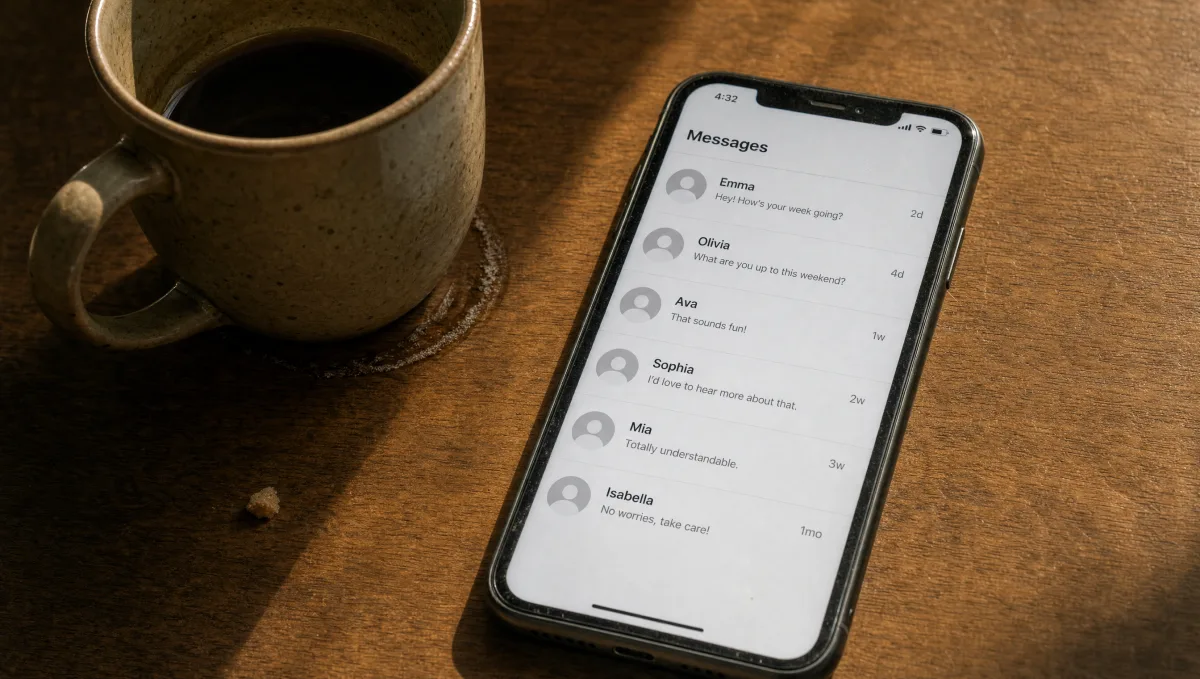
This is the part people get backward, so it's worth stating plainly: permanence tracks whether either of you discarded, not how much either of you wrote. Imagine you send four thoughtful messages and get nothing back. If your match discards anyway — even after reading everything you sent — the match is gone. Your effort didn't buy it a reprieve, because effort was never the thing being measured.
Now flip it: imagine neither of you writes a single word for 47 hours. As long as neither of you actively discards, the match still goes permanent at hour 48. Silence isn't a vote to end things — it's just silence. The only vote that counts is a discard, from either side, at any point in the window. Anketta sends a nudge at 24 hours and another at 6 hours before the window closes specifically because most people who let a match lapse into permanence didn't mean anything by it — they just hadn't gotten around to deciding, and the app would rather ask than assume.
If you'd rather find out what that feels like than read about it, start your own manuscript and see the 48 hours for yourself.
Because the closer a deadline gets, the more likely people are to actually act on it — a pattern behavioral researchers have measured well outside dating. Kivetz, Urminsky, and Zheng, in the Journal of Marketing Research (2006), tracked customers working through loyalty-card punch cards and found that people close in on a reward faster the nearer they get to it — the same coffee-shop customers who barely visited early in a card sped up sharply as the free coffee got close. The effect isn't really about coffee. It's about proximity making a goal feel real enough to finally act on.
A 48-hour match with no reminder at all would rely on either of you remembering it exists. Two reminders, placed right where that proximity effect predicts people start actually moving, do something more useful: they turn "I'll deal with it later" into an actual choice, made on purpose, before the clock makes it for you.
Write toward a match that resolves — not one that waitsIt's just gone — cleanly, not half-gone. There's no archived-matches folder holding it for you to stumble back into six weeks later feeling awkward about it. If either of you discarded it, or the two of you let it lapse without ever writing, the match record closes and both people return to browsing everyone else.
The one thing that doesn't reset immediately is each other: the same two people can't match again for 30 days. That's not a punishment — it's a pause long enough that a re-match, if it happens, means something changed, rather than just being an accidental re-match five minutes later on an app that never noticed you'd already tried this once.
Because the alternative isn't "no pressure" — it's just pressure with no shape. An app that never closes anything doesn't spare you the decision; it just spreads it out over months of half-attention, one more unresolved thread quietly adding to the same fatigue that 78% of dating-app users already report feeling. Anketta's 48 hours doesn't rush the conversation. It just refuses to let the conversation not-happen indefinitely — every match gets an answer, even when the answer is that nobody had to say a word.
Somewhere right now, someone is halfway through a reply they will not finish tonight — and whether they notice it or not, the choice is already close to being made for them, or by them. Anketta would rather it be by them.
Does a match expire the moment the 48 hours run out?
No — running out of time is what makes a match permanent, not what ends it. A match only ends early if either person actively discards it. If neither of you does, the 48-hour mark is when it goes permanent, not when it disappears.
What if I write for two days and the other person still discards?
The match still ends. Discarding always wins over how much either person wrote — there's no threshold of effort or message count that protects a match from a discard on the other side.
Can I get a match back after it expires?
Not immediately. The two of you enter a 30-day cooldown before you could match again. After that, matching again is possible if you both like each other's manuscripts a second time.
Do I need to pay to keep a match from expiring?
No — the 48-hour window and the option to discard or let a match go permanent are the same for everyone. What sits behind a paid tier is opening the chat itself, not the match mechanics.
Why 48 hours instead of a shorter or longer window?
Anketta doesn't publish an exact formula for the figure, but the shape of it lines up with the two warnings: long enough to actually read someone's manuscript, short enough that no match sits unresolved for weeks.
Could a match become permanent with zero messages exchanged?
Yes — technically. Permanence depends only on whether either person discarded within 48 hours, not on message count. In practice the 24-hour and 6-hour nudges make a silent lapse into permanence uncommon, but the mechanism itself doesn't require a single word being sent.
Unsure about writing? Try reading first.