Dating for Foodies: What Actually Reveals Good Taste
"Dating for foodies" usually means matching two people on a shared list of restaurants — but a restaurant list says almost nothing about whether two people actually share a food life. A 2026 University of Mannheim study surveyed 12,686 partnered German adults and 5,276 of their partners and found couples share a meal an average of 10.23 times a week — and the more often they did, the higher their reported relationship satisfaction (Herwig et al., 2026). That's a habit, not a cuisine preference.
Anketta's manuscript has no "interests" field to tick "foodie" and move on. Someone who actually cooks, shops, or plans a week around what's in season has to write that down in their own sentences — and a reader can tell the difference between someone describing an actual Tuesday at the stove and someone listing three restaurants they were seen at.
Write the meal you actually make, not the table you were seen atMost advice for foodie daters treats the label as a filter — find someone who also likes ramen, also has opinions about natural wine, also wants the new tasting menu. But cuisine overlap is trivia. What actually predicts whether two people's food lives fit is how food shows up in an ordinary week: who buys it, who cooks it, and whether either of you notices when something is actually in season.
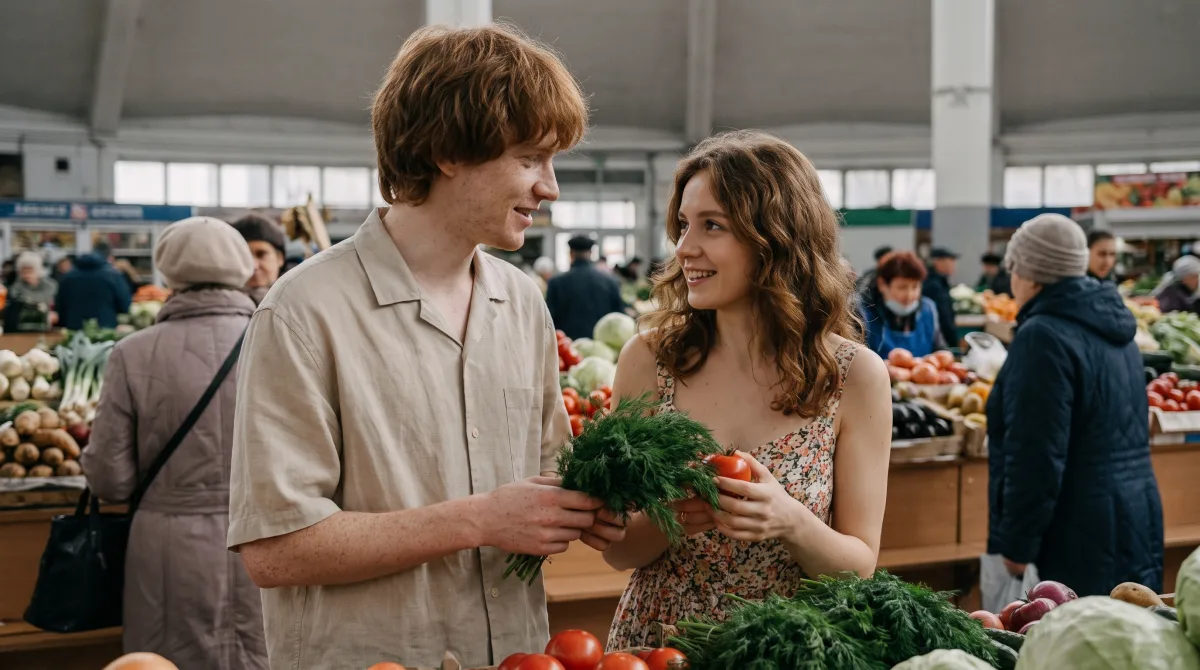
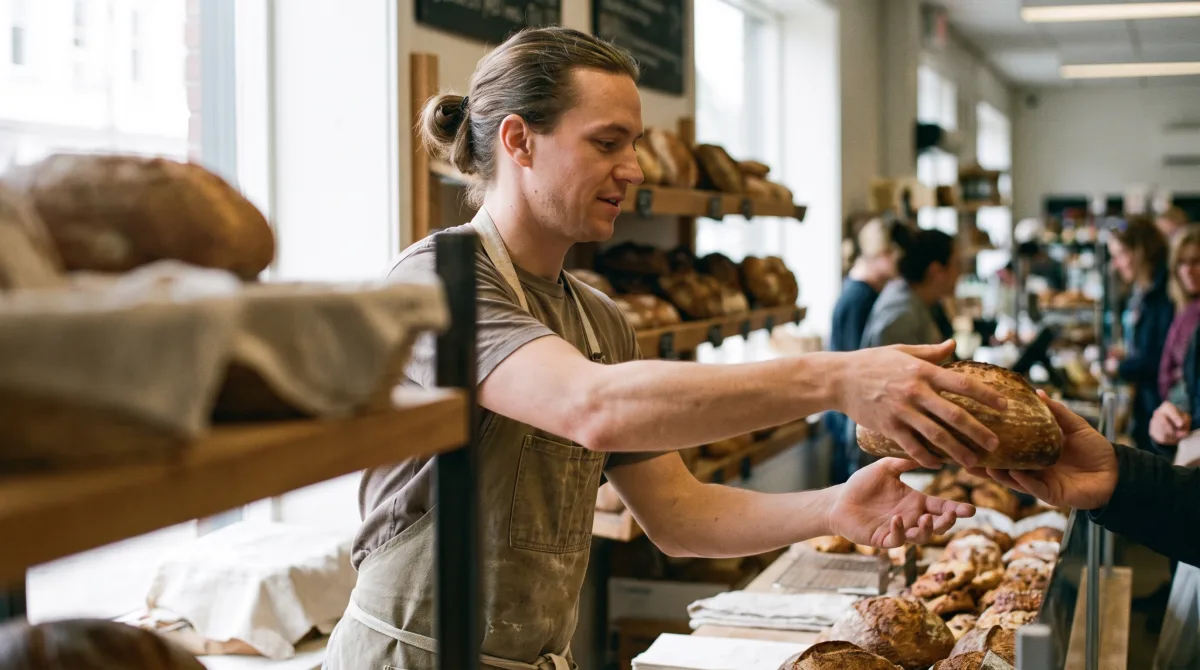
That distinction sounds abstract until you watch where each kind of eater spends a Saturday morning. One person is standing in a line for bread that will be gone by noon, arguing gently with a vendor about which melon is actually ready. The other is scrolling a reservation app, deciding between two rooms neither of them has been to yet. Both might write "foodie" on a profile. Only one of them just told you something true.
A restaurant reservation proves someone can use an app. A market trip proves someone already knows what they're buying — the stallholder who tells you the plums are three days from ready, the queue for bread that sells out by eleven. None of that photographs the way a tasting menu does, and none of it can be faked by anyone who hasn't shown up before.
A market habit gives away three things a restaurant list never will:
- Whether they know what's actually good this week, not what a menu insists is seasonal
- Whether they'll wait in a line for something ordinary, or only for something worth posting
- Whether the point of the trip was the ingredient, or the outing
None of this makes a restaurant date wrong — plenty of real food people also love a good dining room. It's a question of which one tells you something you didn't already know, and that's worth writing into your own manuscript before the first message goes out.
A "foodie call" is when someone accepts a date with no romantic interest, purely for a free meal. A 2023 replication study across three countries found 52.8% of the U.S. women surveyed admitted to having done exactly that, against roughly 13% in Poland and 7% in the U.K. (Orhan et al., 2023). Two caveats do most of the work here. The study surveyed only women — men were never asked the same question — so it establishes nothing about which direction this runs more often. And the seven-fold gap between the U.S. and the U.K. samples is a strong hint that what's being measured is a local dating norm, not a fact about anybody's character.
Which means the word "foodie" on its own tells a match nothing about intent — the same seven letters cover someone planning a real evening and someone planning a free entrée. A checkbox can't tell those two people apart. A paragraph about what you actually cooked last week is harder to fake than either one, and it's why writing beats a tag when the thing you're trying to signal is genuine.
Going out and eating well aren't opposites — they just optimize for different things, and most food-forward couples do both. The useful question isn't which one you prefer. It's which one you're actually building a relationship around.
| Eating out to be seen | Eating in to actually eat | |
|---|---|---|
| What the outing is for | A backdrop worth posting | A meal worth finishing |
| Where attention goes | The room, the wait, who's there | The plate, the pace, the conversation |
| What "let's cook Sunday" signals | An inconvenience | An invitation |
| What it predicts | Fit with performance, not necessarily food | Fit with an actual shared food life |
Neither column describes a worse person. They describe two different evenings that happen to use the same word — "foodie" — to explain themselves.
Write about the bread you waited in line for, not the table you bookedThe Mannheim researchers found the effect wasn't limited to relationship satisfaction. More frequent shared meals also tracked with higher life satisfaction, fewer depressive symptoms, and better subjective health (Herwig et al., 2026) — the association held most strongly for couples who lived together, which makes sense: shared groceries and a shared kitchen turn eating into daily coordination, not a scheduled event.
That's correlation, worth saying plainly — couples who already get along may simply choose to eat together more, not the other way around. But the caveat cuts both ways: a meal-frequency habit is still something observed over a week, not a stated preference someone can perform for one dinner and then drop.
It's the same gap that makes "I love reading" say almost as little as "foodie" does on its own — what someone actually reads for tells you more than the label ever will. Neither interest carries its own meaning. The daily habit underneath it does.
You watch what someone chooses to write about, not what they list. Anketta's matching doesn't ask what your interests are — it watches what you highlight, and marking a phrase like "the market on Saturdays" as something you loved teaches the algorithm to surface more manuscripts that mention exactly that, not more manuscripts that happen to say "foodie." The specific beats the generic every time, and that's how the matching actually works underneath the label — a pattern in what you wrote and what a reader underlined, not a tag either of you ticked.
Is "foodie" a meaningful interest on a dating profile?
Barely, on its own — it's one of the most commonly listed interests, so it filters out almost nobody. What's informative is the behavior underneath it: whether someone actually shops and cooks, or just eats out and photographs it.
What's a foodie call, and how common is it?
A foodie call is accepting a date for a free meal with no real romantic interest. A 2023 three-country replication found just over half of the U.S. women surveyed had done it at least once — against roughly 7% in the U.K. sample. The study asked only women, so it says nothing about how often the reverse happens, and the gap between countries suggests a local dating norm rather than a trait.
Should a first date with a self-described foodie be a restaurant?
It can be, but a market, a food hall, or cooking something small together tells you more in less time. A restaurant date shows you how someone behaves in a room built for two strangers — polite, a little performed, on best behavior by design. A market or a stove shows you how they actually shop, decide, and improvise when the plan doesn't quite work.
Does cooking or shopping together really predict relationship success?
Frequent shared meals correlate with higher relationship satisfaction, life satisfaction, and fewer depressive symptoms in couples, according to the 2026 Mannheim study — strongest among couples who already live together and share a kitchen.
What if one of you cooks and the other doesn't?
That's not automatically a mismatch. The relevant question isn't who holds the knife — it's whether food is something you build a week around together or something one person handles alone while the other watches.
Is "foodie" overused on dating profiles?
Yes, which is exactly why it's stopped meaning much. A word this common needs a specific sentence behind it — what you actually cooked, bought, or waited in line for — before it tells a stranger anything real, which is exactly what's worth putting in writing instead.
The market closes by early afternoon either way, whether or not you bought anything worth writing about.
Unsure about writing? Try reading first.