Small-Town Dating: When Everyone Already Knows You
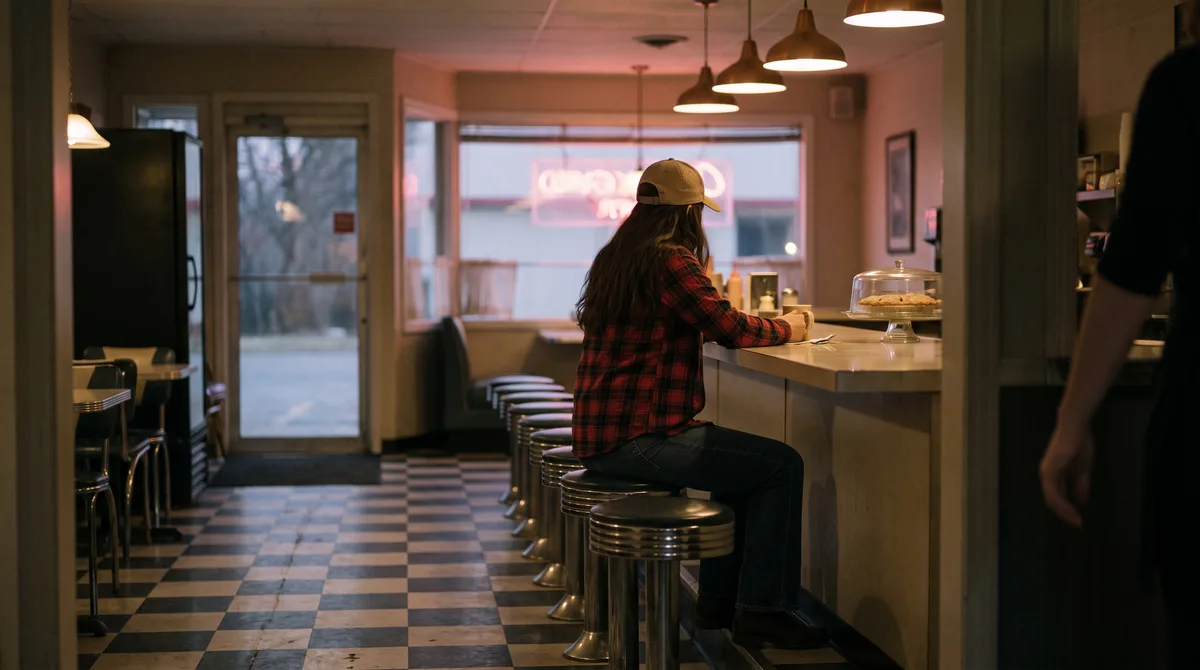
The diner on Main Street empties out by nine, and the two people still sitting at opposite ends of the counter know exactly why they haven't said hello: her cousin dated his college roommate, and neither one wants to be the version of that story people repeat for the next decade. By 2017, meeting online had become the single most common way heterosexual couples in the United States found each other at all — 39% of them, up from just 2% two decades earlier — and that shift landed as hard in towns of a few thousand as it did in cities of a few million (Rosenfeld, Thomas & Hausen (2019)).
This isn't a story about lonely rural bachelors, or a coastal joke about flyover romance. It's a math problem, and math problems have documented answers — the trouble is that most dating advice was written for cities, where the answer to "who else is out there" was never really the question.
Put in writing what the gossip never quite gets right, and a stranger sixty miles away only has your own sentences to go on.
Write the version only you can tellA city dater who strikes out on a Tuesday has thousands of unfamiliar profiles by Wednesday. A small-town dater runs out. Rosenfeld and Thomas's 2012 study of how American couples meet found that people who face a thin market for partners — gays, lesbians, and middle-aged heterosexuals among them — are especially likely to meet partners online, and geography turns out to work the same way sexual orientation and age do: whatever shrinks your local set of strangers pushes you toward a wider one.
The pool isn't just small. In much of rural America it is shrinking on a schedule. Rural farming-dependent counties have lost about 40% of young adults between 20-29 years old each decade since the 1950s, and the people who stay are dating from what's left.
"Farming has continued to get bigger and more mechanized, so there are fewer jobs on the farms left." — Kenneth Johnson, demographer, University of New Hampshire, KCUR (2023)
Fewer farm jobs means fewer twenty-somethings sticking around, and fewer twenty-somethings sticking around means the dating pool empties faster than any single person's bad luck could explain.
Smaller than most people assume. The Census Bureau redrew the line after the 2020 count: what used to qualify as urban at 2,500 residents now needs 5,000 (Farm and Dairy (2022)). Below that line, you're statistically in the same dating math as every other place the federal government now calls rural, whether it feels like farm country or just a quiet exit off the interstate.
| A city of 500,000 | A town of 5,000 | |
|---|---|---|
| Unfamiliar singles you could plausibly meet this month | hundreds | a handful |
| Odds a match already knows someone you dated | low | near-certain |
| What actually widens the pool | a new neighborhood | a new radius on the map |
Not the way most people fear. The instinct is to picture the whole county scrolling past your photo by Friday — but a text-first app like Anketta shows no photos at all before two people match, and phone numbers and addresses stay server-blurred from anyone you haven't matched with. What a stranger sees first is what you actually wrote, not a face the barber's wife would recognize at the gas station.
That single design choice changes what "everyone already knows everyone" means. The town can still guess. It can't confirm anything it was never shown.
Anketta never asks where you are, either — you type your city once, and no distance gets calculated or displayed to anyone. For someone whose actual address is one intersection and a water tower, that omission is doing real work: a dating app that doesn't quietly triangulate your location is a different proposition when your location is the whole problem, not an anonymous account with no name attached at all, which solves privacy by removing the person along with the risk.
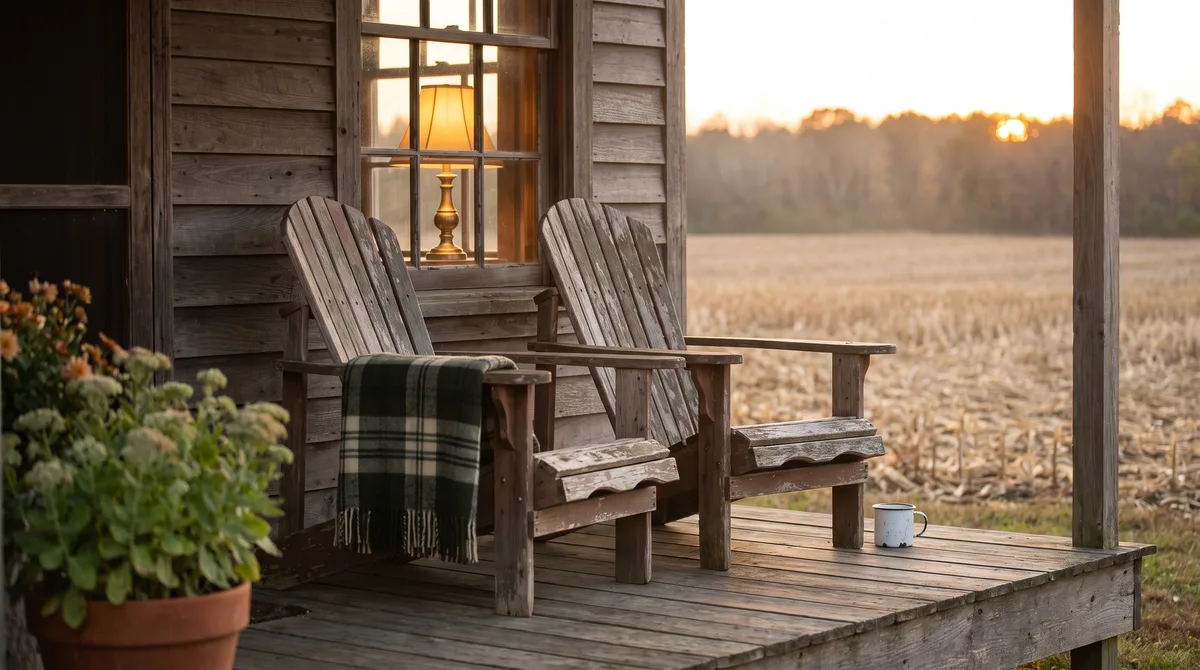
The honest answer: distance stops being optional and starts being a variable you manage on purpose. FarmersOnly.com has drawn more than 10 million members since it launched in 2005 by doing one thing well: it guarantees the person on the other end already understands cattle prices, or a 4 a.m. milking schedule, or why a Saturday can't move. That's a real problem solved — shared context, instantly, with no explaining required.
It doesn't solve volume. A niche app narrows an already-thin pool further before it widens anything. The fix for a town of five thousand isn't a smaller filter. It's a bigger radius and a manuscript that does the explaining a shared background used to do for free.
- Write more, not less. A stranger two counties over has none of the context your town supplies automatically — the manuscript has to do the job small talk and mutual friends used to do.
- Set your radius on purpose, before you need it. Decide in advance how far you're willing to go for someone worth it, rather than negotiating it mid-conversation once you already like them.
- Treat "everyone already knows" as material, not a secret. Readers underline the lines that feel true; a small town explained honestly reads as specific, not as an excuse.
- Stop rereading the same forty profiles. If the app you're using shows you the same people every week, the pool isn't small — the app's filter is.
- Let one good match matter more than usual. In a market this thin, walking away from something workable costs more than it would in a city with another option arriving Thursday.
None of that requires moving. It requires actually writing down the parts a stranger would need explained instead of assuming the town's version of you will do the introducing.
Say the thing a shared hometown would have said for youIs online dating actually worth it if I live somewhere small?
Yes, more than in a city, by the numbers: 39% of heterosexual couples nationally met online by 2017, and people in thinner markets — which a small town is, geographically — are the group research finds most likely to benefit from a wider search (Rosenfeld, Thomas & Hausen 2019; Rosenfeld & Thomas 2012).
How many people my age are actually still around to date?
Fewer than a decade ago in most farming-dependent counties, where 20-somethings have declined by about 40% per decade since the 1950s as farm jobs mechanized. That decline is regional, not universal — check what's actually happened locally before assuming the worst.
Will a dating app just tell everyone in town I'm on it?
No app shares your presence with anyone who hasn't matched with you, and a text-first design that hides photos until a match adds a second layer: nobody sees a face to recognize before they've read a word you wrote.
Should I date outside my own town if I live somewhere small?
Usually, yes, if the local pool is genuinely small — a wider radius is the direct fix for a thin market, not a workaround. Decide the distance you're comfortable with before a specific person makes you renegotiate it.
Does a smaller dating pool mean I should lower my standards?
No — it means the cost of writing a vague, generic manuscript is higher, not lower. In a big city a bland one just gets skipped for the next; in a small market, being specific is what actually gets you found by the one or two people who'd suit you.
Is it normal to already recognize the name of everyone I match with?
Very. It's the defining fact of a thin market, not a sign the app is broken. The useful move is writing the specific, non-generic parts of yourself a shared hometown never required you to explain out loud.
The town will keep believing it already knows how this ends. It doesn't — not for the two people actually still typing to each other well past midnight, in a place everyone assumed had nothing left to say.
If the version of you the town has isn't the whole one, only your own sentences can say the rest.
Unsure about writing? Try reading first.