Dating for Cyclists: Pace, 6 a.m. Rides and Who Waits
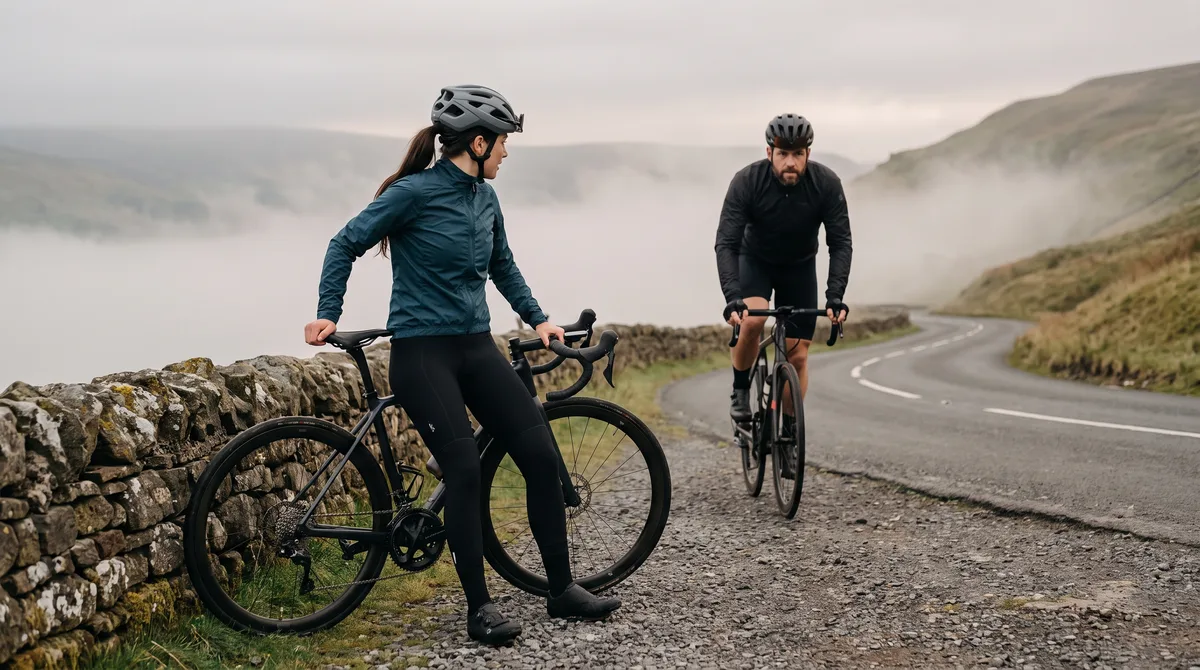
At the top of the third climb, one of you is already there, bike against the wall, bottle half empty, and the other is still two switchbacks down in the lowest gear. Whether the first one waits, and how they wait, tells you more than most dinners. On Strava, 43% of the cyclists on the platform logged at least one bike commute in 2025 (Strava, 2025), so the person you meet may ride to work, to race, or both.
That figure describes Strava's own users, a self-selected group that records rides, not cyclists everywhere. It still shows the range: dating a cyclist can mean a commuter with a pannier or a Sunday racer with a power meter.
Both come with an early alarm, a calendar built around weather and a bike that gets more attention than the furniture.
Here is how to read those habits, schedule around them and write about them before anyone has to stand at the top of a hill pretending not to be out of breath.
Write the ride you would never skipA ride can be a good second date and a risky first one. The honest test is pace: two people who ride at different speeds either split up for most of the route or negotiate a rule. The rule that works is the regroup, where the faster rider waits at agreed points, the slower one sets the tempo between them, and nobody comments on gears.
The psychology is on the ride's side. In a series of experiments, couples who took part together in a 7-minute novel and arousing task reported a greater increase in relationship quality than couples who did a mundane one (Aron et al., 2000). A route neither of you has done qualifies. A familiar loop at a familiar speed, much less.
Keep the first one short, flat enough to talk on and finished at a café, because a date needs somewhere to sit down.
Because the road is emptier, the heat is lower and the rest of the day stays free. For a cyclist, an early start is a courtesy to traffic and to the plans that follow. It also shapes dating: weeknight drinks at 9 p.m. collide with a 5:45 alarm, and many cyclists would rather propose breakfast.
There is a research angle, with limits. A study that tracked 306 couples aged 18 to 80 with accelerometers for seven days found that partners' activity moved together hour by hour, and that this synchrony was higher in the morning and in the evening (Pauly et al., 2020). The study was of couples in general, not cyclists, so read it as a hint: the edges of the day are when partners tend to move together.
If your own schedule is unusual, dating around shift work runs into the same arithmetic of mismatched hours, and the answer is the same: fix one reliable window and protect it.
Yes, more than the bike does. A commuter treats cycling as transport and tends to dress, plan and talk like it. A sport rider treats it as training, with a plan, a power number and a Saturday that is spoken for. Neither is more serious. They are serious about different things.
| Bike commuter | Sport rider | |
|---|---|---|
| Why they ride | To get somewhere, weather permitting | To get faster, or to ride long |
| Typical date | Lunch, a walk, a ride home together | A morning ride, then coffee |
| What eats the calendar | Rain, a punctured tyre, a late meeting | Training blocks, club rides, races |
| What to ask | Which route they take, and why that one | What the season looks like |
| What can cause friction | Being late because of a flat | A Saturday that is already spoken for |
The numbers hint at how wide the commuter category is. Strava reports that cyclists worldwide logged 550 million miles of bike commutes in 2025, and that Boomers had the largest share of commuters of any generation (Strava, 2025). The stereotype of the lycra-clad twenty-something is only one slice of who is out there.
Both. A club is a pool of people who already share your hobby, your schedule and your lingo, and that makes first conversations easy. It is also a small world: rides are public, the group chat is shared, and a breakup is visible every Sunday for a year.
The practical rule is to date outside the club's immediate circle until you know you are serious, and to treat the group ride as a group ride, not a date with an audience. If someone in the club interests you, ask them to a coffee after the ride, not to a wheel to sit on.
Club life also builds a vocabulary of inside jokes that can make a non-rider feel like a guest. Which brings up the other direction.
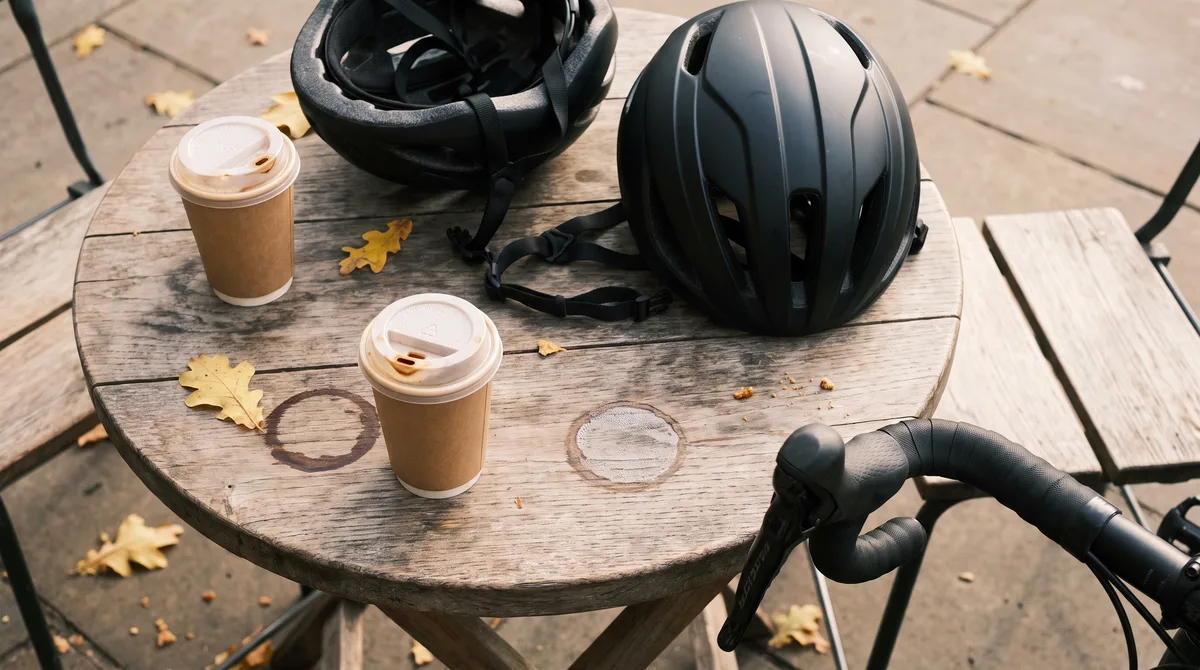
Join part of it and keep part of your own life. Date a cyclist as a non-rider and you will spend some mornings alone, so the question is whether that feels like freedom or like being left. Decide that early, and out loud.
Here is a workable setup for the first months:
- Ask what the ride is for: fitness, escape, competition or company. Each answer changes what a missed Saturday means.
- Say what you would like, such as one shared ride a month at an easy pace, and one thing in your week that is yours.
- Meet the bike, not just the rider. Let them show you why this frame, this saddle, this route. Interest in their thing is a form of attention.
- Pick the part of the day you do share, for example the breakfast after the ride, and make it a standing plan.
- Never ask them to choose between you and a training block in the first months. Ask when they are free, and believe the answer.
If you are the one who rides and your partner does not, the same logic runs backwards. A hike or another low-gear outing is often an easier bridge than a bike. And a second date that has nothing to do with wheels shows you whether the two of you work off the saddle.
Write what the ride gives you, and what you would shareA cyclist's dating page usually says "loves cycling" and shows a bike. That is the least informative thing a rider could say. The better version names the route, the hour and the rule: the 6 a.m. loop, the pace you hold, what you want from someone who rides slower, or who does not ride.
Anketta works on exactly that detail. You write a manuscript instead of uploading a photo grid, and the reader underlines the lines that land. A sentence about the climb you keep going back to, or the commute you will not give up, gives someone a real place to start a message. And once two people match, the 48-hour window decides whether they actually write to each other.
If you do not know where to begin, writing your way into dating walks through the shape. The point is not to sound sporty. It is to sound like someone who has thought about how to share a road with another person, and chemistry follows from details like that more than from a jersey.
A ride ends, the person at the top of the climb turns around, and what they do next, wait or ride on, is the one line of the story nobody can write in advance.
Is a bike ride a good first date?
It can be, if it is short, flat and ends at a café. A long or hilly ride puts a speed gap in front of both of you before you have talked. A novel route helps: experiments on shared novel, arousing tasks link them to higher relationship quality (Aron et al., 2000).
Should the faster rider wait for the slower one?
Yes, at agreed points. Agree beforehand where the regroup is, let the slower rider set the pace between stops and skip any remark about gears. The faster rider waiting is not charity, it is the point of riding with someone.
How do I date a cyclist if I am not sporty?
Be curious about their bike and their routes, and keep an interest of your own. Offer one shared easy ride a month and a standing breakfast. You do not have to match their speed, only to be clear about what you want from the time you have together.
Do cyclists date other cyclists more often?
There is no solid data on that, so treat claims either way with suspicion. What is true is that riding gives people a shared schedule and vocabulary, and a club is a ready-made pool. Plenty of cyclists date non-riders happily.
Is it a red flag if my date cancels for a training ride?
Once, no. Repeatedly, and without offering another time, yes. A training plan is a legitimate reason to move a date. A pattern of putting you last is a different conversation, and it is one you can have early.
Unsure about writing? Try reading first.