Dating for Fitness Enthusiasts: The Room Where Nobody Talks
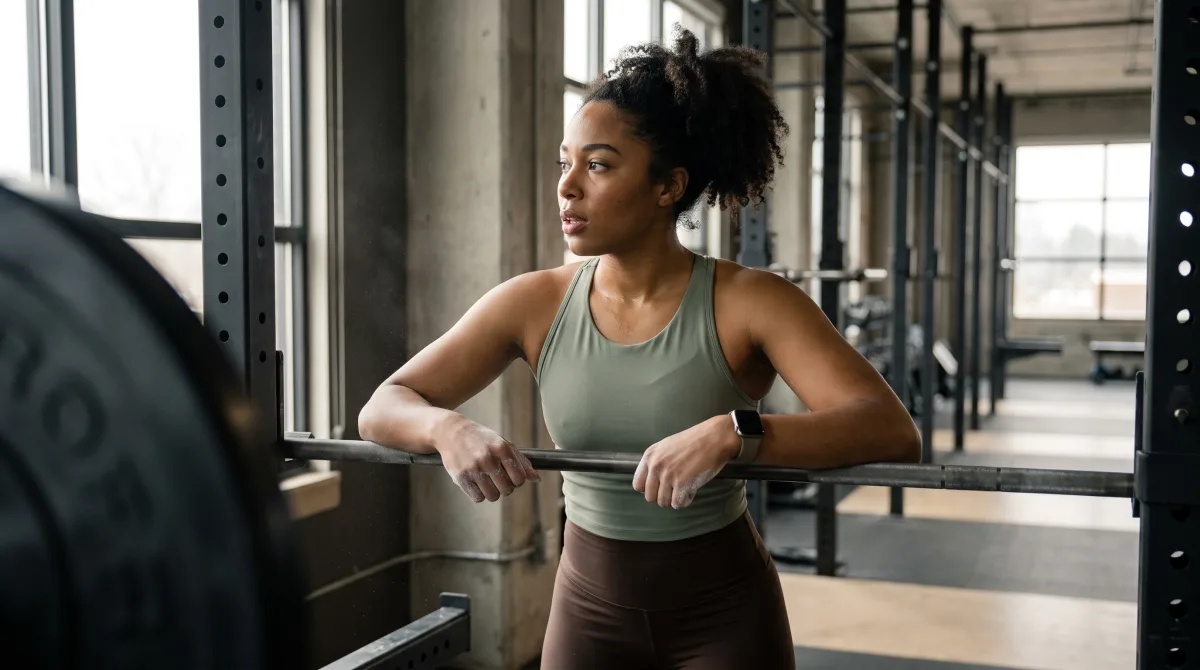
A gym at seven in the evening and a bar at seven in the evening hold the same crowd: the same age range, the same density, the same loud music. Only one of them is understood as a place to meet someone. A 2025 PLOS ONE study of 279 women found that 46.6% had received unsolicited compliments on their appearance at the gym, most of them from men.
That single finding explains the whole social architecture of the place. Dating for fitness enthusiasts is not short of proximity — six hours a week in a room with forty strangers is more contact than most office jobs provide. What it lacks is an opening both people would agree is harmless. The compliment, historically the entry-level move, now lands on the wrong side of a line that has moved for good reasons.
If the room gives you nowhere to start, start on a page insteadThe reading of it did. The same authors describe a theme they call being "always on display" — women in their sample reported feeling "sexualised", "on the defense", "creeped out" and "unsafe" because of unsolicited stares and comments from men in the gym. An approach that once counted as flirtation is now, more often than not, filed as intrusion before the first sentence is finished.
None of that is a complaint about the shift. It is a description of what the shift did to the room. A person mid-set is working — she is counting, breathing to a pattern, and holding a bar that will get heavier the longer someone stands there talking. The approach has no good window, and everybody who trains knows it, which is why the vast majority of people in any commercial gym spend the entire hour speaking to nobody at all.
So you get a strange result. The place where a fitness-centred life puts you among people most reliably is also the place where you are least likely to have a conversation with any of them. Six days a week of company, and no company.
Because that expectation is close to universal, and it is close to wrong. Nicholas Epley and Juliana Schroeder ran ten experiments on commuters and lab participants for Mistakenly Seeking Solitude (Journal of Experimental Psychology: General, 2014). People instructed to talk to a stranger had a better time than people who sat in silence — and a separate group of people, asked to predict it, guessed the exact opposite.
Their explanation is the interesting part: the mistake persists because we underestimate how interested the other person is in talking. Nobody speaks, so nobody learns they were wrong, so nobody speaks. A gym takes that loop and adds headphones, a set timer, and a real risk of being the creep. It is one of the most efficient silence-manufacturing environments ever built, and it manufactures silence on people who chose to be there five or six times a week.
Almost always sideways, and almost never mid-set. The openings that work are the ones with a task attached — asking for a spot, asking whether a rack is free, adjusting someone's setup after they asked. The task supplies the reason to speak, so neither person has to claim the reason was attraction, and that is the entire difference.
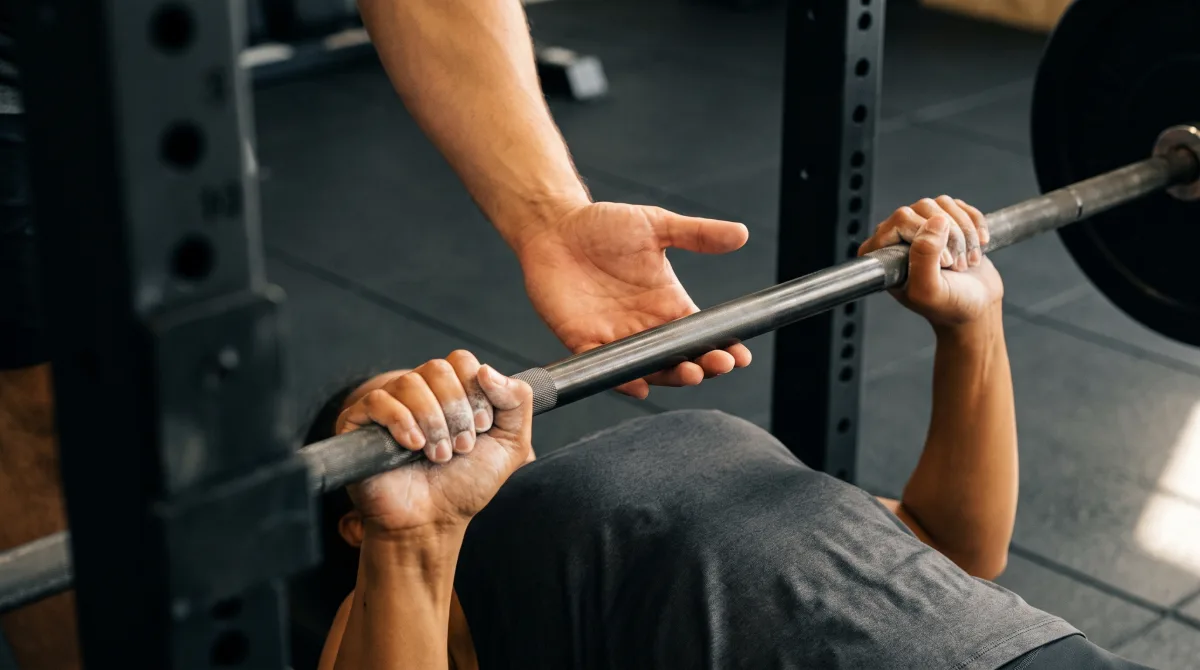
The other window is after. Not during the working set, not between the working sets — after, on the mats, when the heart rate is down and neither of you is holding anything heavy. Classes produce it more often than open floors do. So does the ten minutes of stretching that most people rush through on the way to the changing room, which happens to be the only stretch of gym time that has room in it for a sentence longer than four words.
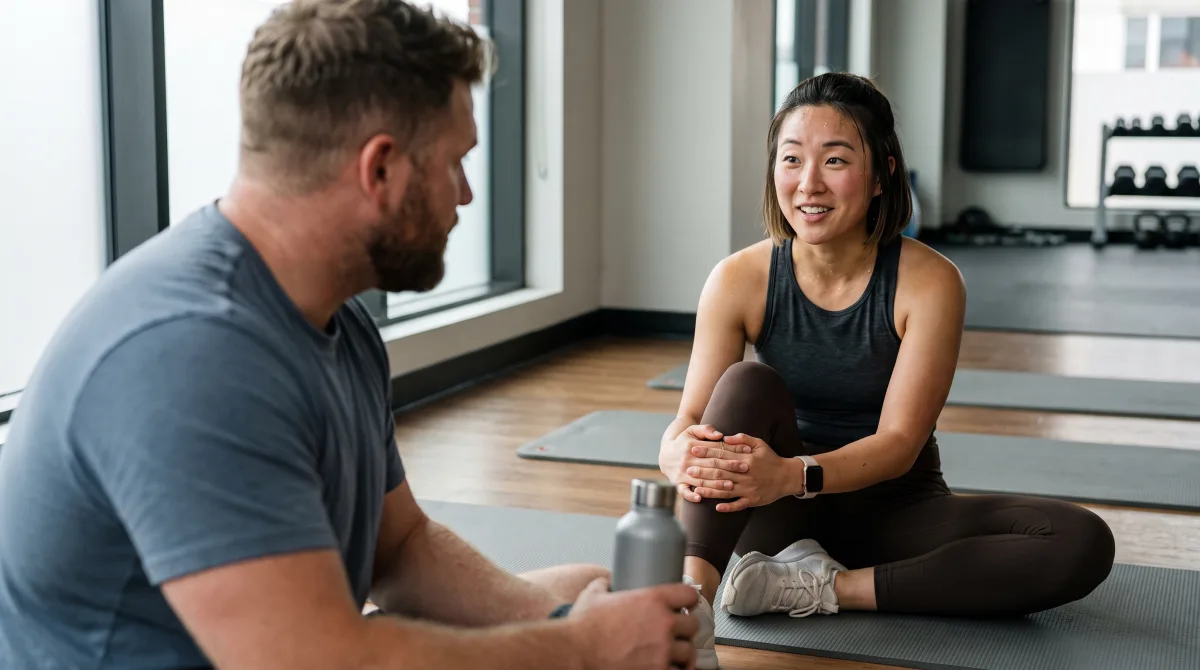
Even so, that is a thin harvest for six hours a week. Which is why most people who train seriously end up meeting partners the way everybody else does — on an app, where the second half of this problem is waiting for them.
Because it is the most parodied genre in online dating, and parody is expensive. Research in Sex Roles (2022) put 567 US college students in front of a mock dating profile and found that a sexualised self-presentation carried a cost: the man who posed shirtless was rated as less competent and more of a sexual risk-taker than the identical man in a shirt.
That study looked at one narrow case — a young white man, an American student sample — so it is not a law of nature. But it names the mechanism honestly. A body shot is read as a claim about the person making it, and the claim it is read as making is rarely the one intended. Meanwhile the photo answers a question nobody serious is asking.
| A gym photo answers | A gym photo can't answer |
|---|---|
| What shape you are in this month | What you were like the year you couldn't train |
| That training is part of your life | How much of the week it takes, and what it gives back |
| That you own a mirror and a phone | Whether you'd rather talk about lifting or about anything else |
This is the trap that catches committed people hardest. The more central training is to your life, the more of your week it explains — and the fewer ways you have to say so that don't read as the cliché. Leave it out and the profile is a lie by omission. Put it in as a photo and you have joined a genre. That is a real bind, and no amount of better lighting solves it.
Sentences, not statistics. A 2026 study in Psychology of Popular Media ran three experiments on dating-profile self-presentation and found that narrative profiles produced more empathy than non-narrative ones carrying identical information — and that the empathy predicted romantic interest, including actual attempts to make contact. Same facts. Different shape. Measurably different result.
Which means the thing to write is the story the photo can't hold — and a page you fill in yourself has room for all of it:
- Name the hour, not the physique. "I train at six because the gym at six is empty and I like the building better when it's empty" says more than any angle of the same body.
- Write the year it went wrong. The injury, the stretch when you stopped going, the month you started again at half the weight. Nobody photographs that year, and it is the one that explains you.
- Say what it gives back, in plain terms. A place to put a bad day. An hour where the only problem is a number on a bar. That is a legible reason to care about something; "gym rat 🏋️" is not.
- Give a reader one line to argue with. An opinion about training — that cardio is underrated, that the 5 a.m. crowd is insufferable — is something a person can answer. A physique is not.
- Leave the numbers out unless a number is a story. Your deadlift is a fact. The first time you pulled it after two years off is a scene.
It can invert the order. Anketta shows no photos at all before a match — not in the feed, not anywhere — so what a reader meets first is a manuscript you wrote yourself: a free-form page of headings and paragraphs, with no intake form and no length target. Photos exist, up to three of them, optional and shown only inside an active match, and only to someone who has offered one back.
The mechanic matters more than the absence. There is no swipe on Anketta. To signal interest in someone you highlight a line of their writing that landed — one sentence, capped at that — and then press the heart, which means the first thing anyone learns about you is which of your sentences someone else could not let go of. Two hearts make a match. For people whose lives are legible in a photograph and misread in one, that ordering is the whole point, and it is close to what dating without photos was always trying to get at.
One more piece fits the gym problem specifically. Once your manuscript is approved you get a public link and a QR code you can hand to someone in person — at a class, in the car park, at the desk on the way out — instead of performing an approach between sets. Phone numbers, emails and addresses inside it stay server-blurred to anyone you haven't matched with, so handing it over costs you nothing. It is the intentional version of the thing the room refuses to let you do: not an interruption, just an offer to be read later, which is roughly what slow dating means in practice. If you'd rather see the shape of it before writing a word, start with someone else's page.
Is it ever acceptable to approach someone at the gym?
Between sets, no. After a class or on the mats afterwards, with a real reason and a short exit if the answer is no, it is normal behaviour. The test is whether the other person can end it in one sentence without any social cost — if they can't, it wasn't an approach, it was a trap.
Should I put a gym photo on my dating profile at all?
One, in context, doing something — a climbing wall, a race number, a class — reads differently from a mirror shot in an empty locker room. The problem is not that you train. It is that the mirror selfie has become a genre with a set of assumptions attached, and you inherit them all.
How do I say training matters to me without sounding obsessive?
Describe what it costs and what it returns, in one line each. "Six mornings a week, and it's the only hour of the day nobody needs anything from me" is specific, human and hard to parody. Any sentence containing the word "grind" is not.
Do I need to date someone who also trains?
No, but you do need someone who is not quietly annoyed by it. Shared training is convenient; the actual requirement is that neither person treats the other's hours as a negotiation. That is a temperament question, and it shows up in writing long before it shows up in a shared calendar.
Why does nobody talk at the gym any more?
Headphones, set timers, and a well-founded caution about unwanted attention. The result is a room built for proximity and hostile to conversation, which is why the people who spend the most hours there frequently meet the fewest people there.
Where do fitness people actually meet partners?
Mostly outside the gym — classes and clubs with a social structure attached, through friends, and on apps. The gym floor itself is a poor introducer. It gives you a shared context that is only useful once a conversation has already started somewhere else.
The woman between sets isn't waiting for anyone to speak to her; she's got ninety seconds and she's spending them on her breathing. Nothing has to happen in that gap. What you'd have said in it is worth writing down instead, somewhere a reader has time to answer.
Unsure about writing? Try reading first.