Never Been in a Relationship? What the Research Actually Shows

You're not the only one who reached your late twenties without a single relationship behind you. Pew Research Center found that in a 2022 survey, 63% of men under 30 described themselves as single, compared with 34% of women the same age (Pew Research Center, 2023) — single meaning not married, not living with a partner, and not in a committed relationship. Some of that gap is dating-market math. Some of it is simply people who haven't started yet, for reasons that have little to do with what anyone assumes.
The assumption arrives before any explanation does — shy, anxious, somehow behind. Most of the time it's plainer than that: a run of ordinary years that never happened to include this one thing, the same way some adults have never lived alone, or learned to drive, or been on a plane.
If any of that describes your own timeline, the next few sections are worth reading before you assume the worst about yourself.
Write the years nobody else asked aboutNot necessarily, and treating it as a personality flaw gets the order of causation backwards. Shyness and social anxiety are real, well-documented experiences with their own dating obstacles — dating for shy people and dating while socially anxious cover them directly, and neither is what this piece is about. Plenty of people with no relationship history are neither shy nor anxious. They're something else entirely.
A few of the actual reasons look nothing like a diagnosis:
- A small school or hometown with a genuinely thin field to choose from.
- Years spent on work, caregiving, or a health situation that used up the time dating needs.
- Faith, family, or culture that put off a first attempt on purpose, not by accident.
- Plain chance — the right person, at the right moment, simply hadn't happened yet.
Say you spent your twenties finishing a residency, or caring for a parent, or working two jobs in a town where almost nobody your age stayed. None of that is a character trait. It's a decade that had other things in it.
Rarer than the stereotype, but not vanishingly rare. A 2021 study tracked 1,710 young adults in the Netherlands from age 17 to 29, and by that final wave, researchers found that greater early withdrawal significantly predicted a higher likelihood of never having been involved in a romantic relationship by early adulthood (Barzeva et al., 2021) — a small minority, but a stable and real one, not a rounding error.
The same study offered a plainer explanation than "shy": people who'd had fewer early chances to practice the ordinary mechanics of approaching someone were the ones most likely to enter a first relationship later, or not yet at all. That's a skills-and-practice story, not a verdict on anyone's worth — the same way someone who never learned to swim isn't broken, they just never had the pool.
A little, in the sense that any unfamiliar thing takes some getting used to. Not in the compounding, ticking-clock way the fear frames it. First relationships start at every age, for reasons that have nothing to do with a deadline.
Structured dating coaching earns real credit here: a program that walks someone through eye contact, small talk, and how to end a conversation gracefully is teaching an actual, transferable skill. It just isn't the only route in, and skipping it says nothing about anyone's character.
"The more that you can go with the flow and not chase your belief of what dating should look like, the more you can tolerate disappointments." — Dr. Sheri Jacobson, psychotherapist and founder of Harley Therapy, Refinery29 (2023)
That advice was aimed at someone specific — a woman close to thirty, fielding family questions about a dating history that doesn't exist yet. It holds for anyone comparing their own timeline to an imaginary schedule nobody else is actually following either.
Writing that timeline down, instead of just carrying it around, tends to be the part that actually helps.
Put your real timeline in your own wordsIt varies more than the standard story allows. A 2023 study following sexual-minority youth into adulthood found that people whose lesbian or gay sexual orientation emerged in adulthood only delayed their first dating relationship compared with heterosexual peers the same age (Mernitz et al., 2023) — an entire, well-documented population for whom a later first relationship is the normal pattern, not an exception that needs explaining away.
None of that makes any one person's timeline identical to anyone else's. It does mean the calendar most people compare themselves against was never as universal as it sounded.
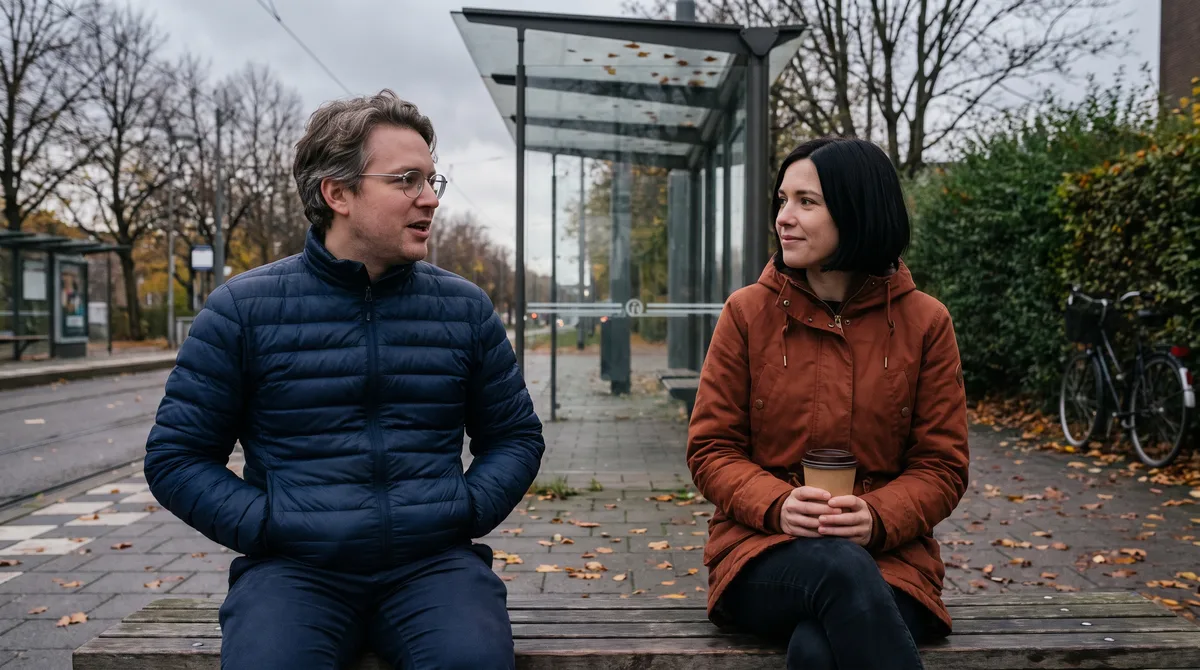
You write the actual shape of it, the way you'd explain any other true thing about your life — not as a warning label, not as an apology. Anketta's manuscript has no field for "relationship history" to check and move past; there's no box quietly answering the question for you. Someone with no dating history writes the years themselves — what filled them instead — and a reader underlines the one sentence that actually explains it, which does more work than a vague line about being "late to the dating scene" ever could.
Being specific about where you actually stand reads as confidence, not confession, once it stops sounding like an apology. A sentence about the residency, the small town, or the years spent somewhere else entirely tells a reader something concrete to react to — which is exactly what a checkbox for "relationship history" could never do, because it was never asking the real question in the first place.
Writing the version of events that's actually true has to happen before anyone reads it, and most drafts reach for a vaguer sentence instead of doing exactly that.
Is it actually rare to have never been in a relationship as an adult?
Rarer than average, not rare in an alarming sense. A 2021 Dutch study of 1,710 young adults found that a small minority had never been romantically involved by age 29 — real, but a minority, not the norm and not a diagnosis.
Does having no relationship experience mean someone is shy or anxious?
Not automatically. Shyness and social anxiety are their own separate topics with their own real challenges. Plenty of people with no relationship history are simply people whose circumstances — school, work, geography, timing — never happened to include one yet.
Do you have to explain it upfront on a dating profile?
No, and doing it as an apology usually backfires. A short, specific sentence about your actual life reads better than either silence about it or an over-explained disclaimer nobody asked for.
Does waiting longer make a first relationship harder to start?
Slightly, in the ordinary sense that unfamiliar things take some getting used to. It isn't the compounding penalty the fear suggests — the research on delayed first relationships shows it getting different, not harder.
Is "never dated" the same thing as being aromantic or asexual?
No. Those describe a lack of romantic or sexual attraction itself, which is a separate and distinct experience. Never having dated says nothing about what someone wants — only that the timing hasn't lined up yet.
Should you mention it in a first message?
Usually not the first one. Save the specifics for when someone's actually reading closely — a manuscript, not a one-line introduction — where there's room for the context that makes it make sense.
The years before a first relationship were never a waiting room. They were just years, and the first one starts whenever it starts — nothing needs to be settled in advance, only written down once.
Unsure about writing? Try reading first.