The Anti-App IRL Dating Movement in 2026
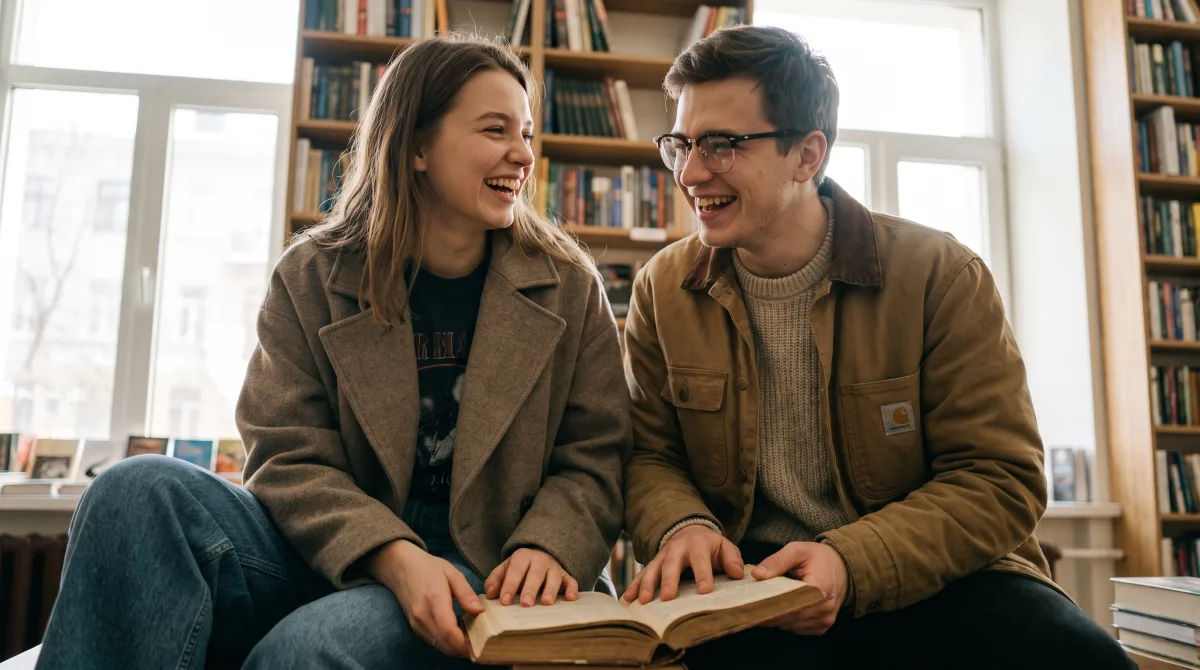
The anti-app IRL dating movement is the deliberate shift away from swipe apps toward in-person formats where romance is a side effect of showing up — run clubs, book clubs, supper-club dinners, singles mixers, dance classes. The idea isn't new. What changed in 2026 is the scale: a 2024 Eventbrite report found that 69% of millennials prefer in-person dating because it feels more genuine, framed explicitly around online-dating fatigue (Eventbrite, 2024). When two-thirds of a generation says it would rather meet over a shared activity than a grid of photos, a subculture becomes a market.
There's a complement to the clean-break story that most coverage skips. The same people walking away from swipe apps still have a problem the apps were supposed to solve — meeting someone outside their immediate physical radius. A run club introduces you to whoever already lives near your Saturday route. That's a feature and a ceiling. The honest 2026 pattern isn't "apps versus real life." It's a hybrid: in-person formats for the people already around you, and a slower text-first platform for everyone you'd never otherwise cross paths with. The movement is a correction, not a purge.
Write the version of you a run club would never meet.The formats that work share three traits: a recurring cast, a shared activity, and a low barrier to showing up. You want to see the same people week after week, doing something together, without having to declare romantic intent at the door. That combination turns strangers into familiars, and familiars into dates, without anyone having to perform a "first impression."
Run clubs are the breakout story. Strava's 2024 Year in Sport reported a 59% rise in running-club participation globally in a single year, and — strikingly — nearly 1 in 5 Gen Z athletes went on a date with someone they met through exercise (Strava, 2024). The math is simple: sixty to ninety shared minutes a week, a common goal, and conversation that has somewhere to start.
The wider events economy is moving the same direction. Eventbrite found that friend-making events like run clubs and speed friending grew 82%, and athletic singles events rose 136% (Eventbrite, 2024). The formats carrying that growth, roughly in order of how reliably they turn into dates:
- Run clubs. Weekly, physical, conversational. The lowest-pressure on-ramp because nobody came to flirt — which is exactly why it works.
- Book clubs. A text is the starting point for the conversation, the same principle behind essay-style dating: you meet the mind before the face.
- Supper clubs. Six to twelve strangers at one table, often seated by a host who plays loose matchmaker. High intimacy, small numbers.
- Dance classes. Salsa, bachata, tango — formats built on partnered repetition, so contact is structural, not awkward.
- Volunteer groups. Shared purpose plus a recurring crew gives you a reason to talk that isn't "do you come here often."
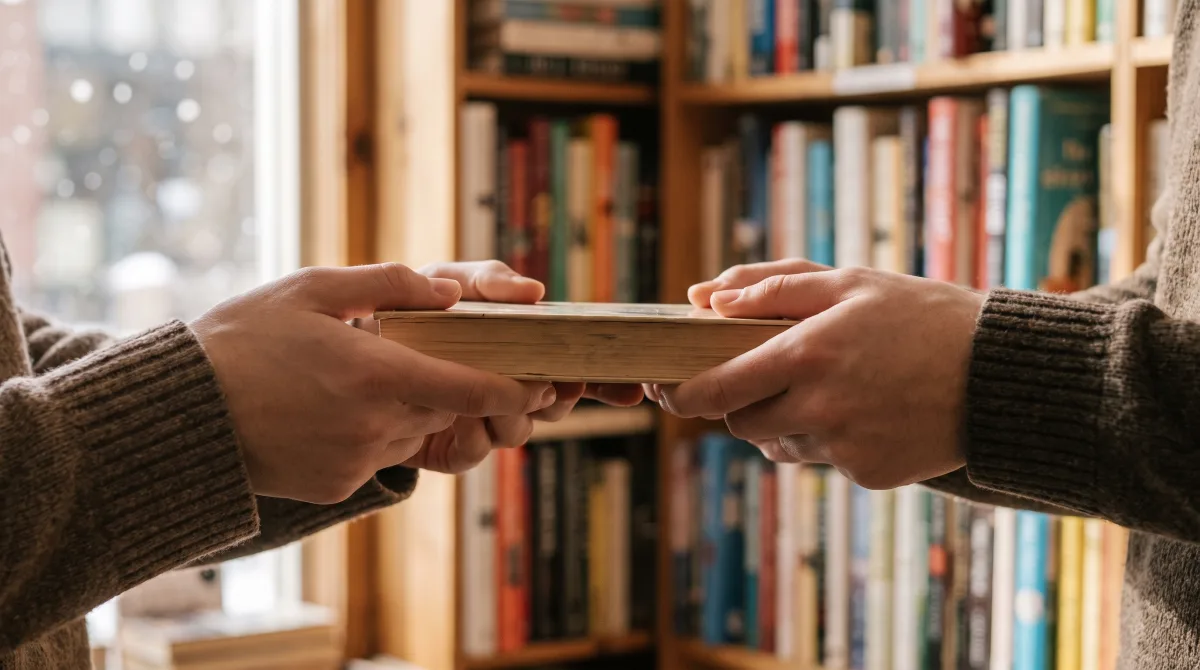
The data says offline introductions convert faster into real meetings, mostly because you're assessing a living person instead of a static profile. You watch how someone moves through a group, handles a slow mile, or argues about a book. That's a far richer signal than a posed photo and three bio lines — and it arrives before you've invested a single text thread.
Helen Fisher, the biological anthropologist and senior research fellow at the Kinsey Institute, has spent years pushing back on what apps can actually do. Her framing is blunt:
"All they do is introduce you. That's all they do." — Helen Fisher, biological anthropologist, Kinsey Institute (CNN Health, 2023)
Fisher prefers to call them "introducing apps," and the distinction matters here. An app hands you a name. A run club hands you eight weeks of watching someone be themselves before you decide anything. The offline format collapses the gap between "matched" and "actually knows what this person is like" — the gap where most app conversations quietly die. We unpack the broader numbers on that decay in our 2026 online dating statistics.
Yes — and not at the margins. The incumbents are posting declines that show up directly in their financials, which is the clearest evidence yet that the anti-app mood has teeth. Tinder's paying users fell 7% year over year to 9.7 million for full-year 2024, and Match Group's consolidated payer base dropped 5% to 13.8 million by the end of 2025 (Match Group, 2025). These aren't soft engagement metrics. They're people choosing to stop paying.
The burnout underneath those numbers is severe. A 2024 Forbes Health survey of U.S. dating-app users found that 78% experienced dating-app burnout — exhausted by the apps sometimes, often, or always — a figure that climbed to 79% among Gen Z and Millennials (Forbes Health, 2024). When four out of five young users are tired of the thing, a counter-movement doesn't need persuading. It needs an alternative — and IRL formats are the most visible one. We trace the psychology of that exhaustion in our piece on dopamine detox dating in 2026.
Eight weeks of showing up beats eight hundred swipes.For most people, no — but the working 2026 setup isn't all-or-nothing. It's a split: most of your energy into recurring in-person formats, a smaller share into a slower text-first platform for reach beyond your neighborhood, and zero into swipe apps. The IRL revival doesn't kill online dating. It kills the swipe, and reroutes the rest.
Here's how the realistic mix breaks down against the format it's replacing:
| Channel | Best for | The limit it hits |
|---|---|---|
| In-person formats (run / book / supper clubs) | People already in your physical radius; meeting through action, not a profile | Bounded by geography — you only meet who already shows up |
| Text-first platforms | Reach beyond your area; people whose values you'd never see at a glance | No shared room yet; the first meeting is still ahead of you |
| Swipe apps | Volume, speed, a quick dopamine hit | Burnout, shallow signal, declining payers — the thing the movement is leaving |
The reason in-person can't stand alone is the same reason it works: a run club is local by design. It will never introduce you to the person two cities over who reads the way you do. That's the gap a text-first app fills — not by competing with the run club, but by covering the ground a run club physically can't. The people who quit dating entirely usually quit the swipe, then quietly rebuild around formats that respect their attention. This is the same instinct behind slow dating in 2026 and the matchmaking renaissance: pay with intention, not with infinite scroll.
Text-first platforms fit as the reach layer — the complement that handles everyone an in-person format physically can't put in the same room as you. They matter most for people whose lives don't allow a standing weekly commitment, and for anyone whose match is more likely to share their values than their postcode. A run club is for your neighborhood. A manuscript is for everyone else.
Anketta is built for exactly that role. There's no swipe and no photo before you match — you read someone's manuscript, a written self-portrait, and signal interest by highlighting a phrase you like before pressing a heart. The matching learns from what you highlight rather than from a rapid yes/no: mark a passage you love and the queue surfaces more writing like it; cross one out and it pulls back. That's the semantic matching mechanism, and it rewards reading the way a book club does — slowly, on the substance.
The format also travels offline cleanly. Every manuscript has a shareable link and QR code you can hand someone at a meetup, with contact details server-blurred until you actually match — so the IRL encounter and the written one aren't separate worlds. You can meet at the run club and still let someone read who you are before the chat begins. The same case for writing-first connection runs through our authentic dating trend and anti-perfection dating pieces, and the IRL exodus is one of the forces reshaping the field in the state of AI dating in 2026.
This is a fast-moving trend, so the figures here have a shelf life — refresh due Q3 2026, when the Strava and Eventbrite event-growth data and the Match Group payer counts should be rechecked against fresh reporting.
What is the anti-app IRL dating movement in 2026?
It's the move away from swipe apps toward recurring in-person formats — run clubs, book clubs, supper clubs, dance classes, volunteer groups — where dating happens as a byproduct of a shared activity. A 2024 Eventbrite report found 69% of millennials prefer in-person dating because it feels more genuine.
Which IRL formats work best for meeting someone?
The ones with a recurring cast, a shared activity, and a low barrier to entry. Run clubs lead — Strava reported a 59% global jump in running-club participation in 2024 — followed by book clubs, supper clubs, dance classes, and volunteer groups. The common thread is seeing the same people repeatedly without having to perform romantic intent.
Are dating apps really losing users?
Yes. Tinder's paying users fell 7% year over year to 9.7 million in 2024, and Match Group's overall payer base dropped 5% by the end of 2025. Underneath that, a 2024 Forbes Health survey found 78% of dating-app users — and 79% of Gen Z and Millennials — experiencing burnout.
Can in-person dating fully replace the apps?
For most people, no — because in-person formats are bounded by geography. The working 2026 setup is a hybrid: most energy into recurring local formats, a smaller share into a slower text-first platform for reach beyond your area, and none into swipe apps. The swipe goes; the rest gets rebuilt.
Where do text-first platforms fit alongside IRL dating?
As the reach layer for people an in-person format can't put in the same room as you — those outside your radius, or whose schedules won't allow a standing weekly commitment. Anketta matches on a written manuscript with no swipe and a 48-hour decision window, so the online half of the hybrid stays as slow and intentional as the run club.
Why do offline introductions convert better than app matches?
Because you assess a living person in motion instead of a static profile. You see how someone handles a slow mile or a group argument before you've spent a single text thread. As Helen Fisher puts it, apps only introduce you — the offline format closes the gap between "matched" and "actually knows this person."
The run club gives you the eight people who already live near your Saturday route. The manuscript gives you the one who reads the way you do, three cities away — and 2026 is the year daters stopped pretending they had to choose.
Unsure about writing? Try reading first.