Dating for Theater Lovers: The Case for an Evening You Can't Rewind
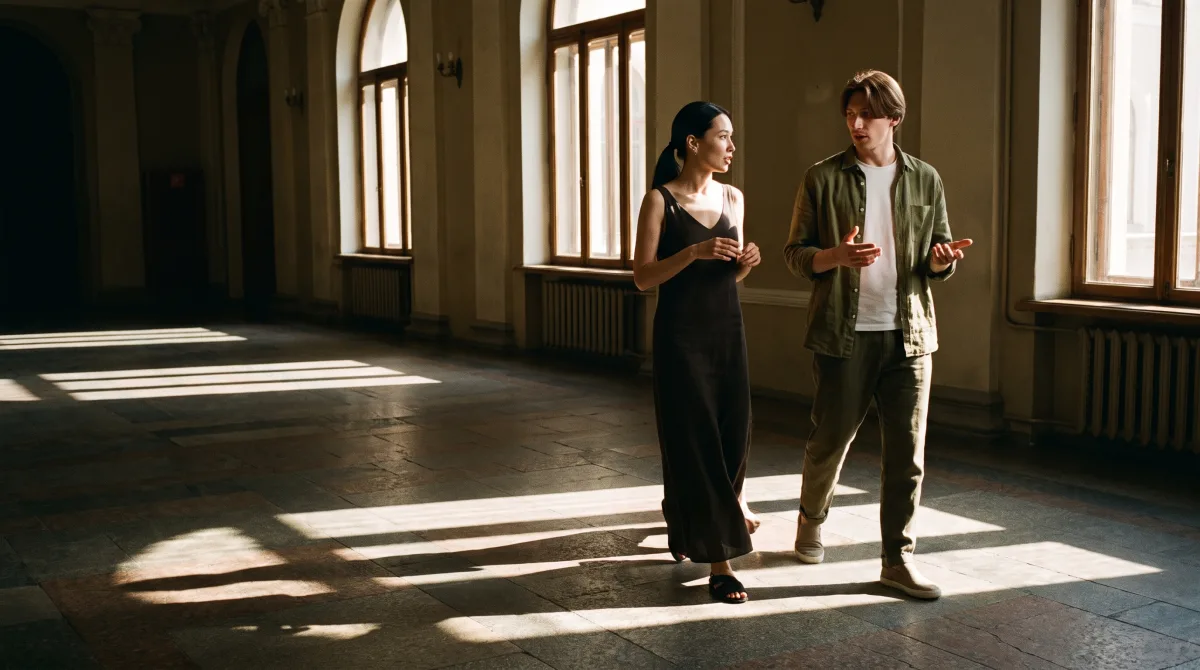
Two people sit in the dark and watch something happen exactly once, together. That is the one format a swipe app cannot replicate, and it turns out to be measurable: researchers who wired up 121 theatergoers across ten live performances in 2024 found their heart rates synchronized more closely during a show than between shows — the first time that had been measured for a live audience rather than a recording. For someone who plans an evening around curtain times, that isn't trivia. It's the whole argument for why this deserves its own answer.
Anketta's manuscript is built for that same specificity. There's no photo grid and no swipe — you write a free-form account of yourself, and a match signals interest by highlighting an actual line in it. Describe the moment the second act turned, the argument in the lobby about the ending, or the actor you'd cross a city to see again, and that's what gets highlighted — not a flat "loves theater" tag sitting next to fifty identical ones. But knowing a live room does something to two bodies at once is only half the answer. The other half is what happens when that room is one most of a country still treats as unremarkable.
Write the evening a bio line could never hold.Because it never stopped being ordinary. A 2024 survey by VTsIOM, Russia's oldest public-opinion research center, found that a quarter of Russians go to the theater several times a year or more — enough of a rhythm that the pollster's own shorthand for that group is театрал, a description of an unremarkable Tuesday, not a hobbyist label. Western dating culture tends to treat a live show as the special-occasion date, the one you save for a fourth or fifth outing. Russian theatergoing was never built around scarcity that way.
That difference matters for how theater actually functions as a dating context. A tradition where student tickets are cheap, the buffet line during intermission is half the social event, and going alone on a Tuesday raises no eyebrows is a tradition where a first date at the theater doesn't have to be a grand gesture — it can just be the next available evening. The ritual carries its own structure without either person needing to invent one: you arrive, you sit through something together, you talk about it in the corridor with a glass of something during the interval, and you leave changed by the same twenty minutes.
It asks for things a streaming date never tests. You have to show up on time — the house lights go down whether you're in your seat or stuck in traffic. You have to sit through a slow scene instead of reaching for a phone. And you have to sit with a silence you didn't choose, next to someone you can't mute. None of it is dramatic. All of it is information.
- Whether they show up on time. A show that starts at 19:00 starts at 19:00 — there's no pausing the second act to let a late arrival catch up, so punctuality stops being a character trait you take on faith.
- Whether they can sit with something slow. A three-hour production has dead stretches by design. Someone who fidgets through them tells you something different from someone who leans in.
- What they do with a silence they didn't choose. No phone, no scrolling, no exit until intermission — just the two of you and whatever the stage is doing to the room.
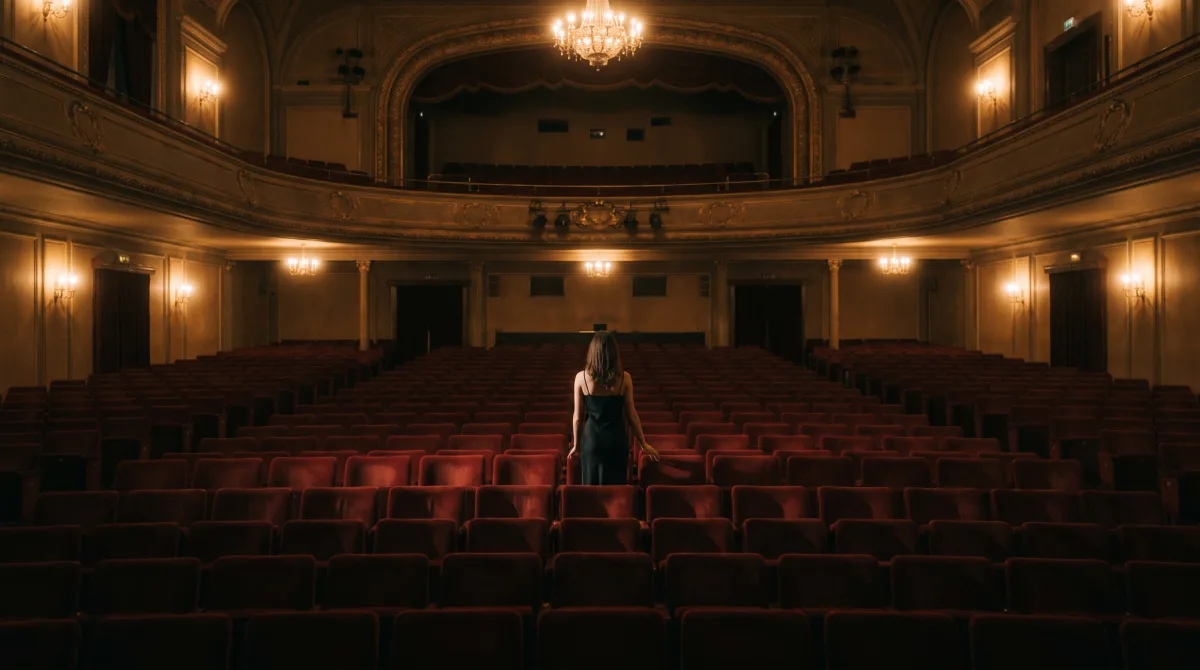
Shared novelty measurably changes how a relationship feels, not just how one evening feels. Aron and colleagues (2000) ran three lab experiments and two field surveys and found that couples who did more novel, arousing activities together — as opposed to mundane ones — felt less bored in the relationship and rated it as higher-quality. A live show that could go anywhere over three hours qualifies. A rerun on a couch usually doesn't.
The difference isn't the theater building — it's that neither of you knows exactly what happens next, and you're finding out at the same second.
| What happens after the lights go down | Streaming at home | Dinner date | Live theater |
|---|---|---|---|
| Can either of you pause it? | Yes, any time | There's no "it" to pause | No — the show runs without you |
| Are you reacting to the same second? | Rarely — someone checks a phone | You're both present, but nothing external sets the beat | Same laugh, same silence, same second, in real time |
| What's left to talk about after | Whatever you half-remember | Whatever you chose to bring up | The thing you both just watched happen, still fresh |
There's no bio field for "loves theater," because Anketta doesn't have bio fields at all. You write in full sentences about the evening that actually mattered, and matching starts when someone highlights the specific line where you describe it. Writing about one particular production works the same way essay-length writing works everywhere else on the manuscript: the more particular the account, the more precisely the recommendation model can find someone whose particular account rhymes with yours.
That's really just intentional dating applied to a habit a theater lover already has — choosing someone based on what a shared evening actually revealed about them, instead of a checkbox next to "culture" that fifty other profiles also ticked.
Try describing the night the second act turned.Not replace it — reorder it, the same way it does for readers. Dating for book lovers makes the same case for a different medium: the specific paragraph someone underlined tells you more than any staged photo does. Theater's version of that paragraph is a night — the whole run of it, seat to curtain call — and it can't be faked the way a bookshelf photo can, because nobody can perform a genuine reaction to a plot twist for three acts running — any more than a concert can be faked by someone who wasn't actually listening.
A photo can be retaken until it's flattering. A live performance only happens the one time you were both in the room for it — and that, more than any bio line, is the beginning most dating apps never think to ask about.
Unsure about writing? Try reading first.What does "dating for theater lovers" mean on Anketta?
It means the evening itself — the production, what struck you, the argument you had about the ending — becomes part of your actual manuscript, and a match responds to that specific account instead of a generic "loves theater" tag.
Why does a live performance matter more than a shared favorite show or movie?
A recording can be paused, rewound, and rewatched on your own schedule. A live performance happens once, in a shared room, at a shared second — which is exactly what the 2024 heart-rate synchrony research measured and a streaming session can't reproduce.
Is this only relevant if you live somewhere with a big theater scene?
No. The underlying habit — showing up, staying present, sitting through something slow together — works with a small local company or a touring production just as well as with a major stage; the scale of the venue isn't the point.
Does this apply to opera, ballet, or experimental theater too, or only drama?
The mechanism is the same across all of them: a live, unrepeatable, shared room. What changes is only the specific thing you'd write about — the choreography that stayed with you, the aria, the moment the fourth wall broke — not whether the format works as a compatibility signal.
What if my match isn't already a regular theatergoer?
That's fine — the signal isn't ticket-buying frequency, it's what someone notices and how they sit with an evening they didn't script. Someone new to theater who pays real attention often writes a more specific account than a lifelong subscriber going through the motions.
Does sharing an evening like this replace physical attraction?
No, it resequences it. You get real signal about how someone shows up, pays attention, and handles an unscripted silence before either of you has seen a photo — so by the time attraction shows up, it has something real to build on.